
Top Signs You Need Air Duct Cleaning Service – Don’t Ignore These
Most people look for signs of dirty ducts in the wrong place. They scan the floor for dust and call it a housekeeping problem. The real evidence sits inside the system: the supply registers, the return grille, the plenum above the air handler. When we inspect a home in North Hills, we’re reading those spots for what they tell us about how much debris has settled on the duct walls and how hard the blower is working to push air past it. Here’s how to read the same signals, and which ones mean a cleaning is due versus something bigger.
If you’d rather not climb around with a flashlight, that’s a fair call. Call (844) 443-4850 for a free estimate and we’ll take a look. Otherwise, read on.
Why Do Signs Matter More Than the Symptom Itself?
A symptom tells you something changed. A mechanism tells you why. That difference matters, because two homes can show identical dust patterns for completely unrelated reasons, and one of them needs a cleaning while the other needs a repair. When we train technicians, we push them to trace every complaint back to a physical cause inside the airflow chain before recommending anything. A musty smell coming off a supply register is not the same problem as a musty smell coming off the air handler, and the fix for each is different.
The mechanical picture is simple. Every time the blower cycles, it pulls return air through the system and pushes supply air into rooms. Duct walls collect a film of dust, pollen, pet dander, and skin cells that the filter doesn’t catch. As that film thickens, airflow velocity picks up enough to lift some of it off the walls and redistribute it through the registers. That’s the whole story behind most “my house is dusty” complaints, and it’s why cleaning a room without addressing the ducts never solves it.
Sign #1: Dust Reappears Within 24 to 48 Hours of Cleaning
This is the most reliable single indicator we look for, and it’s the one homeowners most often misread. If you dust a shelf and it’s hazy again in two days, the dust isn’t coming from the air in the room. It’s coming out of your supply registers, which are acting as distribution points for material that’s built up on the duct interior. The quantity of dust reappearing gives you a rough sense of how much has accumulated: light haze suggests a modest film, visible flecks or dark specks suggest heavier buildup that’s now shedding off the walls.
One caveat. A little settling dust is normal in any home, especially if you keep windows open in spring. The pattern to note is consistency and whether it concentrates near registers and under return grilles rather than evenly across the room. Uneven distribution points to the ducts. Even distribution usually points to filtration or general household activity.
- Dust concentrated directly under supply registers: likely duct-sourced
- Dust concentrated near the return grille: likely duct-sourced, often heavier
- Dust even across the room, near doors and windows: usually filtration or outdoor air
- Dark specks or grit: heavier buildup, worth an inspection
Sign #2: A Musty Odor You Can’t Place – and How to Trace It
Musty odors in a home can come from at least four places inside the HVAC system, and the source determines the fix. This is where a lot of well-meaning advice goes wrong: people assume a smell means dirty ducts, schedule a cleaning, and the smell returns because the actual source was somewhere else. Here’s how we trace it.
- Duct-sourced odor: the smell is strongest at supply registers and fades as you move away from them. Cleaning and sanitizing the ductwork is usually the fix.
- Evaporator coil odor: the smell is strongest at the air handler and often gets worse right after the system shuts off. The coil needs cleaning, not just the ducts.
- Drain pan odor: a sour or swampy smell near the air handler, often worse in humid weather. Standing water in the pan is the source.
- Blower wheel odor: a dusty, almost burnt smell that shows up when the fan starts. The blower wheel has collected debris and needs cleaning.
In North Hills, we see coil and drain pan odor more often than homeowners expect during the humid months, because a system that runs hard in summer keeps that moisture load high. If the smell traces back to the coil or pan, a duct cleaning alone won’t resolve it. That’s why we offer HVAC cleaning as a separate service, so the whole system gets addressed rather than just one segment of it.
Sign #3: Uneven Heating and Cooling Room to Room
If one bedroom is always cold in winter and the upstairs is always warm in summer, the ducts are a likely suspect. Here’s the mechanism: when duct joints leak or the interior has enough buildup to reduce the effective diameter, static pressure in the system rises. Air takes the path of least resistance, so rooms closest to the air handler get more than their share while distant rooms get starved. The thermostat reads the average and cycles the system harder to compensate. That’s why a home with leaking ducts often shows higher energy bills alongside the comfort complaint, even when the equipment itself is fine.
The tell is a room that’s consistently off while others are comfortable. If the problem moves around or follows outdoor temperature swings, it’s more likely equipment sizing or thermostat placement. If it’s the same room every time, the ducts deserve a look. During an inspection we check accessible joints and connections for separation, and we look at whether the register closest to the air handler has noticeably stronger airflow than the farthest one. In our experience, an in-house air duct cleaning visit is the right time to catch leaky joints, since the ducts are already open for inspection. Our team handles duct repair and sealing as part of the same visit, so a small leak doesn’t turn into a second appointment with a different trade.
Sign #4: Allergy Symptoms That Worsen When the System Runs
This one requires a bit of observation, because allergy symptoms have many causes. The pattern to watch for is timing. If someone in the house feels worse when the heat or AC kicks on, or wakes up congested in a room that’s served by a particular register, that correlation is worth noting. The mechanism is straightforward: each blower cycle lifts particulate from duct walls into the airstream, and that particulate includes pollen, mold spores, and dander that settled in during previous seasons. In North Hills, the spring pollen load is heavy enough that a lot of homes accumulate a real seasonal deposit inside the ductwork, and once it’s there, it recirculates year-round rather than clearing out.
One important note. Cleaning removes what’s in the ducts, but it doesn’t fix a filtration problem. That’s where the air quality side matters: pairing the cleaning with a filter upgrade from Honeywell or Aprilaire does more for everyday air quality than cleaning alone, because it catches more of what’s going into the system in the first place. We work with both lines and can recommend a filter that fits the equipment you already have.
Sign #5: Visible Debris at Registers or the Air Handler
Take a flashlight to a supply register and look inside with the system off. You’ll see one of three things: clean metal or flex interior, a light film of dust, or visible debris like lint tufts, insect remains, or dark patches on the duct wall. That third category is the one that needs action. Dark patches in particular can indicate moisture intrusion, which is a different problem than dust buildup. Moisture plus organic dust is the setup for biological growth, and cleaning alone doesn’t resolve it. The underlying leak or condensation issue has to be addressed first, or the growth returns.
This is the single most important distinction in this whole article. Dust buildup means a cleaning is overdue. Moisture, dark patches, or visible damage means there’s an underlying problem and the ducts need to be inspected for damage before cleaning. We’ve had homeowners ask us to skip straight to the cleaning when the honest answer was “we need to seal that joint first.” Cleaning a duct with a leak just means the debris comes back faster.
Sign #6: The Dryer Is Taking Longer to Dry Loads
This is a sign most articles skip, and it’s one of the most important. A dryer vent that’s clogged with lint doesn’t just make loads take two cycles – it’s a documented fire risk, since lint is highly flammable and the heat source is right there. The mechanism: lint escapes the filter and accumulates in the vent line, reducing airflow. Less airflow means more heat retained in the dryer and duct, longer dry times, and rising risk. If your dryer used to dry a load in one cycle and now takes two, the vent line deserves inspection before anything else.
Dryer vent cleaning is a safety service as much as a maintenance one, and we treat it that way. It’s also a natural companion to a duct cleaning visit, since both are part of the same household airflow picture. If you’re already having the supply and return ducts serviced, having the dryer vent cleaning done in the same visit saves you a second appointment.
How Do North Hills Conditions Affect These Signs?
The signs themselves are universal; how quickly they show up is local. In North Hills, three factors push certain indicators to the front.
- Humidity swings: the humid summer months raise condensation risk inside ducts and drain pans, which makes musty odors show up faster here than dry-climate guides suggest. If you smell something in July, it’s often moisture-related rather than dust-related.
- Pollen seasons: heavy spring pollen loads settle into the return side of the system, and once there, they recirculate. Homes here tend to show the “allergy symptoms worse when the system runs” sign more strongly in late spring than the rest of the year.
- Construction vintages: older housing stock in the area often has duct systems that were built before modern sealing practices, which means leaky joints and higher static pressure show up as comfort complaints more often than you’d expect in newer builds.
When to Call a Pro
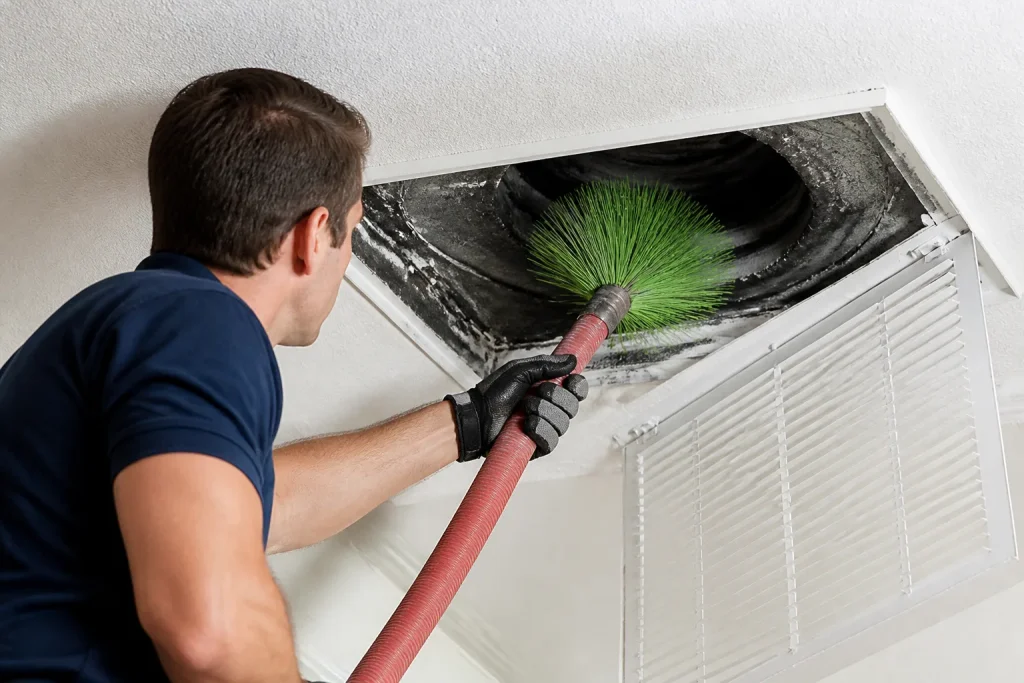
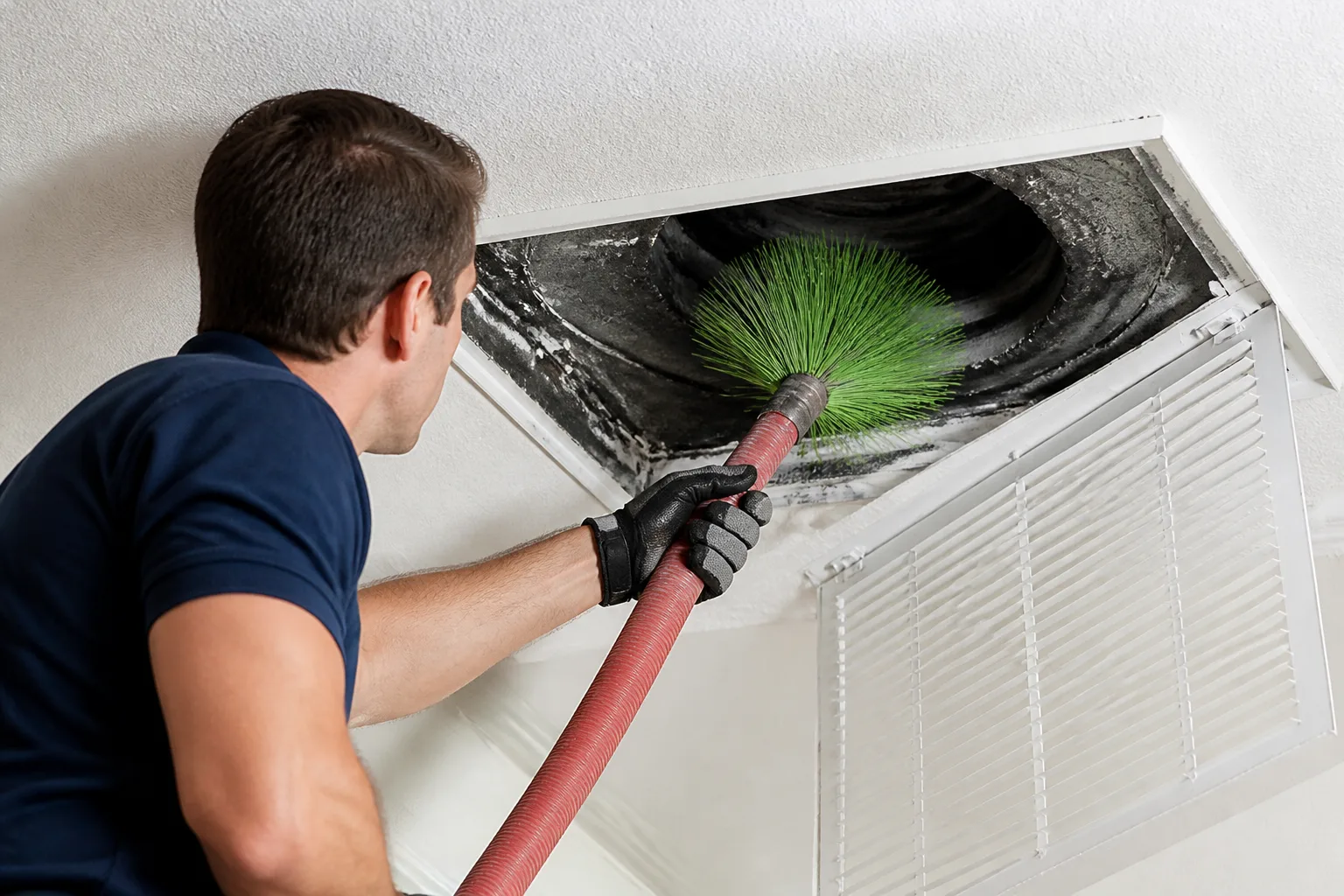
Some checks you can do yourself: a flashlight inspection at accessible registers, watching for the dust-return pattern, and noting whether the dryer is taking longer. The point where it makes sense to bring in a technician is when you’ve traced a symptom to the ducts and want it addressed properly. Professional-grade equipment matters here. Our technicians use Rotobrush rotary brush systems and Nikro negative-air machines, which are built specifically for duct interiors and capture dislodged debris rather than redistributing it into the room. Shop vacuums can’t do that. We also deploy Abatement Technologies air scrubbers during sanitizing work to keep air quality controlled throughout the job. Our technicians have up to 12 years of experience on this equipment.
Related services in North Hills: if the symptoms you’re seeing trace back to a specific part of the system, we handle duct cleaning, dryer vent cleaning, HVAC cleaning, air quality and sanitizing, and duct repair and sealing – all under one roof, so you don’t have to line up multiple contractors.
Self-Inspection Checklist Before You Call
Jot down what you find. A technician conversation that starts with real data goes faster and lands on the right fix first.
- Remove one accessible supply register and look inside with a flashlight. Note the color and texture of any buildup.
- Repeat at the return grille. This is where the heaviest buildup usually shows.
- Dust a hard surface, wait 48 hours, and check the pattern. Is it under registers or spread evenly?
- Smell each area separately: a supply register, the air handler, and the drain pan. Note where the odor is strongest.
- Turn the system on and walk room to room. Note which rooms feel starved for air and which feel oversupplied.
- Time a normal dryer load. If it’s taking longer than it used to, that’s a vent line data point.
- Look at the filter. Is it loaded, or does it look like it’s not catching much?
With those notes in hand, a technician can usually narrow down whether you’re looking at an overdue cleaning, a repair, or both. We’d rather tell you “your ducts are fine, your coil needs cleaning” than sell a service you don’t need – it’s better for everyone than a callback.
The Bottom Line
Dust that returns within two days, a musty smell you can trace to a register, rooms that never heat or cool evenly, allergy symptoms that track with blower cycles, visible dark patches inside ducts, and a dryer that’s taking longer – those are the signs worth acting on. The distinction that matters most is whether you’re looking at buildup (cleaning needed) or moisture and damage (repair needed first). If you’re in North Hills and want a straight answer on which one you’re dealing with, Air Duct Cleaning North Hills offers free estimates – call (844) 443-4850. We answer 24/7. Fast dispatch from 7am to 7pm, Sunday through Friday.
Frequently Asked Questions
Most homes land somewhere between every three and five years, but the right interval depends on the home, not the calendar. A house with pets, recent renovations, or heavy seasonal pollen exposure may need it sooner. A house with a good filter and no signs of buildup may stretch longer. The signs matter more than the schedule – if you’re seeing them, it’s time regardless of when the last cleaning was.
Low quotes usually skip equipment. A quick pass with a shop vacuum, or a “blow-out” that dislodges debris without capturing it, costs less because it does less – and in some cases it redistributes contaminants back into the room. Professional-grade equipment like Rotobrush and Nikro systems, plus air scrubbers during sanitizing, is a different job with different costs. Ask any contractor what equipment they’ll use and how they’ll capture debris, not just what they’ll charge. Call (844) 443-4850 for a free estimate – estimates are free.
Ask for before-and-after photos of your own ducts, not stock images. A reputable technician documents the interior condition at inspection and again after cleaning, so you can see what changed. It’s a fair ask, and a contractor with nothing to hide won’t hesitate. If you want to see what we document, call (844) 443-4850 and ask before you book.
You can, and a lot of people do – which is why the dust keeps coming back. Cleaning surfaces removes what’s settled, but it doesn’t touch what’s built up on the duct walls. The blower cycles and redistributes it within a couple of days, and the cycle repeats. If the dust pattern points to the ducts, addressing the source is the only fix that lasts. Call (844) 443-4850 for a free estimate on what a proper cleaning would involve.
Written by the team at Air Duct Cleaning North Hills.
Need Air Duct Cleaning Help?
Call Air Duct Cleaning North Hills - the local pro we connect you with is licensed and insured, here with fast help in North Hills.
(844) 443-4850