
Last updated November 23, 2026
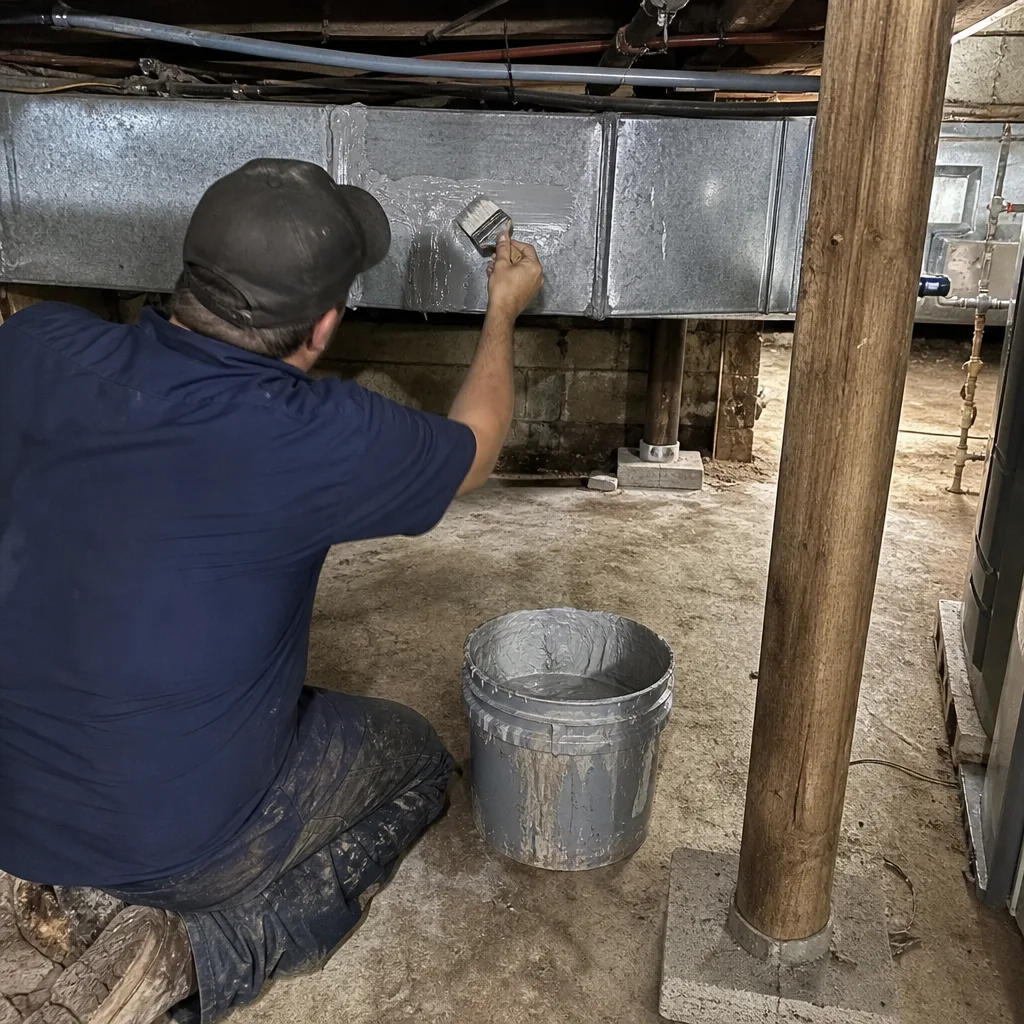
 Whole-home duct cleaning
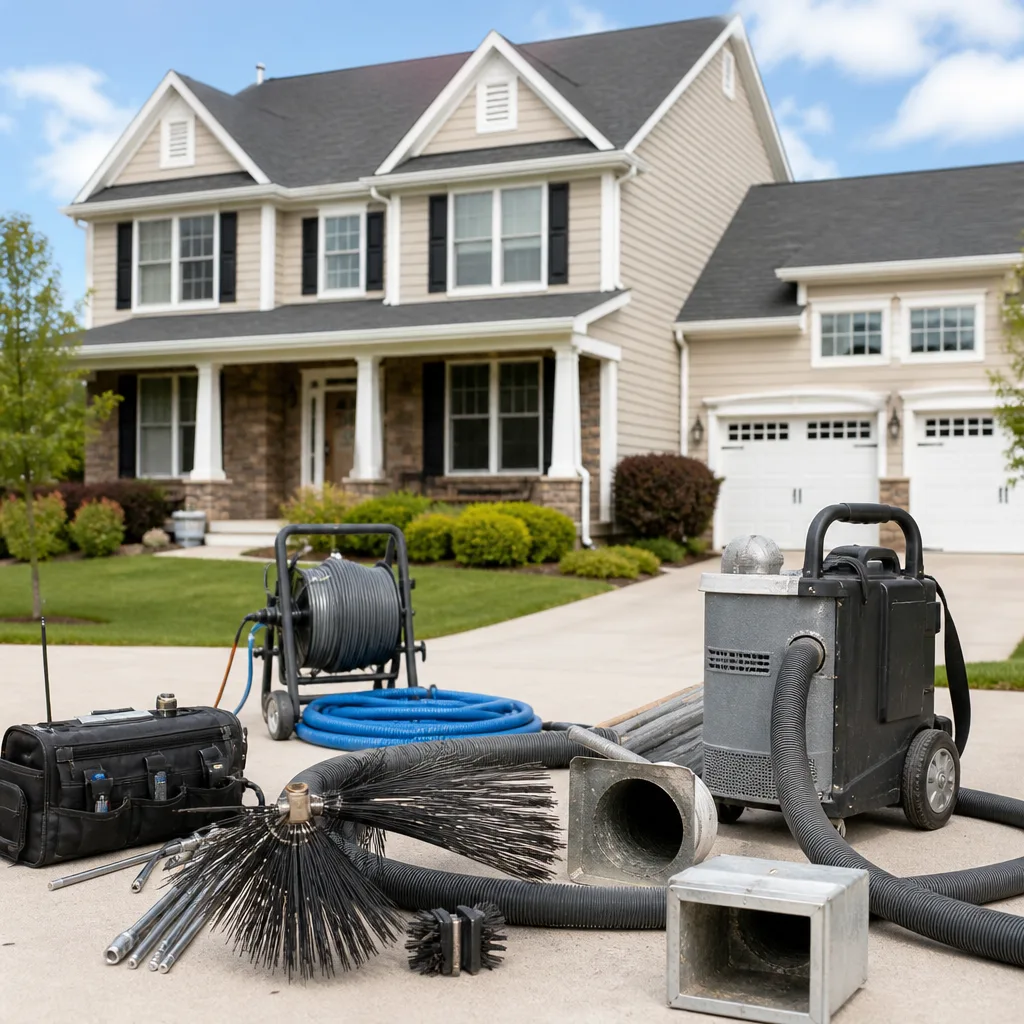
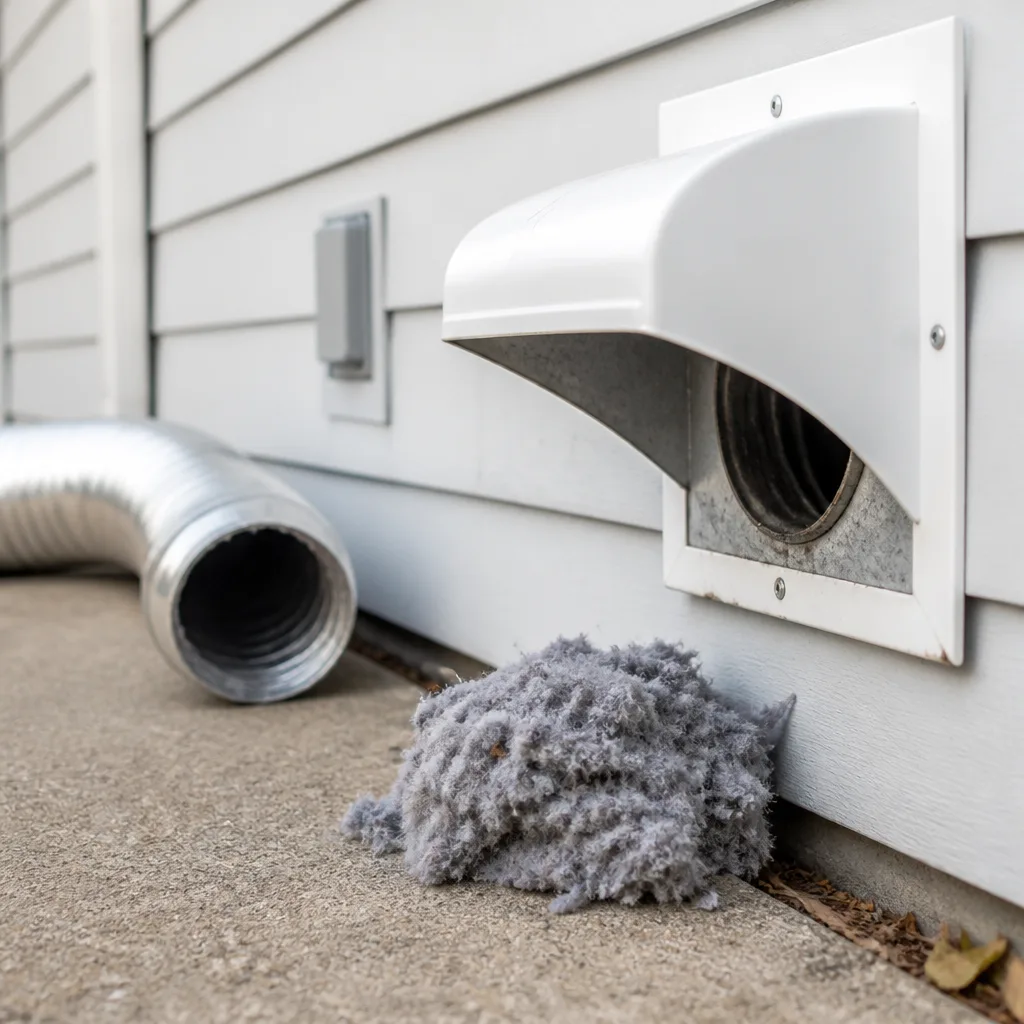 Dryer vent cleaning
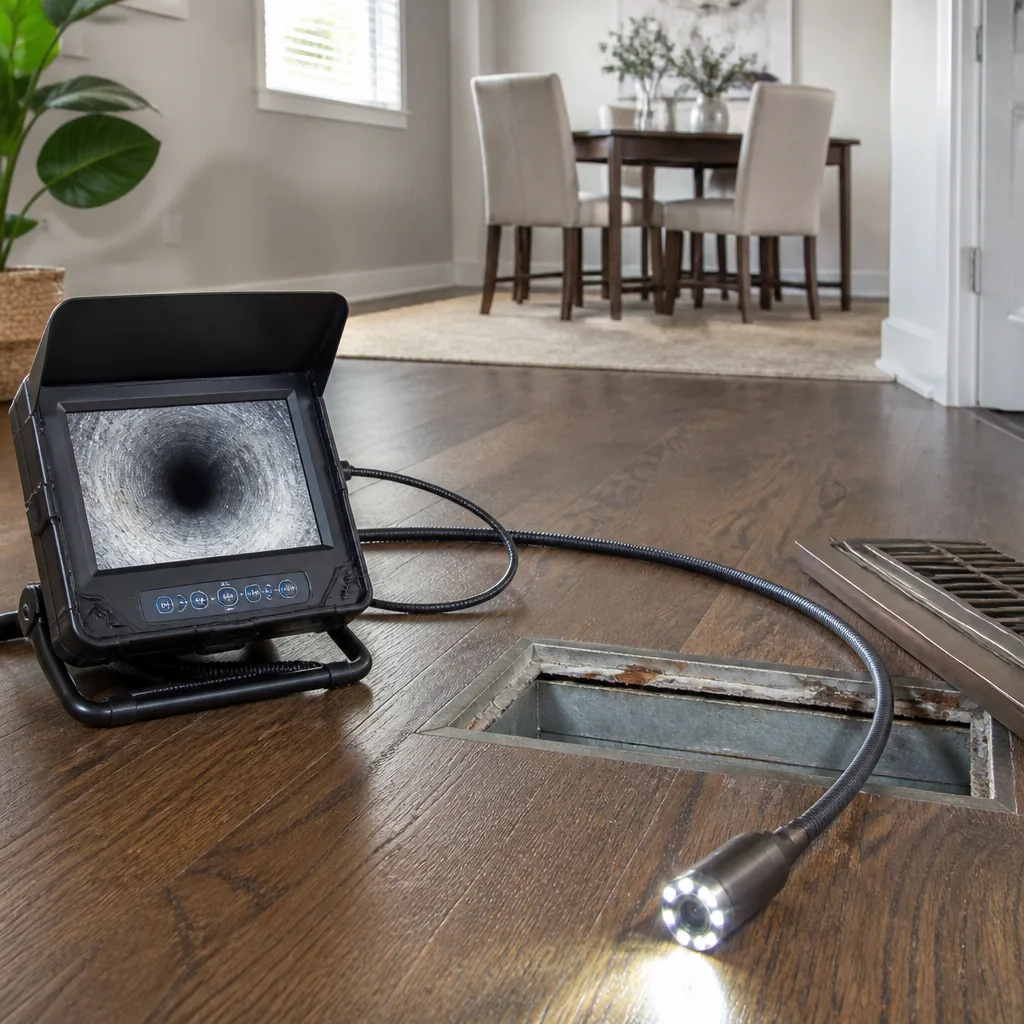 Camera inspection
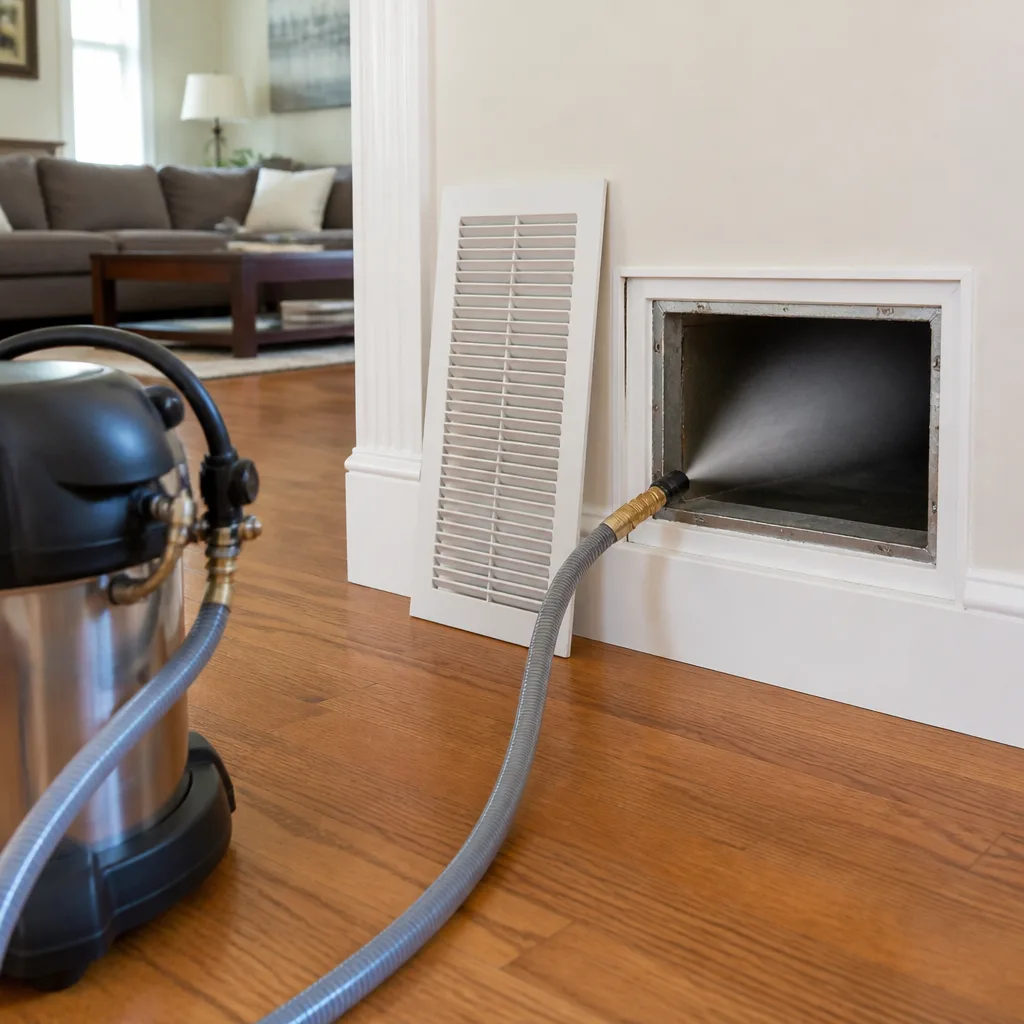 Sanitizing & deodorizing
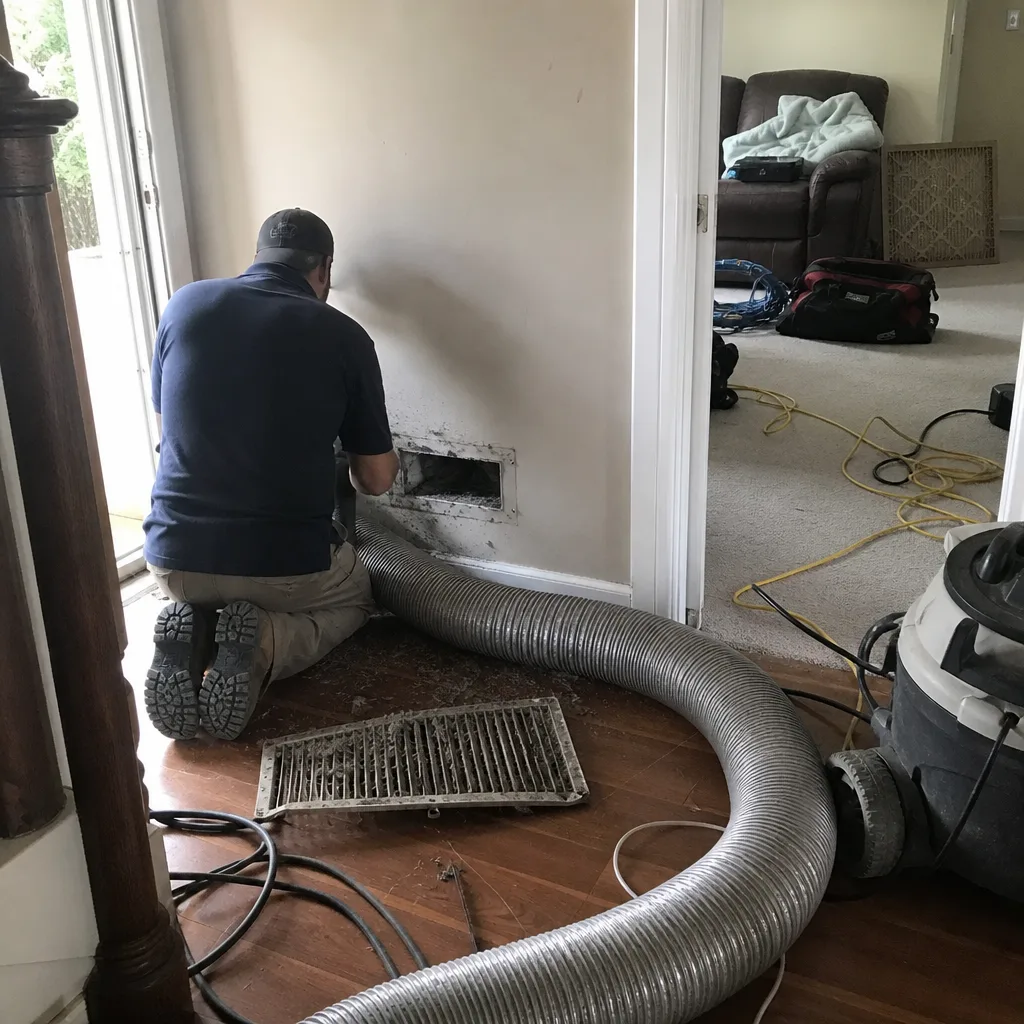
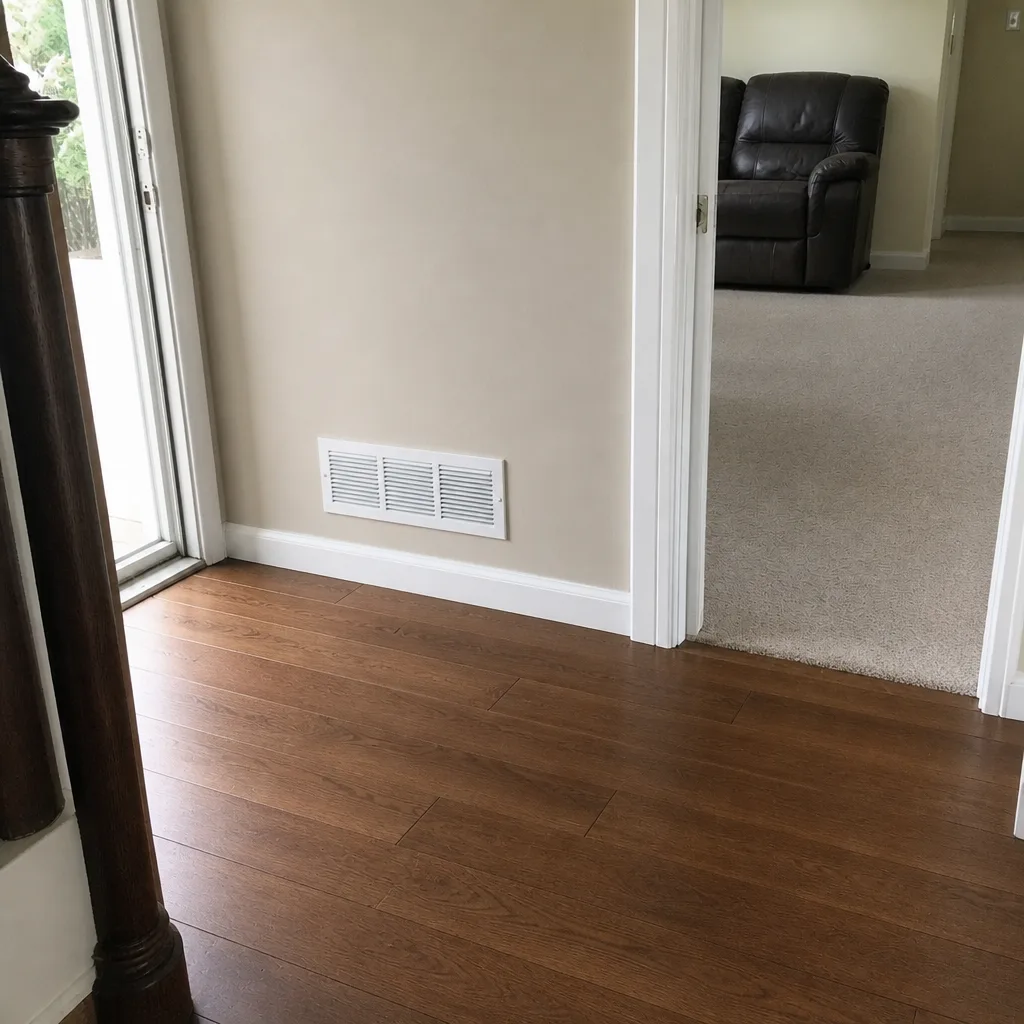
Whole-system duct and dryer vent check with before-and-after photos - you see exactly what came out of your vents
That "$99 whole-house special" is a bait ad - the real number appears once they are in your hallway, or the "clean" is a shop-vac at the register. We photograph the inside of your ducts before and after instead.
Air Duct Cleaning Warning Signs: A North Hills Homeowner’s Reference Guide
Most duct problems get misdiagnosed before anyone opens a panel. A system that runs longer than it used to, smells musty for the first few minutes, and leaves a grey film on supply grilles days after a filter change is describing a contaminated duct system, not a failing compressor and not undersized equipment. That distinction matters. One problem gets solved with cleaning, sanitizing, and sealing. The other gets you a repair bill for machinery that was never the issue. In North Hills, where humid summers push HVAC systems hard and new construction keeps dust circulating for months, we see both patterns constantly and homeowners routinely guess wrong. This guide walks through the seven observable warning signs, how to tell a duct symptom from a mechanical fault, and a simple test you can run this afternoon.
Quick Answer
Air ducts in a North Hills home usually need professional cleaning when you notice several of these together: visible dust on supply grilles within days of a filter change, weak airflow at far registers, a musty smell in the first minute of startup, or debris blowing out of vents after renovation work. No single sign proves a dirty system, but three or more pointing the same direction means it’s worth a professional inspection. A dirty-duct symptom that mimics an HVAC fault almost always clears up with proper cleaning and sealing rather than a mechanical repair.
Styles & brands we work with
- Whole-home duct cleaning
- Dryer vent cleaning
- Camera inspection
- Sanitizing & deodorizing
Table of Contents
- The Seven Warning Signs, Ranked by Severity
- How to Tell a Duct Problem from an HVAC Fault
- The Post-Renovation Warning Pattern
- The North Hills Humidity Signature: Musty Odors That Come and Go
- The White Cloth Test: A Simple Self-Assessment
- What a Professional Inspection Actually Checks
- The Dryer Vent: A Different Warning Sign Altogether
- When Cleaning Isn’t Enough: Leaks and Damage
The Seven Warning Signs, Ranked by Severity
The signs that ducts need attention fall into three tiers: cosmetic, functional, and health-adjacent. Cosmetic signs are the earliest and the least urgent. Functional signs mean the system is losing airflow or efficiency. Health-adjacent signs are the ones that should prompt a call within days rather than weeks. Here’s the full list, from mildest to most pressing.
- Dust settling on supply grilles within days of a filter change. A thin even film is normal. A visible grey coat that returns within three to five days means particulates are being pushed out of the supply side, not just floating in from the room.
- Dust streaks on ceilings or walls near registers. Air moving out of a grille carries particles with it. When you see dark trails radiating from a register, the supply air is loaded.
- Visible debris discharge when the system first kicks on. Little puffs of dust, insulation fibers, or drywall dust escaping a register is the clearest cosmetic-to-functional crossover sign there is.
- Uneven airflow between rooms. When the bedroom down the hall takes noticeably longer to cool than the room near the air handler, the supply trunk may be restricted by debris or leaking at a joint.
- Reduced airflow at registers you can feel. Hold your hand over a supply grille. Weak, barely-there flow on a system that’s running full-tilt points to restriction in the duct run.
- Musty odor on startup that fades after a few minutes. This is the classic signature of microbial growth in the duct or on the evaporator coil. Air sits in a damp duct overnight, loads up with the smell, and flushes it through the house in the first minute.
- Persistent odor that doesn’t fade, or visible mold near a register. The highest-priority tier. Odor that stays or visible growth near a vent means the problem may extend beyond cleaning into moisture control.
In our experience running air duct cleaning across North Hills, homeowners who come to us with signs six and seven almost always have a system that’s been ignored for a while. The good news is that the fix is usually straightforward once you know which tier you’re in.
How to Tell a Duct Problem from an HVAC Fault
This is the single most expensive confusion in home comfort. A homeowner with restricted ducts calls an HVAC tech. The tech finds a healthy compressor, charges a diagnostic fee, and suggests cleaning. The reverse also happens: a failing blower gets blamed on dirty ducts, and someone pays for a cleaning that never fixes the airflow. Here are the tells.
Signs it’s the ducts
- The system reaches setpoint eventually but takes longer than it used to.
- Some rooms are fine and others are consistently weak. Unevenness is a duct signature.
- Filter changes are happening on schedule but the filter loads up faster than it used to.
- Noise at the registers: whistling, rattling, or rushing air suggests a leak or restriction.
- The musty smell is short-lived and tied to startup, not continuous.
Signs it’s the equipment
- The system short-cycles: runs briefly, shuts off, comes back on quickly.
- You hear unusual mechanical noise from the outdoor unit or the air handler itself.
- The blower doesn’t come on at all, or runs at one speed regardless of demand.
- Ice forms on the refrigerant lines or the indoor coil.
- The system can’t reach setpoint no matter how long it runs, and the airflow at registers is strong.
Strong airflow plus no cooling is almost always equipment. Weak airflow plus no cooling is usually ducts or a blower issue, and cleaning plus a proper inspection sorts it out. But when both are muddy, the cheapest next step is a duct inspection, not a compressor diagnosis. A dirty system masks equipment problems; a clean system exposes them.
A full HVAC cleaning also covers the air handler, evaporator coil, and blower assembly, which is where most of the dust that eventually reaches your ducts originates. Getting that cleaned alongside the ducts means the source is addressed, not just the symptom.
The Post-Renovation Warning Pattern
New construction and renovation are the most predictable duct contamination events in any house. Drywall sanding, insulation installation, cabinet cutting, and flooring work all generate fine particulates that settle into every vertical surface in the home. Most of it lands in the duct system, and it doesn’t all leave with a vacuum pass.
The timeline looks like this:
- Week 1 to 2 after the work: Visible dust settles on horizontal surfaces throughout the house. Normal, expected, and easily wiped away.
- Week 2 to 4: Dust begins reappearing on grilles and furniture faster than expected. The HVAC system is redistributing fine particulates that settled into the supply and return trunks.
- Week 4 to 8: Filter loading accelerates. Homeowners start changing filters every two weeks instead of every three months.
- Week 6 to 12: Odor becomes noticeable, usually drywall-adjacent and slightly chalky at first, then musty if any moisture is present in the system.
The window to act is between week two and week six. After that, particulates have had time to settle firmly against duct walls, and in a humid North Hills summer, some of that drywall dust can become a food source for microbial growth. If you’ve had any significant interior work done in the last two months, treat your duct system as scheduled for cleaning whether you see symptoms or not.
The same pattern applies to a smaller degree when insulation in the attic or crawlspace is disturbed, when windows or doors are replaced, and when any tradesperson cuts into a return air plenum. In every case, what settles in the ducts stays in the ducts until a machine pulls it out.
The North Hills Humidity Signature: Musty Odors That Come and Go
This is where North Hills gets its own warning pattern, and it’s the one most often misread. A musty smell that appears in June, peaks in July and August, and fades by September is rarely a cleaning problem. Seasonal humidity in North Hills pushes indoor relative humidity high enough that condensation forms on cold evaporator coils and damp duct interiors, and that moisture feeds microbial growth even in a duct system that was professionally cleaned last year.
The pattern to watch for:
- A musty smell that comes and goes with the seasons. If the smell disappears in cooler, drier months, the driver is moisture, not debris. Cleaning alone won’t solve it.
- A musty smell that stays year-round. This is the debris signature. Cleaning, sanitizing, and sealing is the right fix.
- A smell that spikes after heavy rain or high humidity days. Moisture management issue. Check for a clogged condensate line, an oversized system short-cycling, or a duct leaking in unconditioned space.
- A smell that spikes when the system first starts and fades within a minute or two. Duct or coil contamination. Cleaning addresses it.
When the driver is moisture, we pair cleaning with air quality treatment: an Abatement Technologies air scrubber runs during the sanitizing step to keep particulates and microbial contaminants captured rather than redistributed. In some North Hills homes, a Honeywell or Aprilaire filtration upgrade is the more durable answer, because it manages indoor air year-round rather than once every few years. Both of those products sit in our regular air quality and sanitizing work, and we can recommend the right version for your system without calling in a second contractor.
What doesn’t work: cleaning the ducts once a summer and wondering why the smell comes back. If the underlying moisture is still there, the growth returns. The right question isn’t “why does it smell again,” it’s “where is the moisture coming from.”
The White Cloth Test: A Simple Self-Assessment
You can get a decent read on particulate discharge in about ten minutes with a clean white cloth and no tools. This isn’t a substitute for a professional inspection, but it tells you whether a call is warranted right now or can wait until the next scheduled maintenance.
How to run it
- Turn off the system at the thermostat. Let it stay off for at least ten minutes.
- Take a clean white cotton cloth or paper towel and hold it firmly against a supply register grille, covering the entire face.
- Have someone turn the system on at the thermostat while you keep the cloth in place. Hold it for a full minute of active airflow.
- Remove the cloth and inspect it against a dark background.
How to read the results
- Cloth stays white or shows only faint ambient dust: Your supply side is clean enough. No action needed.
- Light even grey haze: Normal in most homes, especially during pollen season. Recheck in three months.
- Visible dark particles or debris spots: Discharge is happening. A professional inspection is warranted.
- Yellow or brown streaking: May indicate moisture-related contamination. Schedule a sanitizing assessment rather than just cleaning.
- Insulation fibers or drywall dust visible: Typical of a recent renovation. Cleaning is the right next step.
Repeat the test at two or three different supply registers around the house. If the results are consistent, you have a system-wide signature. If only one register reads dirty, the problem may be local to that branch, and a duct sealing inspection can pinpoint where the leak is drawing contamination in.
This test doesn’t evaluate the return side and it doesn’t evaluate the air handler. A professional inspection covers both. But it’s the fastest way to separate normal household dust from a duct system that’s actively discharging contaminants into the room.
What a Professional Inspection Actually Checks
A real duct inspection is not a flashlight down the nearest register. It’s a systematic look at the whole airflow chain, from the return air plenum through the air handler, out through every trunk and branch, and to every supply and return grille. Here’s what a professional-grade inspection should cover, and what you should expect to see in the report.
- Return air side: Return grilles, return trunk, return plenum. This is where the majority of accumulated debris lives in most systems.
- Air handler cabinet: Blower housing, blower wheel, evaporator coil face, and the transition where the duct meets the cabinet.
- Supply trunk and branches: Interior wall condition, visible debris accumulation, insulation integrity, and joint tightness.
- Register boots and grilles: Sealing at the wall or floor penetration, and any gap that would allow attic or crawlspace air into the supply path.
- Flex duct runs: Kinks, crushed sections, and disconnections. Flex duct fails more often than rigid duct, and a crushed run is restriction that cleaning can’t fix.
- Dryer vent (separate system): Lint accumulation, duct run length, and termination at the exterior. This is a different service and a different safety issue.
North Hills homes with flex duct runs in the attic see more collapsed and disconnected sections than homes with mostly rigid duct. A branch that’s been disconnected at a fitting for two summers is pulling attic air into the supply side, which is a very different problem from dirty ducts and needs repair before or alongside cleaning. That’s why inspections that stop at visual cleanliness miss half the story. A dirty system may clean up perfectly and still underperform because one branch is broken.
If you want the fuller picture of how cleaning is done properly, our main page on air duct cleaning in North Hills walks through the mechanical process step by step.
The Dryer Vent: A Different Warning Sign Altogether
The warning signs for a clogged dryer vent are easy to confuse with warning signs of a failing dryer, and the consequences are more serious than most homeowners realize. Lint accumulation is a leading cause of residential fires, and it’s the most common reason clothes dryers lose efficiency.
Watch for these signs on the dryer side:
- Clothes take two cycles or more to dry when they used to dry in one.
- The dryer exterior runs hot to the touch on a normal load.
- There’s a burning or smoky smell during a dry cycle.
- Lint is accumulating on the interior of the lint trap screen faster than usual, or the screen catches less because there’s more lint elsewhere.
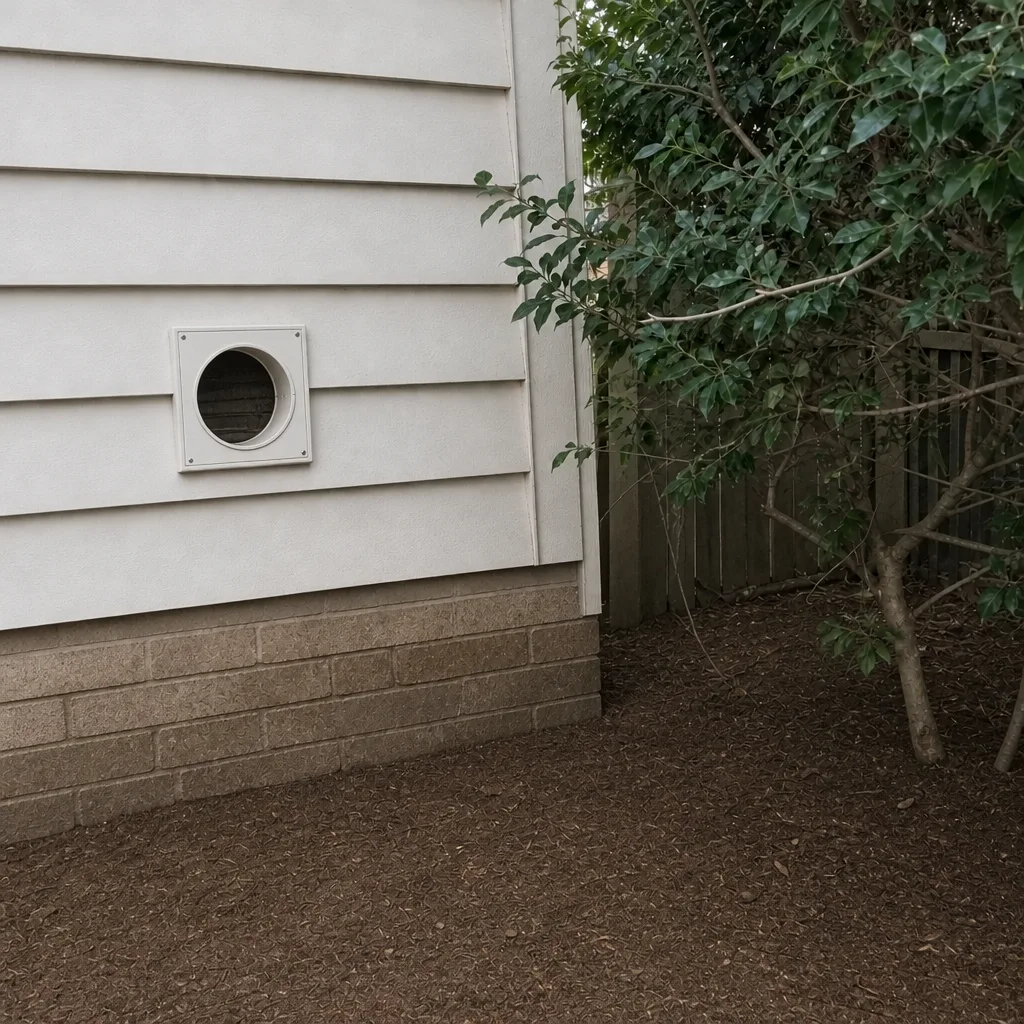
- The exterior vent flap doesn’t open fully when the dryer runs.
- There’s a visible lint ring around the outside termination hood.
Dryer vent cleaning is its own service with its own safety profile. It’s not part of a standard duct cleaning unless you ask for it, and it should be run every one to two years in a typical household. In North Hills homes where the dryer is set against an exterior wall with a short vent run, the interval can stretch longer. In homes where the dryer sits in the middle of the house with a long vent run through the attic, the interval should be shorter, often annually.
Professional dryer vent cleaning is the right call rather than a DIY brush kit for any run over a few feet. A brush that dislodges lint but doesn’t remove it can compact lint further down the run. Rotary cleaning with controlled suction pulls the lint out completely, which is the entire point.
When Cleaning Isn’t Enough: Leaks and Damage
Cleaning restores airflow. It doesn’t fix leaks. In practice, the biggest hidden cost in a duct system comes from leaks at joints, boots, and flex duct connections, and these leaks aren’t visible from the register side. A system that’s lost 15 to 20 percent of its conditioned air into the attic or crawlspace will look clean after a professional cleaning and still underperform, because the conditioned air is still leaving the duct system before it reaches the room.
The signs a system needs sealing rather than just cleaning:
- Cooling is uneven between rooms and the airflow pattern hasn’t improved after cleaning.
- Attic or crawlspace smell is detectable in specific rooms, sometimes only when the system is running.
- Dust streaks appear around register frames where air is escaping at the wall or floor.
- Flex duct runs have visible crushed sections, sharp bends, or disconnections at fittings.
- The system runs longer than it should after cleaning, and the filter isn’t loading up faster than normal.
Duct repair and sealing is the in-house answer for these. Our technicians handle it in the same visit as cleaning, which means you don’t schedule a second trade to come back and fix what the first visit revealed. Clean, sanitize, and seal in one visit is a different outcome from clean only.
Equipment matters here. Professional-grade Rotobrush and Nikro systems are engineered for duct interiors: rotary brushes on a flexible shaft for mechanical agitation, and negative-air machines for controlled suction that captures dislodged debris rather than pushing it into the room. A shop vacuum taped to a register doesn’t do the same job, no matter how long it runs. That’s the difference between a real cleaning and a low-price in-and-out visit.
Common Mistakes to Avoid
- Assuming a dust film on furniture is a duct problem. Dust in a home comes from dozens of sources: fabric, pets, outdoor air, unsealed attic penetrations, and normal skin cells. Confirm with the cloth test before assuming you’re dealing with a duct issue.
- Cleaning ducts to solve a moisture-driven musty smell. In North Hills, a seasonal smell that peaks in July and fades by September needs moisture control alongside cleaning. Cleaning alone lets the problem return within a season.
- Choosing a quote based solely on price. A low number usually means a technician with a shop vac and two hours. The cleaning looks fine on the invoice but doesn’t touch the return trunk, doesn’t sanitize, and doesn’t address leaks.
- Skipping the air handler and evaporator coil. Cleaning the ducts while leaving the coil and blower assembly untouched redistributes the contamination into a freshly-cleaned system. The coil is often where the growth is.
- Forgetting the dryer vent. It’s not part of a standard duct cleaning, and it’s the only part of the home’s airflow system that’s directly tied to fire safety. Schedule it separately and on its own interval.
- Ignoring a leak because the ducts look clean. Clean ducts that leak still cost money on every cycle. A run that has lost 15 percent of its air into the attic is a comfort and efficiency problem, not just a maintenance annoyance.
- Assuming a renovation cleanup is automatic. Drywall dust settles into ducts and stays there. If you’ve had significant interior work done and haven’t scheduled cleaning, this is a “when,” not an “if.”
See the difference
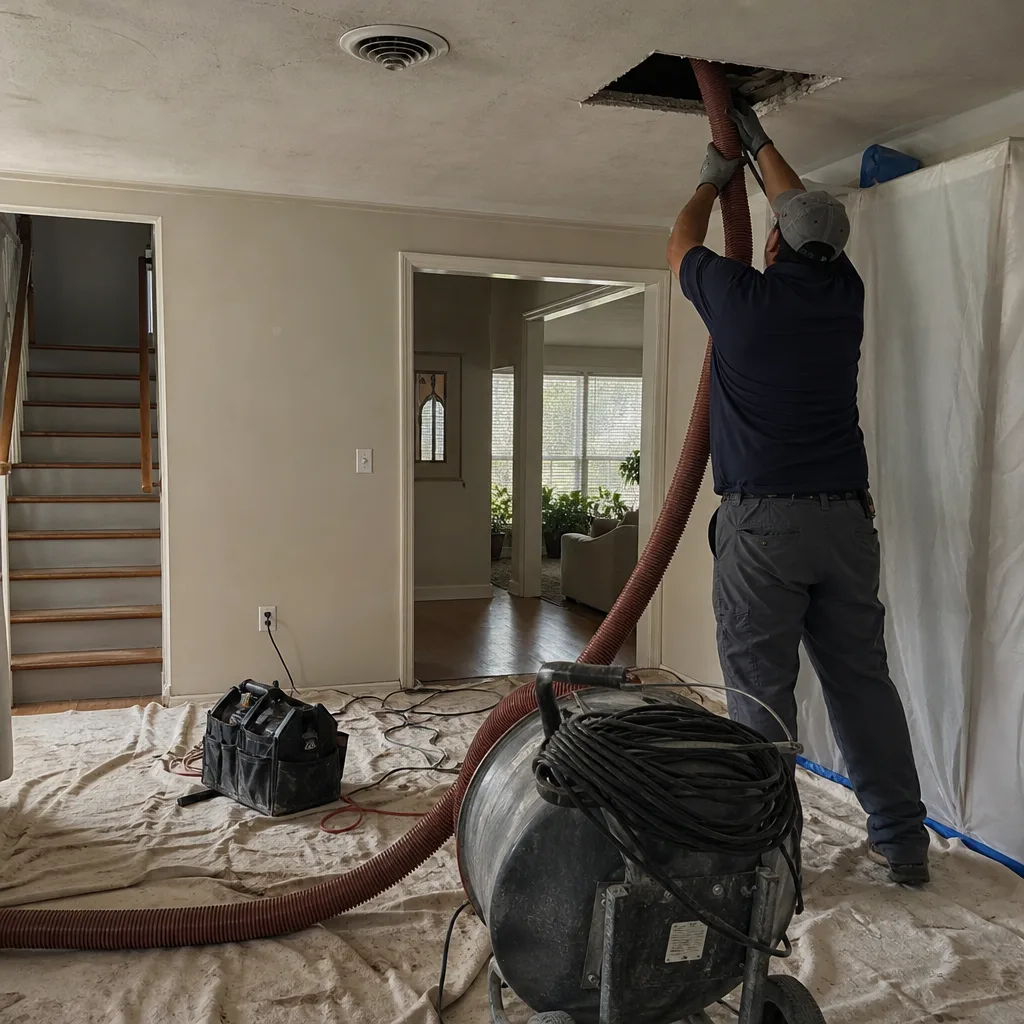 Before
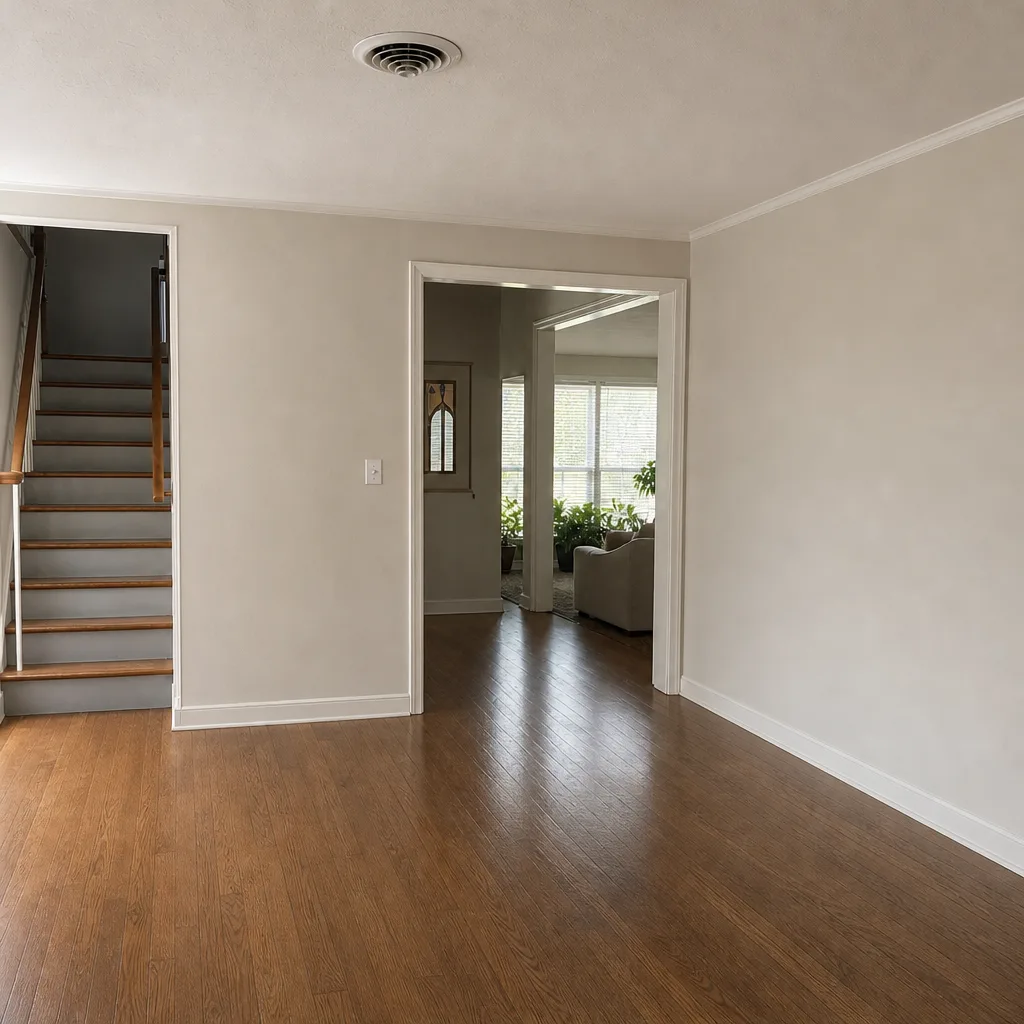 After
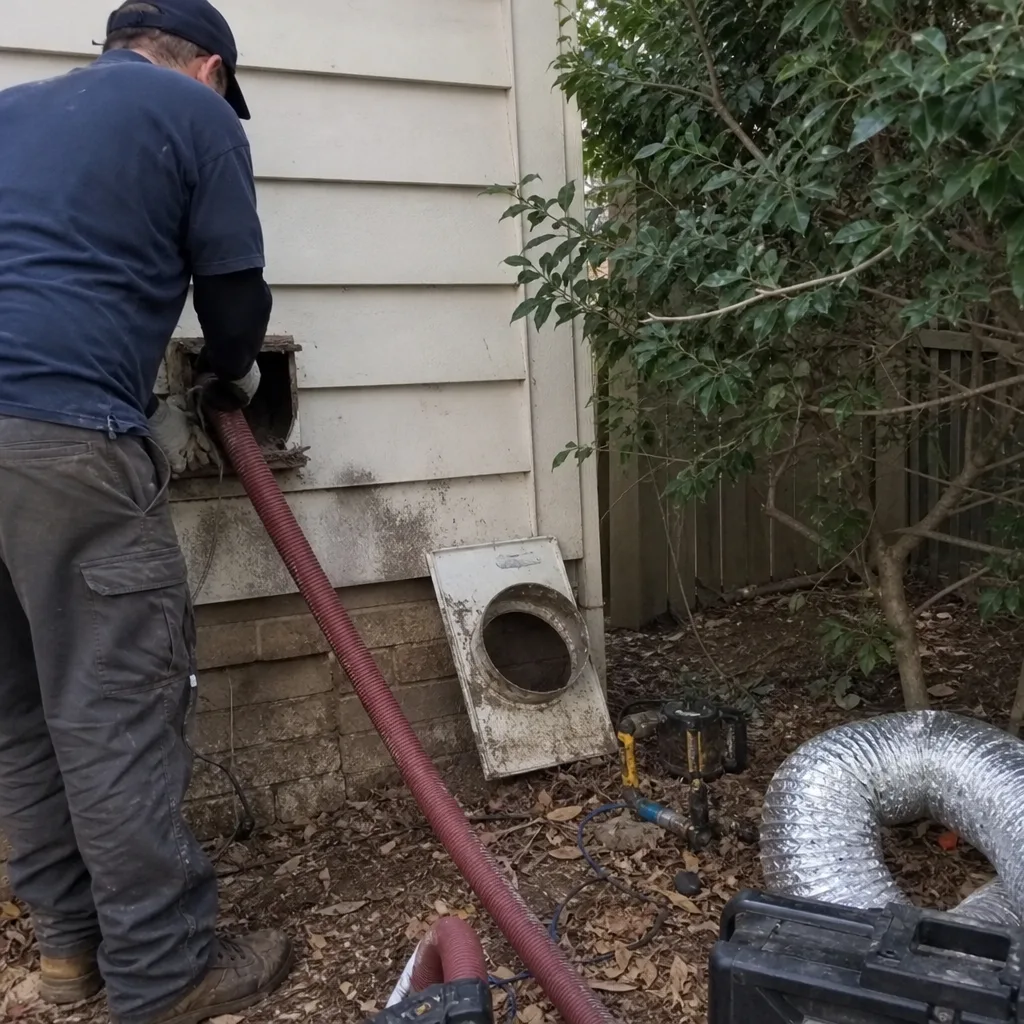 Before
 After
 Before
 After
When to Call a Professional
Call for a professional inspection when you’ve identified three or more warning signs in the same system, when the cloth test shows visible dark particles, or when you’ve had significant interior renovation work done in the last two months. Call sooner if you see visible mold near a register, if the musty smell doesn’t fade back to neutral by late September, or if your clothes dryer has gone from one cycle to two with no other change in the household routine. Also call if you’re buying a home in North Hills and the inspection report shows deferred maintenance on the HVAC system. Air Duct Cleaning North Hills offers free estimates in North Hills. Call (844) 443-4850. We answer 24/7. Fast dispatch from 7am to 7pm, Sunday through Friday.
Frequently Asked Questions
You need cleaning when you see three or more warning signs pointing to the same system: visible dust discharge from registers, uneven airflow between rooms, a musty smell on startup, or accelerated filter loading. No single sign is definitive, but combined signs almost always mean a contaminated duct system. A professional inspection confirms it before any cleaning takes place, so you’re never paying for a service you don’t need. Call (844) 443-4850 for a free estimate.
A musty smell that appears in June and fades by September is almost always a moisture management issue, not a debris problem. High summer humidity in North Hills keeps duct interiors and evaporator coils near the dew point, which feeds microbial growth even in a recently-cleaned system. The right fix combines cleaning and sanitizing with addressing the moisture source, which may mean a condensate line repair, a filtration upgrade, or sealing a duct that’s condensing in unconditioned space.
Yes. Clogged ducts and leaks force the blower to work against higher resistance, which drives up run time and increases wear on the blower motor and compressor. Sealed, clean ducts let the system move the same air with less effort. In our experience, the systems that see the largest efficiency improvement after cleaning are the ones that also had leaks sealed during the same visit, because the air was leaving the ducts before reaching the rooms.
Most homes benefit from cleaning every three to five years, but North Hills homes with pets, allergy sufferers, or recent renovation push toward the shorter end of that range. A system that smells musty on startup or produces visible discharge from registers needs cleaning regardless of how recently it was last done. The right interval is based on the system’s situation, not a fixed calendar.
Yes, and the window matters more than most homeowners realize. Drywall dust and insulation fibers settle into return and supply ducts within days of the work, and the best time to have them removed is between week two and week six after the job finishes. After that, particulates settle firmly against duct walls and, in a humid summer, can become a food source for microbial growth, which turns a simple cleaning into a cleaning-plus-sanitizing job.
Low quotes usually reflect less equipment, less time, and less scope. That means no rotary brush system, no negative-air capture, no return trunk cleaning, no sanitizing step, and often no leak inspection. The cleaning looks fine on the invoice but leaves the contamination in the system. We use professional-grade Rotobrush and Nikro equipment plus Abatement Technologies air scrubbers during sanitizing work, which is a fundamentally different process. Call (844) 443-4850 for a free estimate – estimates are free, and the written estimate sets the price.
The Bottom Line
Dirty ducts show themselves through a consistent pattern, not a single symptom. Dust returning to grilles within days of a filter change, weak airflow at far registers, musty smells on startup, and debris discharge after renovation all point to the same source, and collectively they mean the system is loaded. The North Hills climate adds its own twist: musty smells that appear in summer and fade by fall need moisture management, not just cleaning. The white cloth test tells you whether to call now or wait. And when the answer is “call,” the difference between a real cleaning and a cheap one is the equipment and the completeness of the visit. From the dryer vent to the return air plenum, one team handling the whole system is the way through it. Call (844) 443-4850. We answer 24/7. Fast dispatch from 7am to 7pm, Sunday through Friday.
Written by the team at Air Duct Cleaning North Hills.