
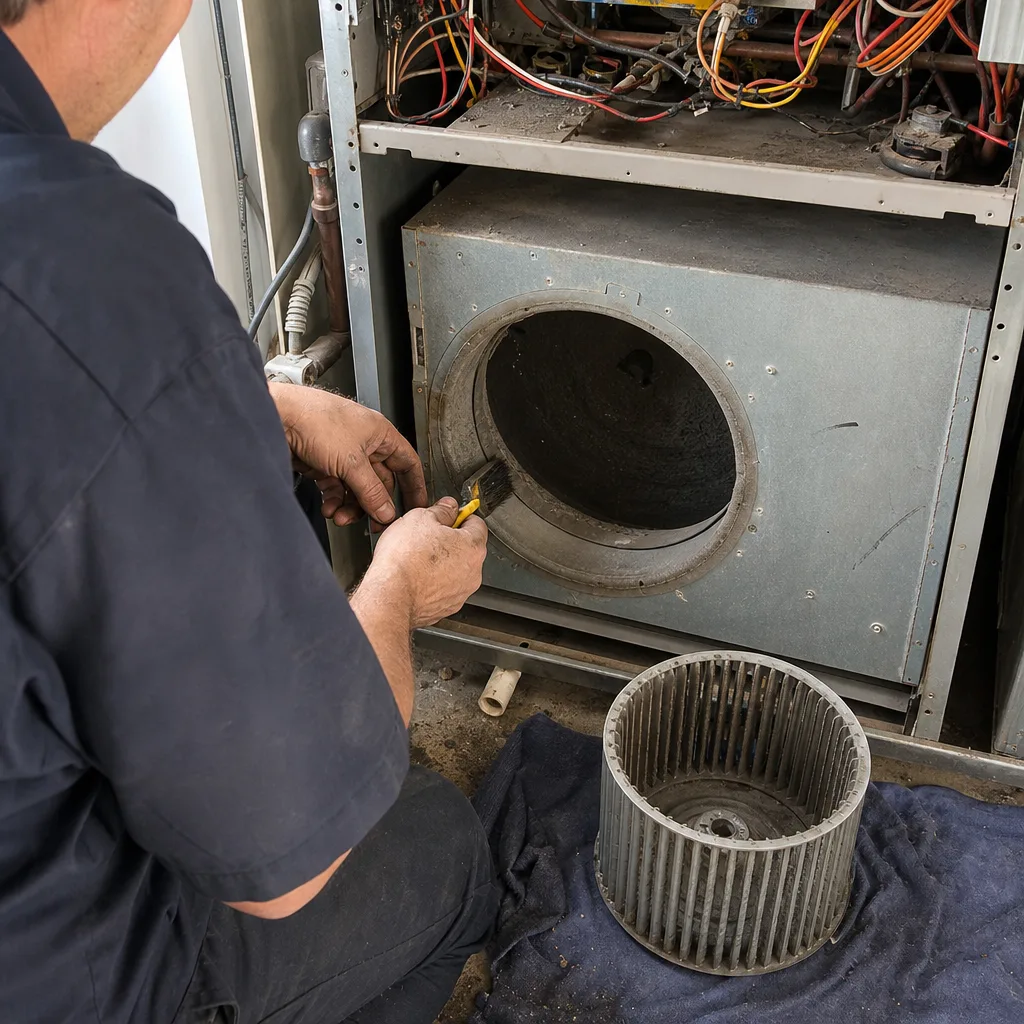
Last updated November 23, 2026
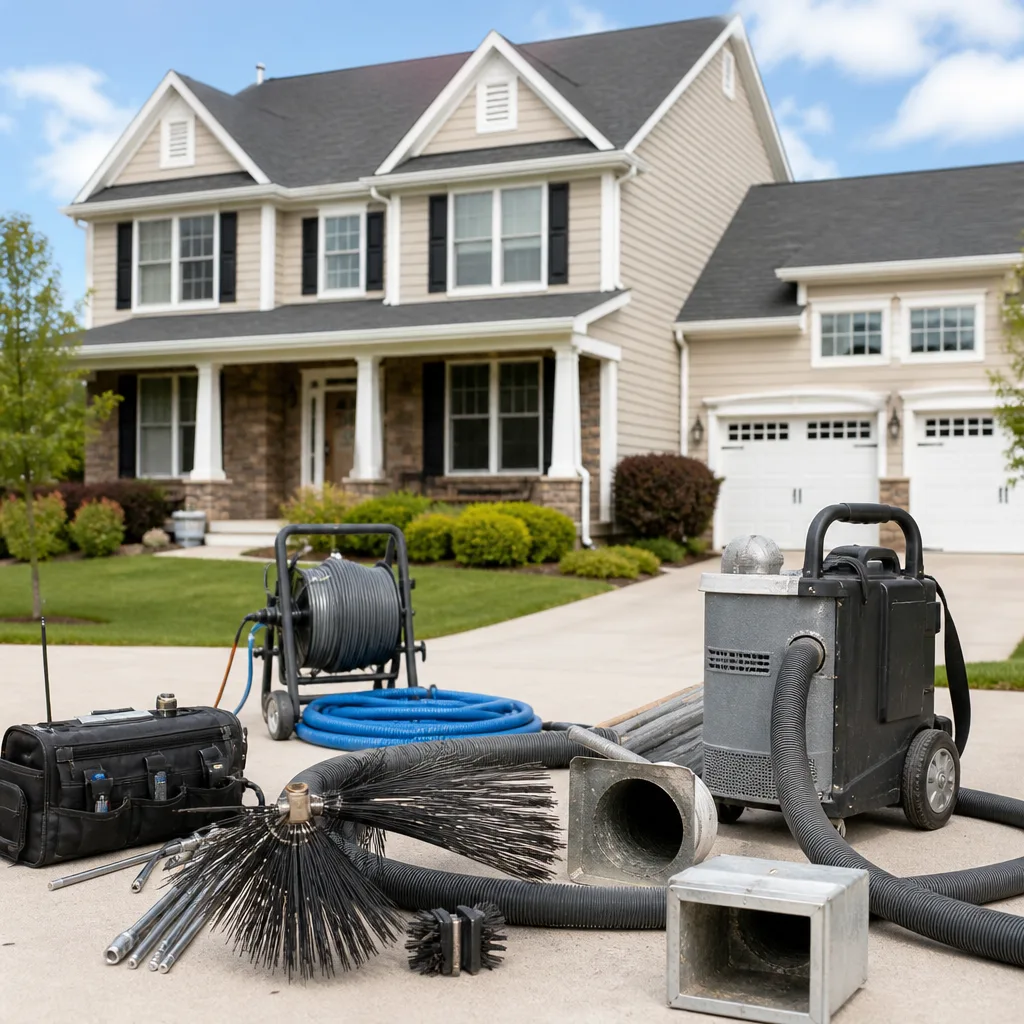 Whole-home duct cleaning
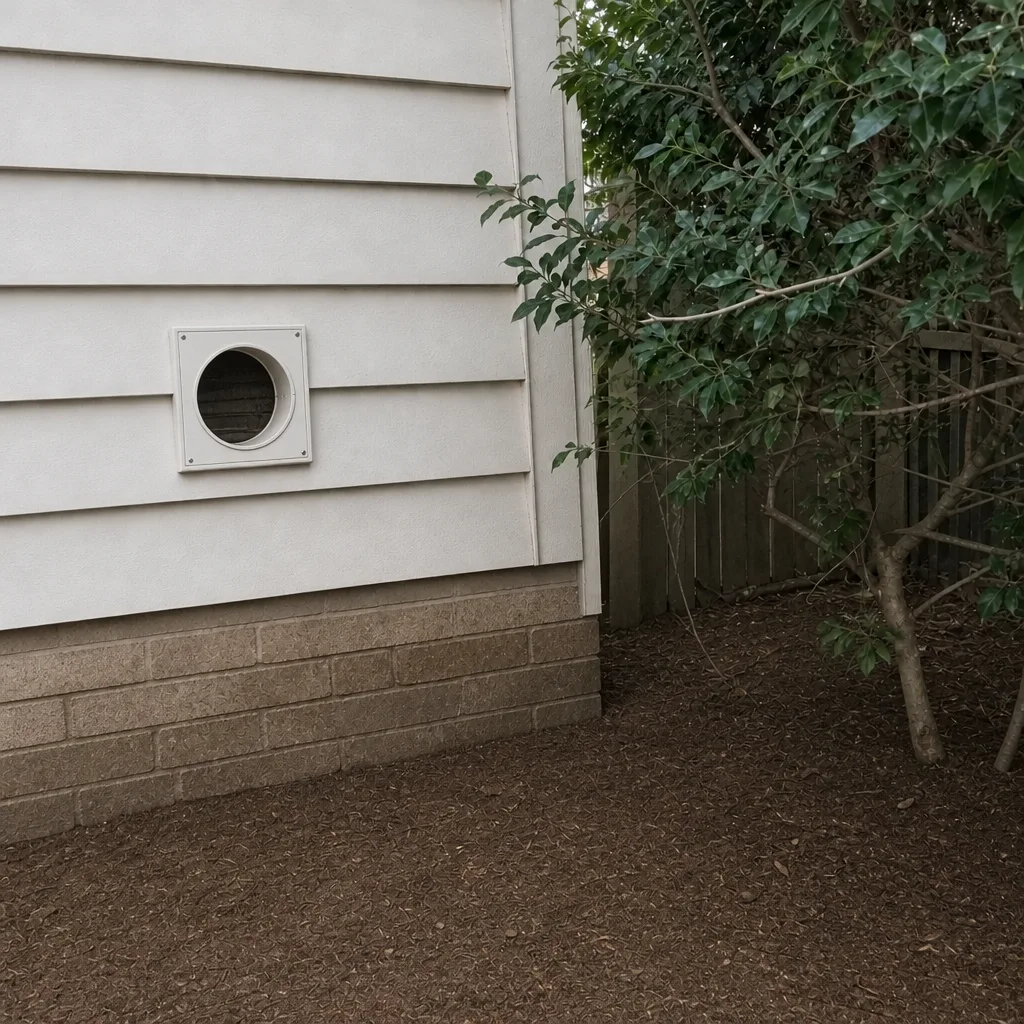
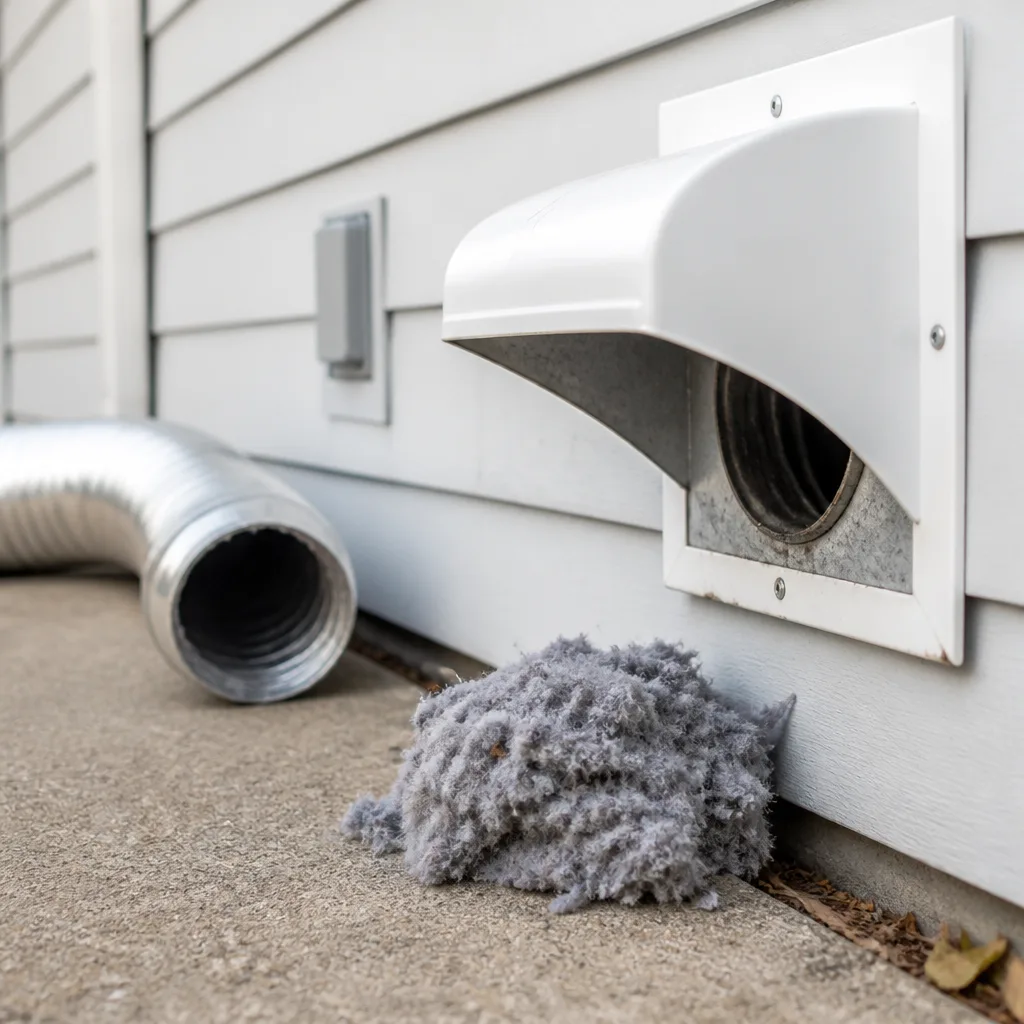 Dryer vent cleaning
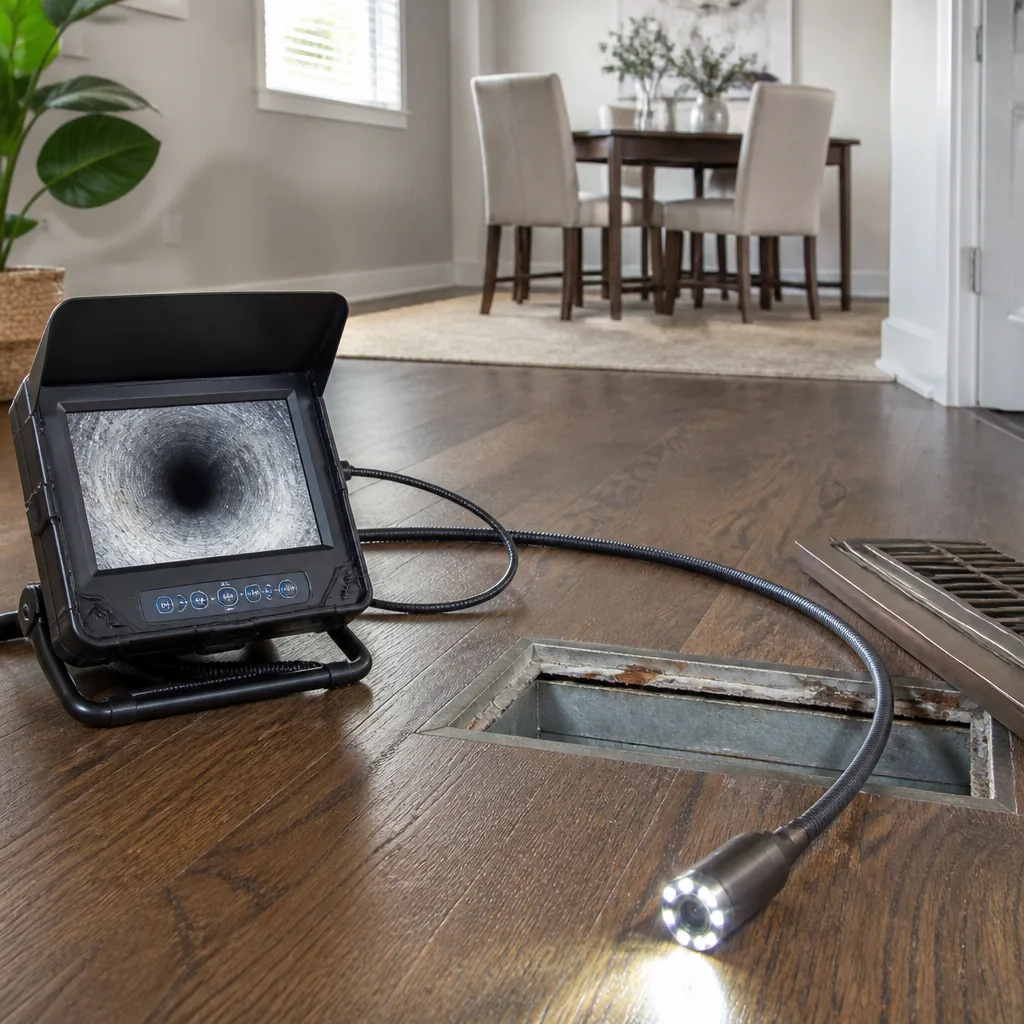 Camera inspection
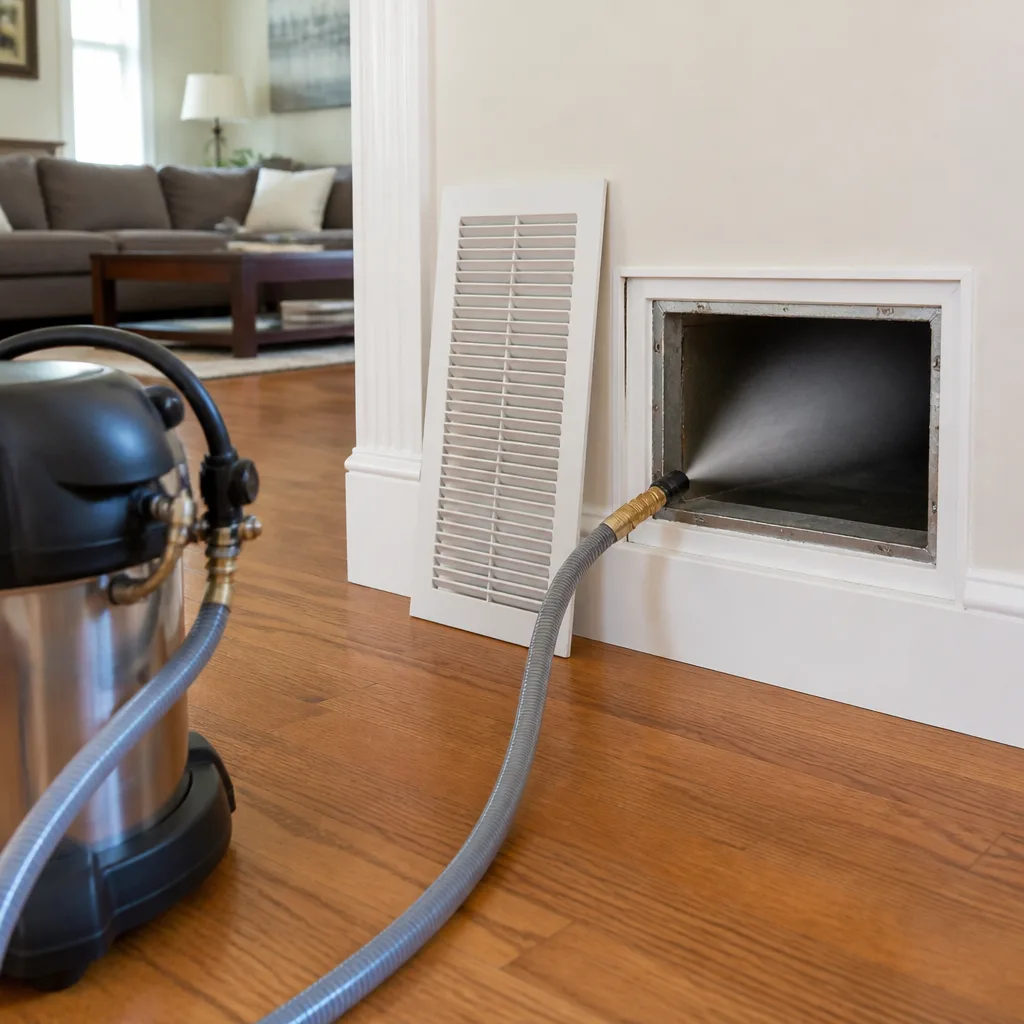 Sanitizing & deodorizing
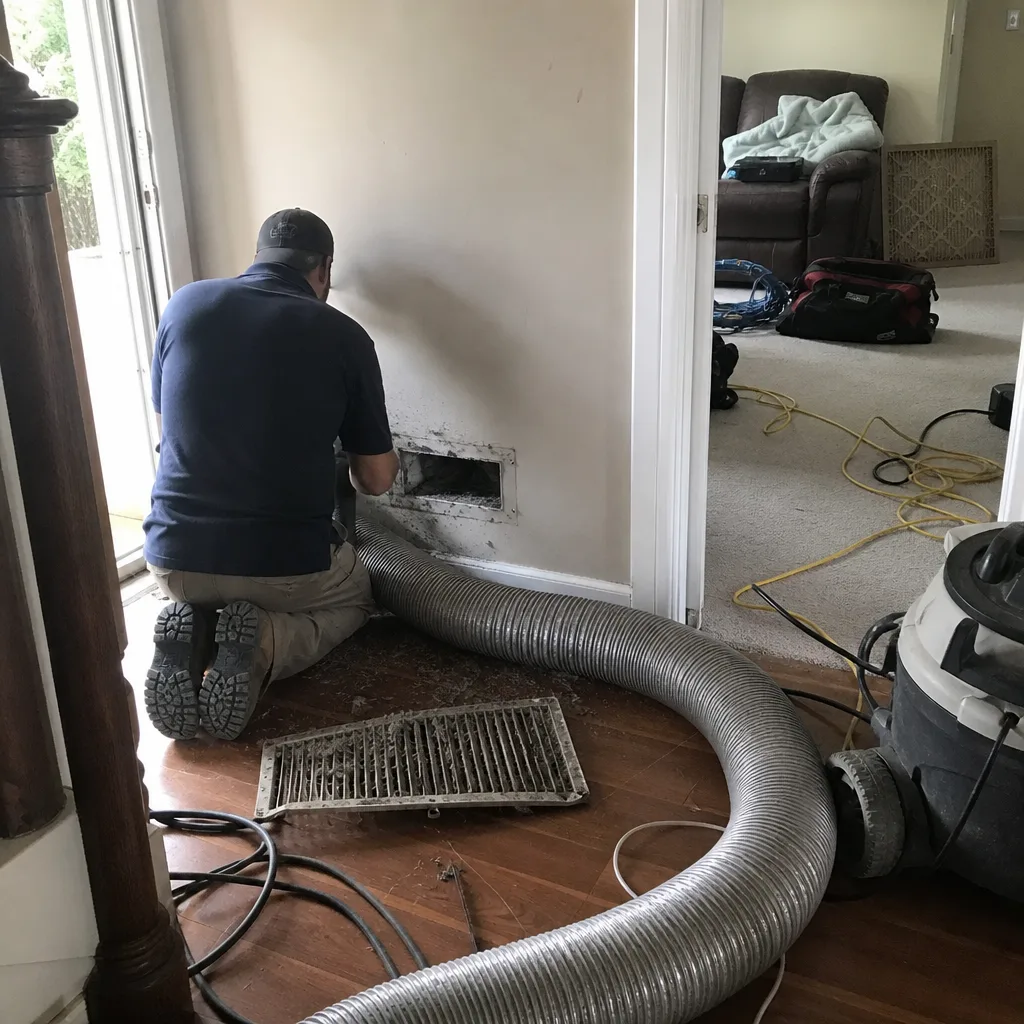
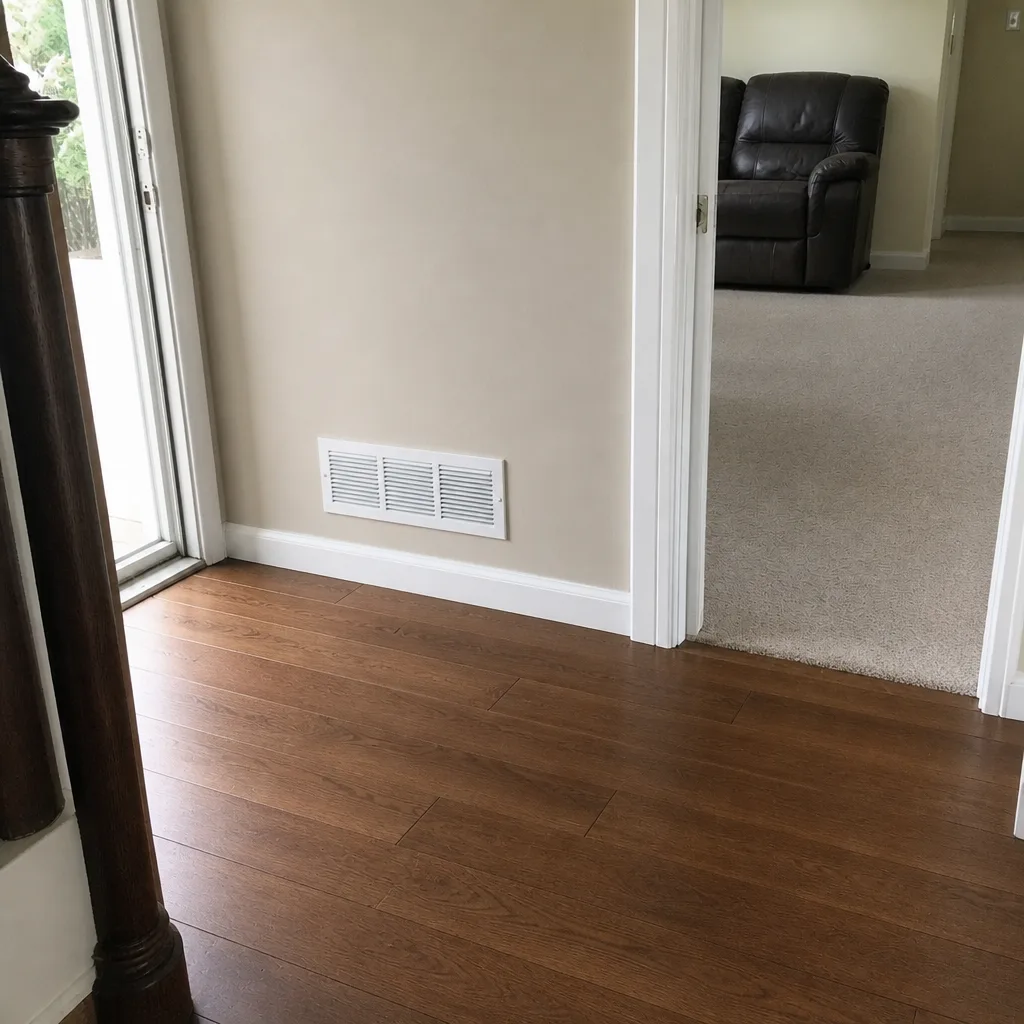
Whole-system duct and dryer vent check with before-and-after photos - you see exactly what came out of your vents
That "$99 whole-house special" is a bait ad - the real number appears once they are in your hallway, or the "clean" is a shop-vac at the register. We photograph the inside of your ducts before and after instead.
DIY vs Professional Air Duct Cleaning: The North Hills Homeowner’s Decision Guide
Most homeowners assume a shop-vac and a brush kit can handle duct cleaning if they’re patient enough. That intuition gets the physics backward. A consumer vacuum pushes air into the duct run while it pulls, generating positive pressure that can push settled debris toward your living space faster than the filter bag can capture it. Professional equipment does the opposite: it creates negative pressure, so the entire duct system is under suction before a brush ever touches the walls. Understanding that one difference changes how you think about every cleaning decision. This guide walks through exactly what you can do yourself in North Hills, where DIY reaches its honest limit, and how to compare the real cost of each path without the fear-based sales pitch.
Quick Answer
DIY air duct cleaning works for light maintenance on a system that was professionally cleaned recently: washing grilles, wiping reachable duct segments, upgrading filters, and checking register airflow. It fails on systems that haven’t been cleaned in over five years, after renovation, with confirmed mold or moisture, or with vermin debris, because consumer vacuums can’t create the negative pressure needed to capture what they loosen. For those cases, professional mechanical cleaning with equipment like Rotobrush and Nikro is the only method that removes contamination rather than redistributing it.
Styles & brands we work with
- Whole-home duct cleaning
- Dryer vent cleaning
- Camera inspection
- Sanitizing & deodorizing
Table of Contents
- Why Airflow Direction Is the Whole Ballgame
- The Equipment Gap: What Professionals Actually Use
- What You Can Legitimately Do Yourself
- The Four Scenarios Where DIY Fails
- The Hidden Cost of a Failed DIY Attempt
- Cost, Time, and Outcome: An Honest Comparison
- How to Decide for Your North Hills Home
- Common Mistakes to Avoid
- When to Call a Professional
- Frequently Asked Questions
Why Airflow Direction Is the Whole Ballgame
A duct cleaning job succeeds or fails on one variable: whether the debris you loosen gets captured or released. Consumer vacuums and professional rigs differ less in raw suction than in where that suction points. When you push a brush into a floor register with a shop-vac attached, the vacuum is pulling from the register opening while your brush disturbs debris deeper in the run. Air rushes toward the open register to feed the vacuum, but it also carries loosened particles with it, and some of that escapes into the room before it reaches the hose.
Professional systems work in the opposite direction. With Air Duct Cleaning North Hills and similar full-service operations, technicians first seal the return and supply openings, then connect a high-powered negative-air machine like a Nikro unit to the main trunk. That machine pulls the entire duct system into negative pressure before cleaning begins. Every register is under suction. When a rotary brush loosens debris from the duct wall, air is already moving toward the collection point, not toward your living room.
That’s why “I have a strong shop-vac” doesn’t solve the problem. The tool isn’t weak; it’s aimed the wrong way. Negative-pressure cleaning is a system-level approach, not a stronger version of what you’d do by hand.
Why North Hills Homes Feel This More Than Most
North Hills sits in the Piedmont, where summers run humid and cool-season heating dries the house out. That seasonal swing pushes duct systems through repeated expansion and contraction, which loosens the dust and debris already settled on duct walls. By the time a system is five or six years old, that loose material is substantial. In a humid climate, it also has more opportunity to clump and stick, which makes it harder to dislodge with consumer suction alone.
The Equipment Gap: What Professionals Actually Use
Professional duct cleaning uses two categories of equipment that have no consumer equivalent. The first is a negative-air machine, sometimes called an air scrubber or HEPA vacuum, that pulls the entire duct system into negative pressure before cleaning starts. The second is a rotary brush system, like Rotobrush, that agitates the duct walls mechanically while the vacuum pulls the loosened material into a collection bag.
Here’s how the equipment stacks up:
- Shop-vac with brush attachment: Positive or neutral pressure, limited reach (usually only the first few feet of a run), no sealed system, and filter bags that clog fast on fine dust. Reasonable for surface dust at the register.
- Consumer duct cleaning kit (brush on a flexible rod): Can reach further than a shop-vac attachment, but still no sealed system and no negative pressure. The rod may dislodge debris it can’t capture.
- Rotobrush rotary brush system: A professional tool designed specifically for duct interiors. It spins a brush head through the duct while the attached vacuum pulls debris into a HEPA-filtered collection unit. The system seals to the duct opening so the whole run is under suction.
- Nikro negative-air machine: Places the entire duct system under controlled suction before any cleaning occurs. Combined with a rotary brush, it captures debris rather than just loosening it.
- Abatement Technologies air scrubbers: Deployed during sanitizing work to maintain air quality throughout the cleaning process, capturing airborne contaminants in the work area.
The equipment list matters because it tells you what a job involves, not just what it costs. An operator who shows up with a shop-vac and a hose is doing a different job than one who seals the system and runs a negative-air machine first. Ask before you book. For a closer look at the full professional process, our air duct cleaning page walks through what each step accomplishes.
What You Can Legitimately Do Yourself
There are real maintenance tasks a homeowner can do well, and they make a professional visit last longer between cleanings. These are the tasks that don’t require negative pressure because they operate at the register, not deep inside the run.
- Remove and wash the grilles. Pop the supply and return grilles off, wash them in a utility sink or outdoors with a hose, and let them dry fully before reinstalling. Grilles collect a surprising amount of surface dust, and washing them is safe, effective, and takes ten minutes per grille.
- Wipe accessible duct segments. In an unfinished basement or attic, the first foot or two of duct run may be reachable through an access panel. Wiping that visible section with a damp cloth removes dust that would eventually travel further.
- Upgrade the filter. A properly sized, correctly rated filter is the highest-impact thing most homeowners neglect. If you’re not sure which filter your system takes, a technician can tell you on a routine visit. Honeywell and Aprilaire both make filters and air-quality components that many North Hills systems are already set up to accept.
- Check register airflow with a tissue or smoke pencil. Hold a tissue near each supply register while the system runs. Weak or uneven flow across registers is a signal worth investigating, though it doesn’t tell you whether the cause is a clog, a leak, or an undersized return.
- Vacuum the return grille face and the surrounding floor. Dust near the return pulls in faster than dust in other rooms. Keeping that zone clean reduces what gets pulled into the system.
These tasks are honest maintenance. They don’t clean the inside of the duct runs, and they don’t address contamination that’s already deeper in the system. But they extend the interval between professional cleanings and help you catch problems early.
The Four Scenarios Where DIY Fails
Some duct conditions can’t be solved with a shop-vac no matter how much time you spend. In each of these four situations, the debris load or the material itself is beyond what consumer tools can capture, and a failed attempt can make the next professional visit harder.
1. Post-Renovation Debris
Drywall dust, sawdust, insulation fibers, and construction grit migrate into duct runs during any renovation, even with plastic sheeting up. That material is fine and dense, and it clogs consumer filters almost instantly. Worse, it settles into the low points of the duct run where positive-pressure cleaning can’t reach. Professional negative-pressure cleaning is the only method that pulls this material out without spreading it.
2. Confirmed Mold or Moisture Intrusion
If you can see visible mold near a register, smell a musty odor that gets worse when the system runs, or know the system has had water intrusion, professional service is the only safe path. Mold spores disturbed by a shop-vac can become airborne inside the home. Cleaning, sanitizing, and sealing need to happen as one process with air scrubbing in place. Our HVAC cleaning service covers the evaporator coil and condensate pan, which are common hidden moisture sources.
3. Vermin Debris
Rodent droppings, nesting material, and insect debris inside duct runs are a health concern and require professional handling. This material should never be disturbed with consumer equipment. Negative-pressure systems capture it safely, and technicians wear appropriate protective equipment.
4. Systems Not Cleaned in Over Five Years
A system that hasn’t been professionally cleaned in more than five years has a debris load that has likely settled into every branch run, the main trunk, and often the supply plenum. That’s too much for consumer suction to move at the scale it needs to move. The first professional cleaning on a neglected system is also the one where the negative-pressure advantage matters most.
The Hidden Cost of a Failed DIY Attempt
The most expensive duct cleaning is the one you shouldn’t have tried. When a homeowner runs a shop-vac and brush into a contaminated duct run, two things happen. First, the debris gets disturbed, and not all of it gets captured. Some of it settles further down the run, in the low points and the branch transitions where consumer tools can’t reach. Second, the airborne fraction of that debris ends up in living spaces. A recent cleaning by the homeowner followed by a musty smell and increased dust is a common pattern.
When a professional does eventually arrive, the job is often more involved because the contamination has been redistributed. In our experience, techs spend more time on the branch runs and need longer on the air scrubbing step when a failed DIY attempt preceded the visit. This is not a scare tactic. It’s simply what happens when positive pressure meets settled contamination: the same dust gets moved twice, and the second movement is the one that costs more to clean up.
Our technicians have up to 12 years of experience, and the pattern is consistent enough that a technician can often tell when a system has had a home cleaning attempt that didn’t go well, just from where the debris collects.
Cost, Time, and Outcome: An Honest Comparison
Here’s the straightforward comparison most decision guides avoid. Rather than compare a $40 shop-vac brush kit against a professional cleaning, compare what each approach actually achieves and over what time frame. Professional air duct cleaning in North Hills is priced per system by a written estimate, not per register, and the estimate is set before work starts.
| Task | Who Does It | Time | What It Achieves |
|---|---|---|---|
| Wash grilles | Homeowner | 30-45 min | Removes surface dust at registers |
| Replace filter | Homeowner | 5 min | Improves ongoing filtration, reduces what enters the ducts |
| Wipe accessible duct near access panel | Homeowner | 15-30 min | Surface dust on reachable sections only |
| Shop-vac register cleaning | Homeowner | 1-3 hrs | Limited surface dust; can redistribute debris if used deep in the run |
| Brush-kit cleaning of a branch run | Homeowner | 2-4 hrs | Inconsistent; debris capture unreliable without negative pressure |
| Full-system negative-pressure cleaning | Professional | Scheduled service | Removes settled debris from branch runs, main trunk, plenum; paired with air scrubbing |
| Cleaning plus sanitizing | Professional | Scheduled service | Removes contamination and neutralizes surface biological growth |
| Cleaning plus duct repair and sealing | Professional | Scheduled service | Removes contamination and closes leaks reducing airflow and pulling in dust |
Notice that homeowner tasks are all real, useful work, and none of them duplicate what a professional cleaning accomplishes. They’re complementary, not competing. A common rational approach: homeowners handle grilles and filters, and a professional handles the duct interior on a maintenance schedule appropriate to the system’s age and history. For a broader look at the full professional menu, our main page and the dryer vent cleaning service cover two more systems that benefit from professional cleaning.
Where Leak Detection Fits In
One cost that often gets overlooked is duct leakage. If a run has come loose at a joint, or the plenum has a gap where it meets the air handler, positive-pressure cleaning in the living space doesn’t help. The leak pulls unconditioned air in and pushes conditioned air into the attic or crawlspace. Sealing those leaks is a separate task from cleaning, and one of the advantages of a full-service provider is that duct repair and sealing can happen in the same visit as the cleaning. A company that only cleans will tell you about the leak and leave you to find another trade. A full-service provider closes the loop.
How to Decide for Your North Hills Home
Here’s a simple decision framework based on system age, history, and current signals:
- Ask when the system was last professionally cleaned. If it was cleaned in the last 2-3 years and the system is running well, DIY maintenance is reasonable between visits.
- Check for signals of a real problem. Visible dust streaks at registers, musty odor when the system runs, uneven airflow, or increased dust in the home are signs that maintenance alone won’t solve.
- Consider your renovation history. Any renovation in the last 2 years should trigger a professional cleaning of the affected duct runs, especially if the work involved drywall or wood sanding.
- Check the duct material. Flex duct (common in older North Hills homes) traps debris more easily than rigid metal duct, and consumer cleaning is especially ineffective on flex runs because the brush can snag and tear the lining.
- Look at the return plenum above the air handler. The return plenum is often the most contaminated part of a residential system because it’s the final collection point before air enters the blower. Consumer tools never reach it.
- Rule out leaks before committing to cleaning. A professional visit that finds unsealed joints or a loose connection at the air handler should include repair, or the cleaning will be undone by new dust entering the system.
Most North Hills homeowners land in one of two camps: systems under 4 years old with recent professional cleaning, where DIY maintenance is genuinely appropriate; and systems older than 6 years or with any of the four red-flag scenarios above, where professional cleaning is the more efficient use of time and money. There’s a real middle zone, and a free estimate is the honest way to find out where you sit. The written estimate sets the final price, and you make the call: cleaning only, cleaning plus sanitizing, or cleaning plus repair and sealing.
Common Mistakes to Avoid
- Using a wet/dry shop-vac to clean deep duct runs. The shop-vac is pulling from the register while you push a brush deeper into the run. Debris you dislodge can be pushed toward the room, not into the vacuum. Work at the register only.
- Running a brush kit into flex duct. Flex duct has a foil or plastic inner lining that snags and tears on consumer brush heads. A torn liner creates a permanent debris trap and a leak that reduces your system’s efficiency. If your North Hills home has flex duct, skip the brush kit.
- Skipping the filter upgrade. This is the cheapest thing to get right and the most commonly neglected. A correctly rated filter keeps new debris from reaching the runs in the first place. Honeywell and Aprilaire both make filters and air quality components that fit most systems.
- Reaching for chemical air fresheners or sprays inside the duct system. They mask odor temporarily without addressing the source, and some leave residue that makes subsequent professional cleaning harder. Musty odor in a duct system is a signal to investigate, not to cover up.
- Hiring the low-bid provider who shows up with a shop-vac and a coupon. If the equipment doesn’t include negative-air machines and rotary brush systems, the service you’re buying isn’t the same service as the one described on this page. Ask about equipment before booking.
- Assuming all airflow problems are duct clogs. In North Hills, a common false cause is a mis-sized return or a closed damper, both of which no amount of duct cleaning will fix. A technician checking airflow should rule these out first.
- Cleaning ducts without checking the HVAC components. The blower wheel, evaporator coil, and condensate pan are where much of the contamination originates. Cleaning the ducts while leaving these installed is a partial job. Ask whether the service includes the air handler.
When to Call a Professional
Call for professional cleaning when your duct system hasn’t been serviced in more than five years, when you’ve had renovations that involved drywall or wood dust, when you smell mustiness that worsens when the system runs, when you see visible debris or droppings around registers, or when you suspect a leak. Call if you’re unsure. Our technicians have up to 12 years of experience and can diagnose what’s happening on a single visit, whether that’s cleaning, sanitizing, or duct repair and sealing. Air Duct Cleaning North Hills offers free estimates in North Hills. We answer 24/7, with fast dispatch from 7am to 7pm, Sunday through Friday, and we’re closed Saturday. Call (844) 443-4850 for a free estimate.
Frequently Asked Questions
Air duct cleaning in North Hills is priced per system by a written estimate, not per register, and the estimate is set before work starts. Whole-system ranges depend on duct layout, system size, whether the air handler is included, and whether sanitizing or sealing is part of the job. Call (844) 443-4850 for an exact quote. Estimates are free.
You can do register-level maintenance with a shop-vac: washing grilles, wiping accessible duct segments, and replacing the filter. You cannot effectively clean the interior of a duct run with a shop-vac because consumer vacuums don’t create the negative pressure needed to capture loosened debris. For any system that hasn’t been cleaned in over five years, professional cleaning is the only method that removes settled contamination.
Cheap quotes are usually priced for a different service than what a full-system cleaning involves. If the provider isn’t using negative-air machines and rotary brush systems, the job is register-level surface cleaning, not mechanical cleaning of the duct interior. Ask about equipment before booking. Our technicians use Rotobrush and Nikro systems and will walk through the process before work starts.
You’ll know by what’s visible before and after. Grilles and registers are removed and washed. Debris is captured, and the collection bags show what came out. Before-and-after photos of your own ducts are part of the service. You’ll be able to see the difference at the register, not just take our word for it.
For most North Hills homes, professional cleaning every 3-5 years is a reasonable maintenance interval. Homes with pets, recent renovation, or a household member with allergies often benefit from more frequent cleaning. Systems with confirmed moisture intrusion or a failed DIY attempt may need an immediate follow-up visit. A free estimate will help you settle on the right interval for your system.
Yes. The Piedmont’s humid summers and dry heating season push duct systems through repeated expansion and contraction, which loosens settled debris. Homes in this region often see more debris accumulation in the low points of a duct run than homes in a stable dry climate. That makes the 3-5 year professional cleaning interval more meaningful here than a national average would suggest.
Sometimes. Musty odor usually traces to moisture, and moisture often comes from the evaporator coil, condensate pan, or a leak in the duct run. Professional cleaning combined with sanitizing and duct sealing addresses these sources. If the moisture source is a coil or drain issue, HVAC cleaning needs to be part of the job. A technician on a diagnostic visit can trace where the moisture is coming from.
A full-system cleaning covers supply and return ducts, the main trunk, the supply plenum, and often the air handler components. It includes register and grille removal and washing, mechanical cleaning with negative pressure, and collection bag disposal. Sanitizing and duct repair are available as part of the same visit. From the dryer vent to the return air plenum, one team handles the whole airflow system. Call (844) 443-4850 for a free estimate on your North Hills home.
The Bottom Line
DIY air duct maintenance is worthwhile on a recently serviced system: washing grilles, wiping reachable duct segments, upgrading filters, and checking register airflow. These tasks are real, they help, and they extend the interval between professional cleanings. What DIY cannot do is match the equipment a professional brings, because the entire advantage comes down to airflow direction, not suction strength. Consumer vacuums push air into the duct run while they pull. Negative-pressure machines like Nikro and rotary brush systems like Rotobrush are designed to capture what they loosen, not redistribute it. For systems not cleaned in over five years, after renovation, with moisture or mold, or with vermin debris, professional cleaning is the only effective option. Air Duct Cleaning North Hills handles duct cleaning, dryer vent cleaning, HVAC cleaning, air quality and sanitizing, and duct repair and sealing as one team, so a leak found during cleaning gets fixed before the technician leaves. Call (844) 443-4850 for a free estimate. We answer 24/7, with fast dispatch from 7am to 7pm, Sunday through Friday, and we’re closed Saturday.
Written by the team at Air Duct Cleaning North Hills.
See the difference
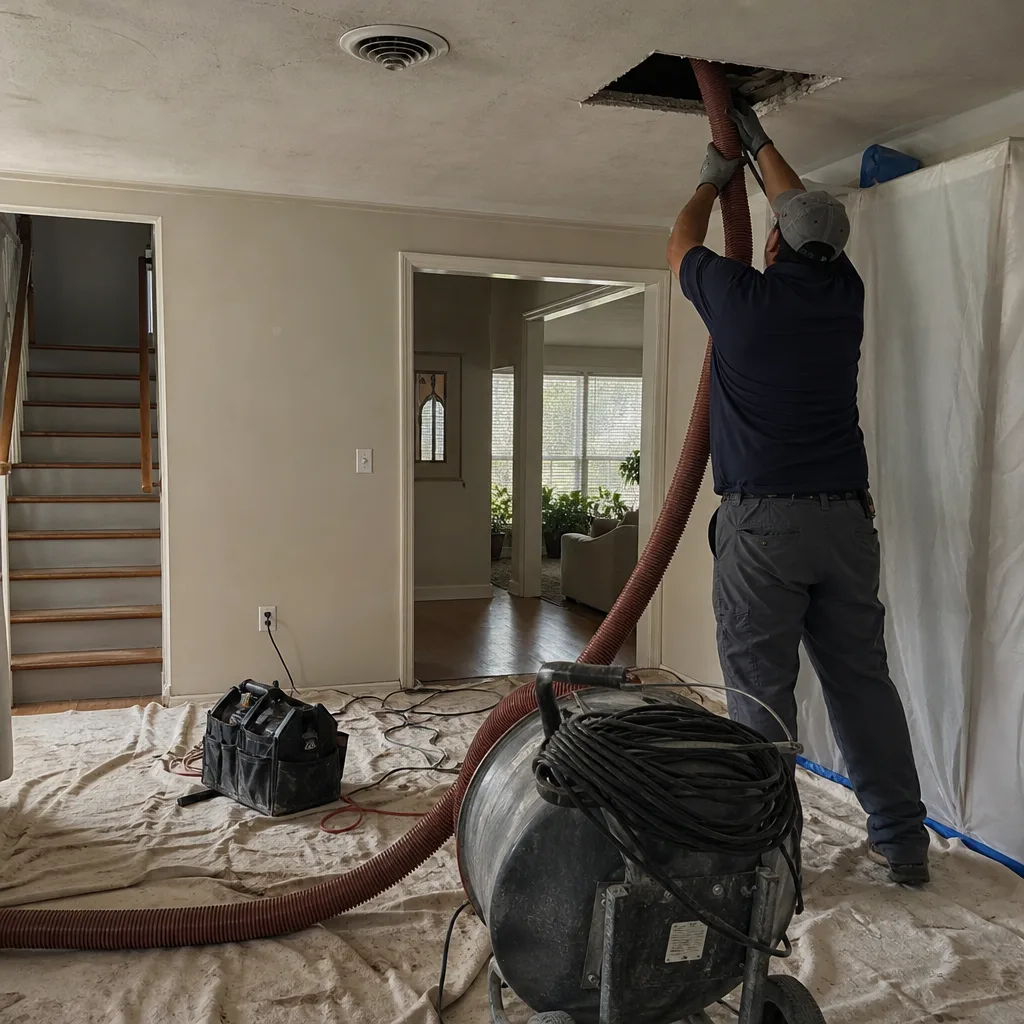 Before
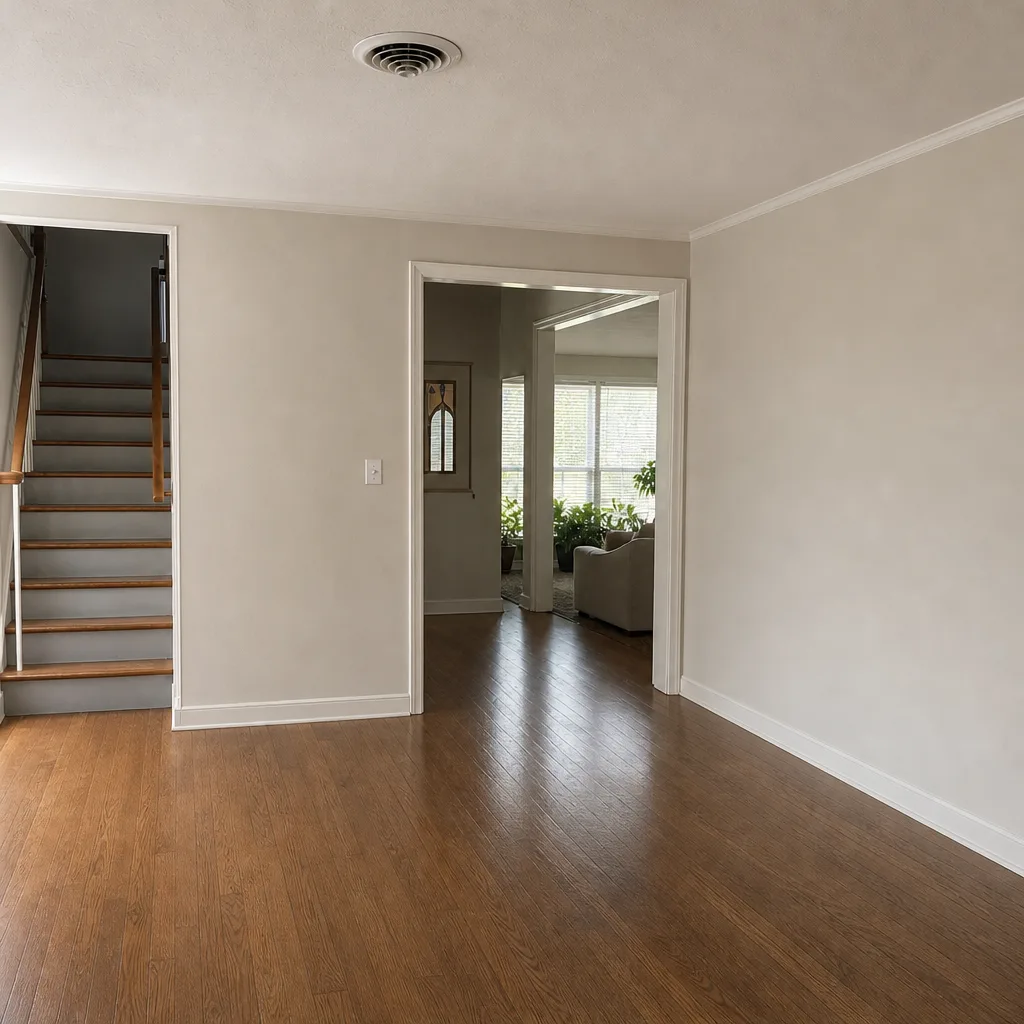 After
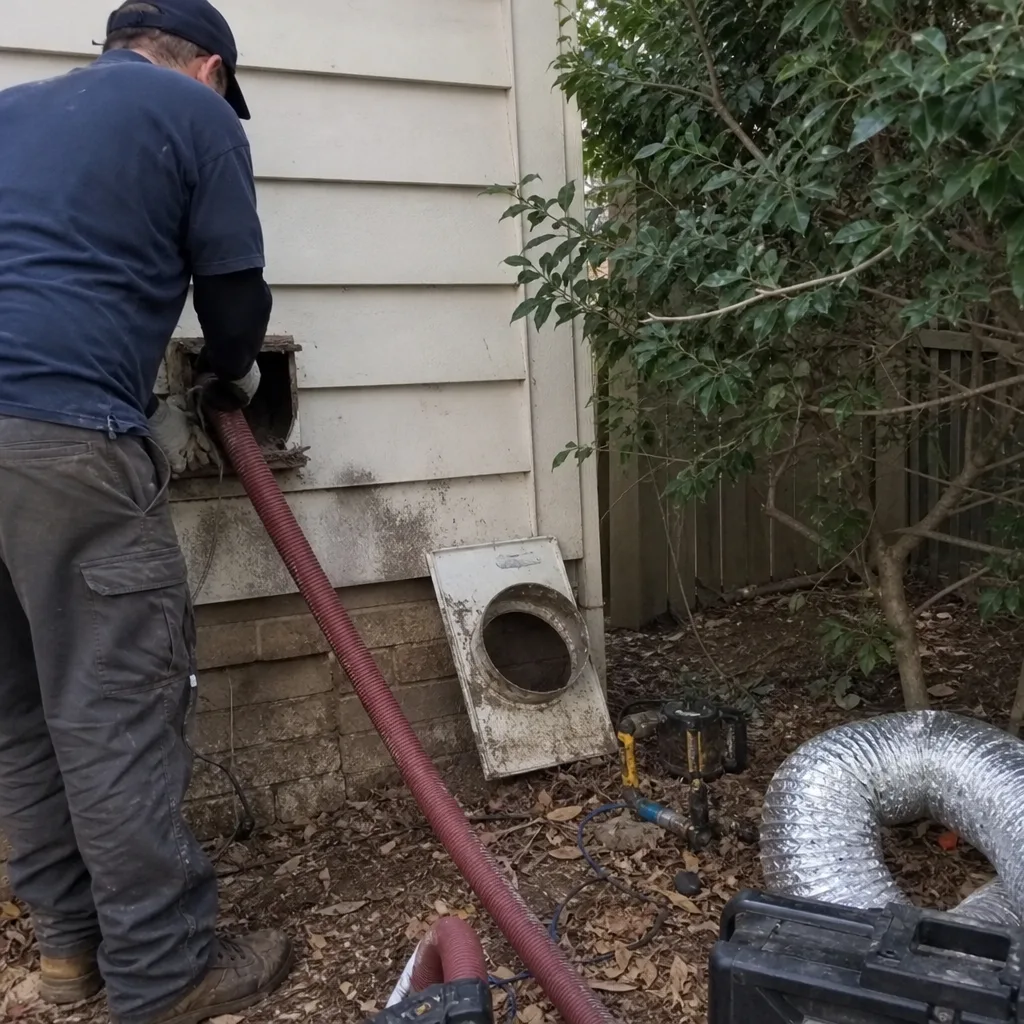 Before
 After
 Before
 After