
Last updated November 23, 2026
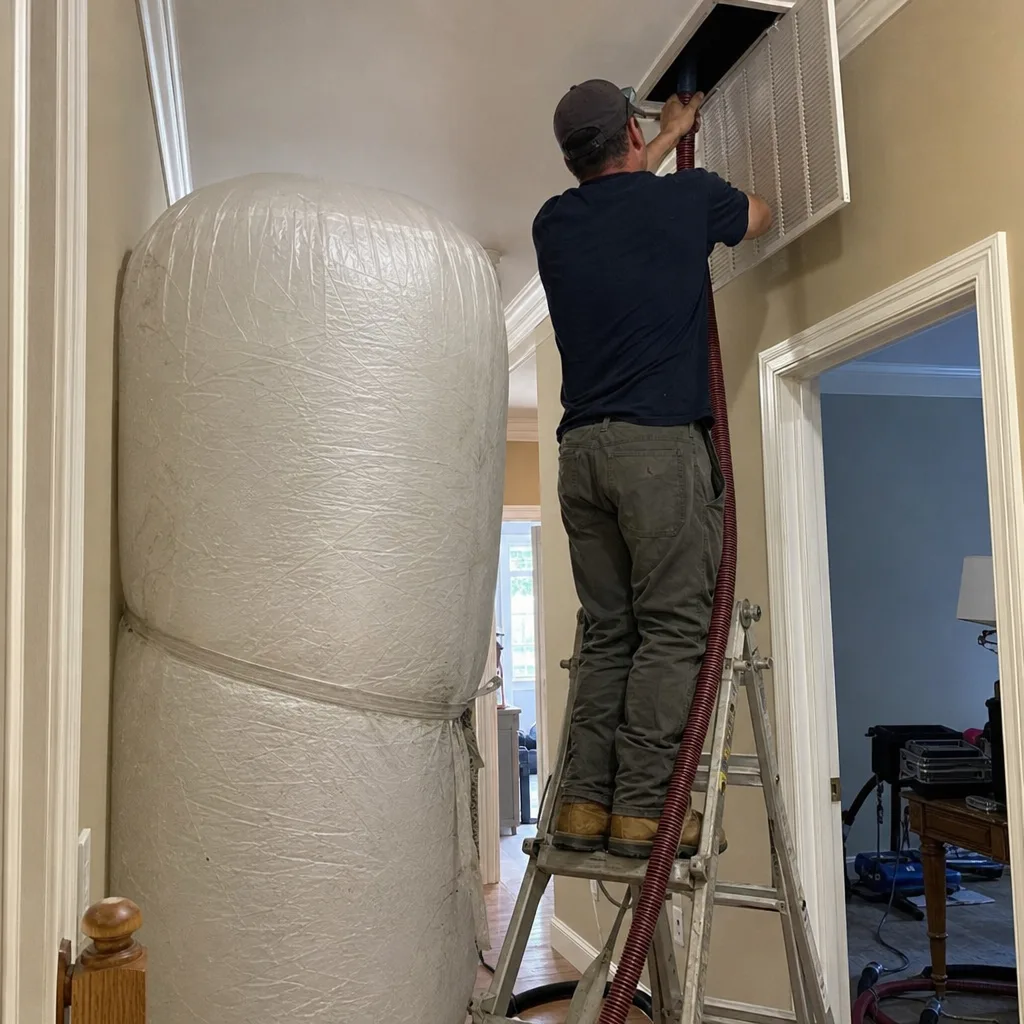
 Whole-home duct cleaning
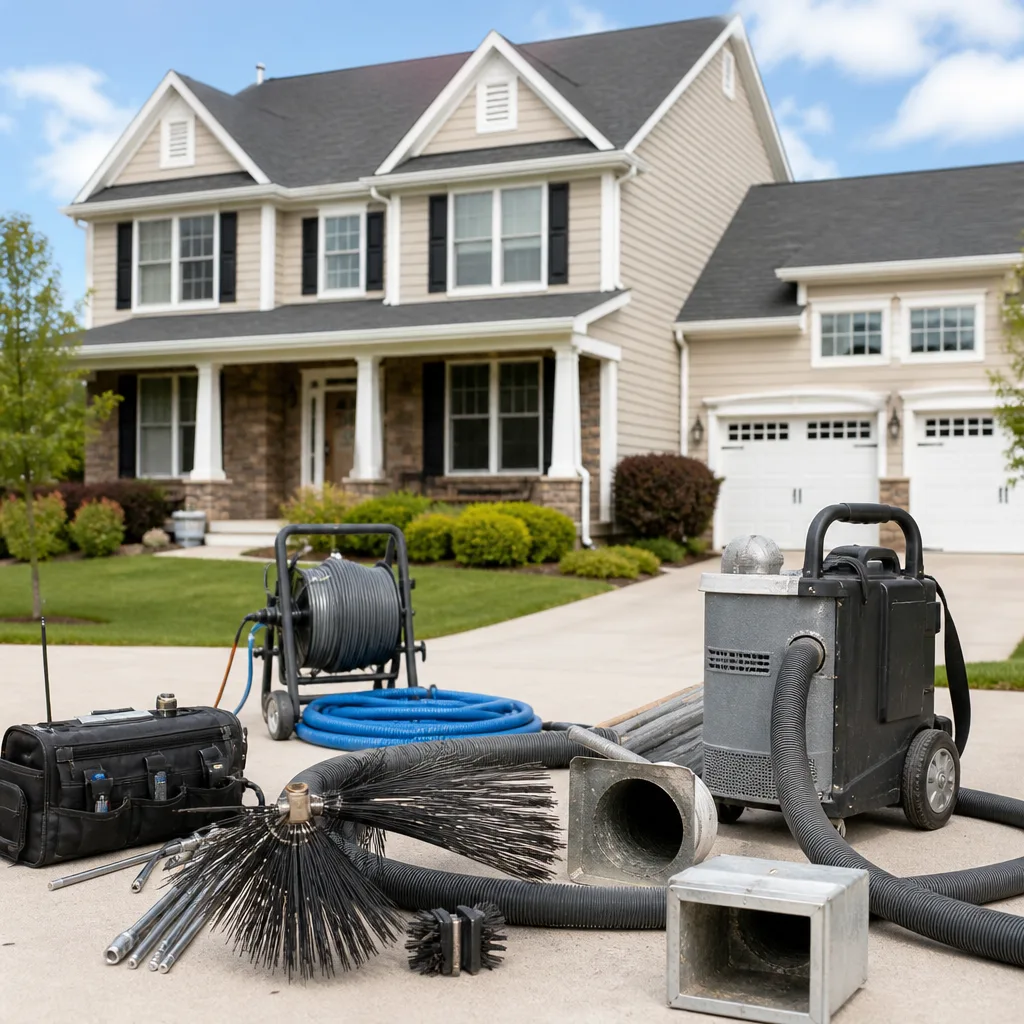
 Dryer vent cleaning
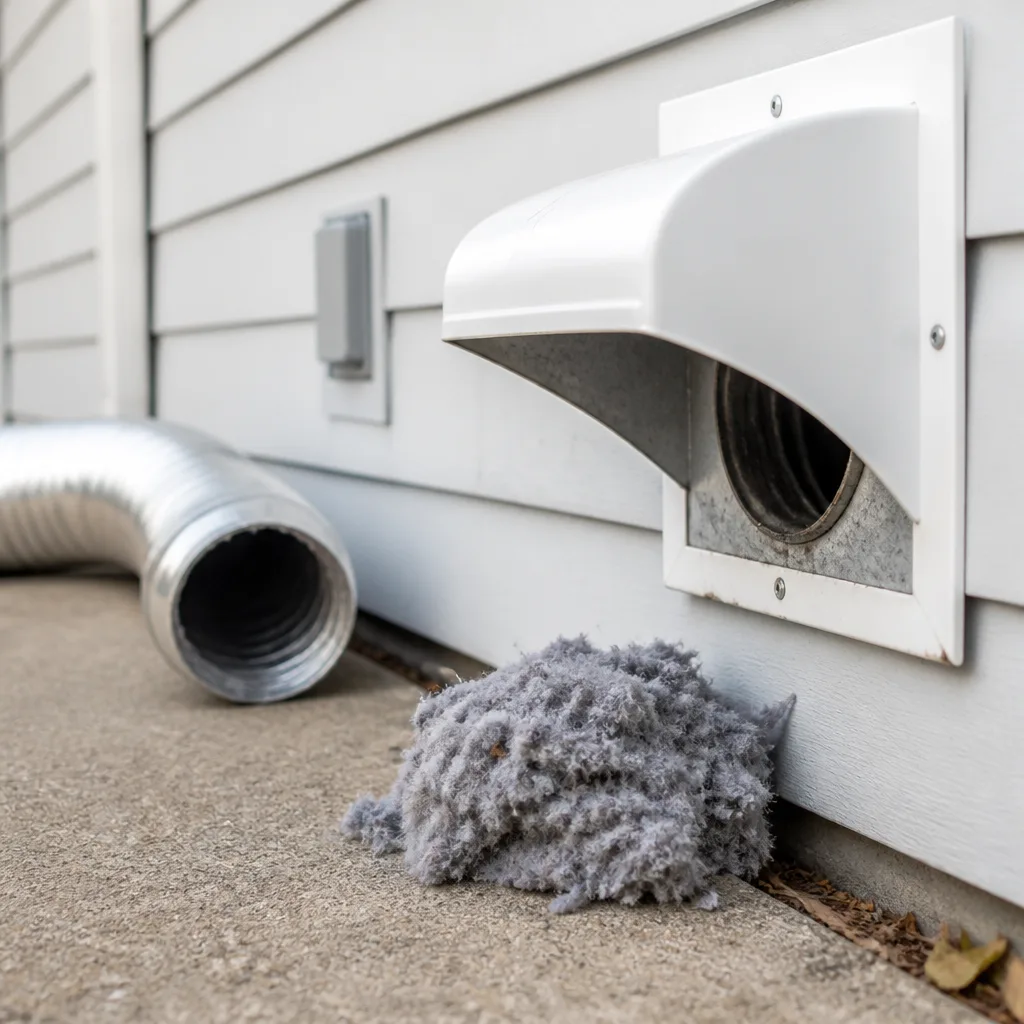
 Camera inspection
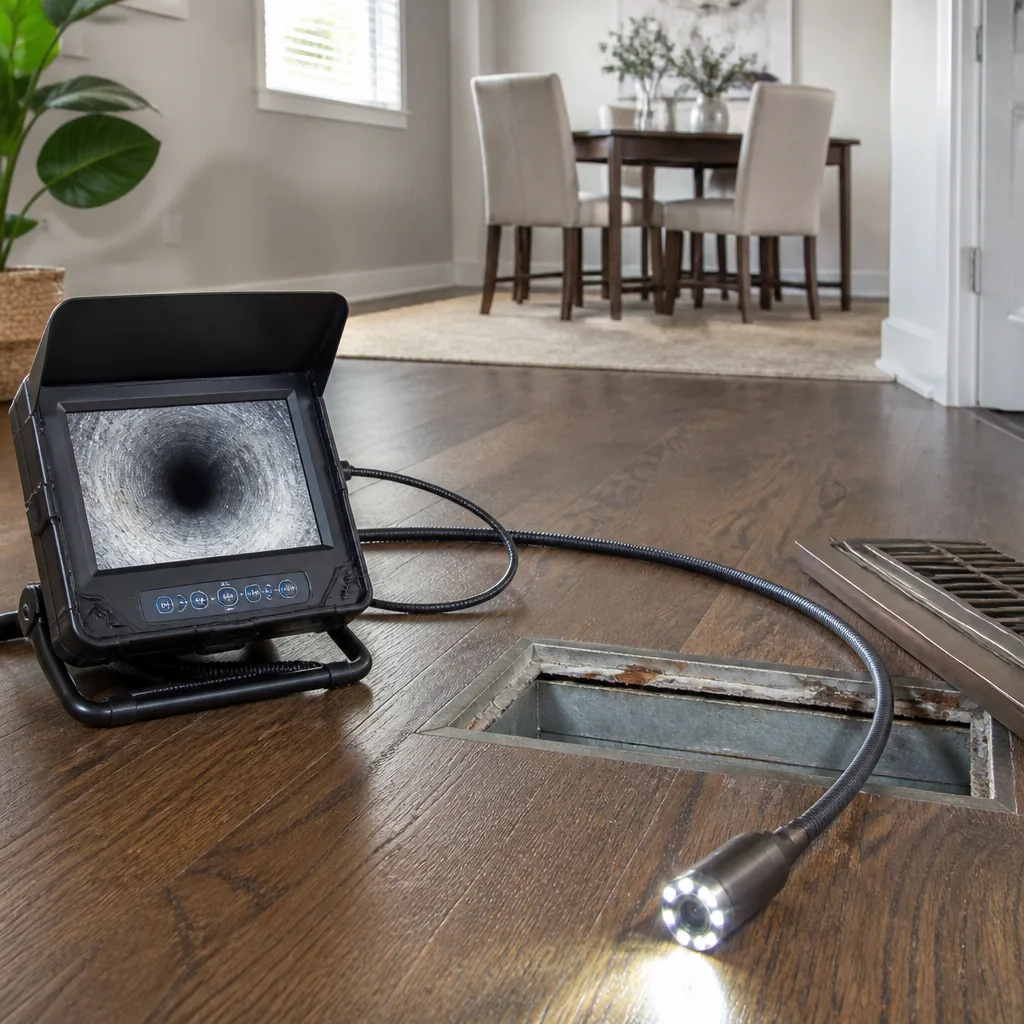
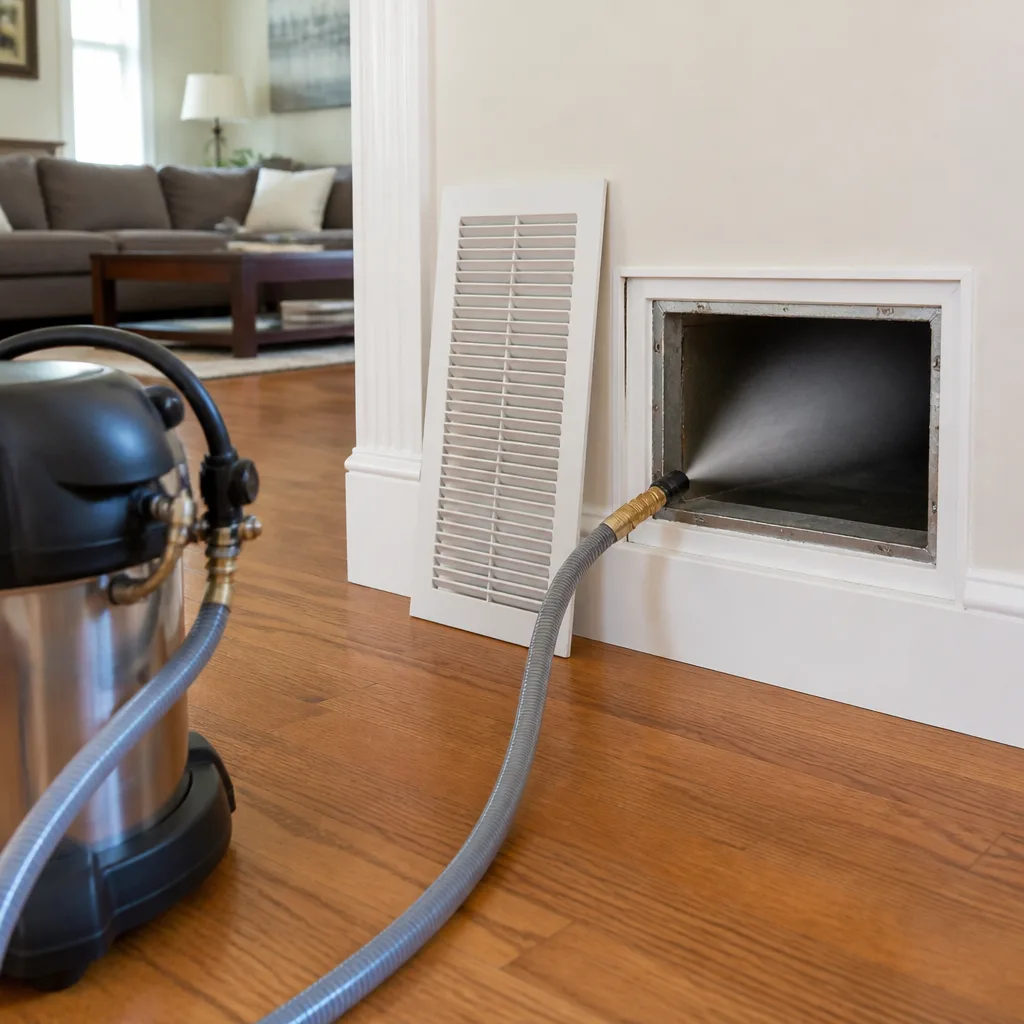 Sanitizing & deodorizing
Whole-system duct and dryer vent check with before-and-after photos - you see exactly what came out of your vents
That "$99 whole-house special" is a bait ad - the real number appears once they are in your hallway, or the "clean" is a shop-vac at the register. We photograph the inside of your ducts before and after instead.
Air Duct Cleaning Maintenance Schedule: What to Do and When
The filter you change every month is doing work your ducts shouldn’t have to. That’s the part most schedules get backward. A MERV-rated filter is a barrier, not a cleaning system, and once bypass leaks form around a loose filter frame, that monthly habit stops protecting anything – debris slips past the frame and loads climb fast. The popular “clean your ducts every 3-5 years” rule ignores what actually drives buildup: pets, renovation dust, filter rating, and the humid subtropical climate we work in across North Hills. This guide lays out a system-wide cadence, task by task, interval by interval, so you know what to do monthly, what to inspect quarterly, and when a full mechanical cleaning is actually due.
Quick Answer
Most North Hills homes need a full professional duct cleaning every 3 to 5 years, with the shorter end of that range for homes with pets, recent renovations, or a poorly sealed filter frame. Between those cleanings, the real schedule is monthly filter checks, quarterly grille and coil inspections, and annual duct-integrity checks. Drier climates stretch those intervals; the humidity in the NC Piedmont compresses them.
Styles & brands we work with
- Whole-home duct cleaning
- Dryer vent cleaning
- Camera inspection
- Sanitizing & deodorizing
Table of Contents
- Why the 3-5 Year Rule Fails in North Hills
- The Monthly Tasks
- The Quarterly Tasks
- The Annual Tasks
- When a Full Mechanical Cleaning Is Due
- Recalibrating After a Trigger Event
- How North Hills Humidity Changes the Timeline
- Choosing a Filter Rating as a Maintenance Variable
- Documenting the Schedule for Resale and Warranty
Why the 3-5 Year Rule Fails in North Hills
A single recurring appointment treats every home the same. Two houses on the same street can have wildly different debris loads. One has two dogs and a filter frame that doesn’t seal. The other is a retired couple with a tight return plenum and a fresh filter every month. Putting both on the same three-year cycle means one gets cleaned too early and the other too late.
Duct maintenance is a system-wide cadence, not one appointment. Think of it as layers. The lowest layer is what you touch personally – filters and grilles. The middle layer is what a technician inspects – coil condition, duct integrity, blower performance. The top layer is the full mechanical clean that resets the whole system. Each layer has its own clock.
The variables that push the top layer sooner in North Hills come down to a handful of things:
- Pets. Fur and dander settle into return air paths and accumulate faster than dry household dust.
- Renovation activity. Drywall dust and sawdust travel through the system in weeks, not years. A single kitchen remodel can deposit more debris than three normal years of living.
- Filter fit. A MERV-13 filter squeezed into a frame with gaps is worse than a properly seated MERV-8, because it lets air bypass the media entirely and drags dust past it.
- Humidity. Our warm, humid summers create conditions where moisture in the ductwork lingers. Where moisture lingers, biological growth has a timeline that drier climates don’t share.
- System age and duct material. Older flex duct with loose joints leaks air and pulls unconditioned attic air into the supply side.
The schedule below treats each layer on its own interval. It also tells you what to do when a renovation, a pest intrusion, or a system replacement resets the clock entirely. If you want the full-system version of the top layer explained, air duct cleaning covers what a professional mechanical clean actually involves.
The Monthly Tasks: What Homeowners Should Do Every Month
Monthly work is cheap, fast, and it’s the layer that most affects how quickly the expensive layer comes due. Three tasks, ten minutes total.
- Check the filter, don’t just replace it. Hold it up to a light. If you can’t see light through it, it’s done. If you can, it may have another month. Replacing a filter that’s still clean wastes money and tells you nothing about the system.
- Look at the filter frame for gaps. Run a finger along the edges. Any gap the width of a dime lets air bypass the media. That bypass is what loads the ducts fast. Foam weatherstrip tape from any hardware store closes most of them.
- Wipe one supply grille and compare. Pick a grille you can reach and wipe it with a white paper towel. If it’s grey with dust within a month, your debris load is running high and your interval should shrink.
One monthly habit that pays off for the whole schedule: photograph the filter and the grille wipe. A dated phone photo trail is the cheapest service history you’ll ever keep, and it’s what we look at when a homeowner asks whether a full cleaning is really due. If your own check suggests it is, air duct cleaning in North Hills starts with an inspection rather than a sales pitch.
The Quarterly Tasks: Grilles, Coils, and Return Paths
Four times a year, look deeper than the filter. These are the checks that catch a small problem before it becomes a full duct repair.
- Vacuum the supply and return grilles. A brush attachment on a household vacuum is fine for the visible face. This isn’t cleaning the ducts – it’s keeping the grille from shedding its own dust back into the room.
- Inspect the evaporator coil compartment. With the system off, look at the coil face through the access panel if your unit has one. A coil matted with dust loses capacity and drives up runtime. Coil cleaning is part of HVAC cleaning and it belongs on the same cadence as the ducts, not on a separate one.
- Check return air paths for blockages. Furniture, rugs, or boxes parked over a return grille starve the system and pull air through leaky duct joints instead.
- Listen at the supply registers. Weak airflow at one register in an otherwise healthy system usually means a disconnected or crushed duct run, not a dirty filter. That’s a duct repair and sealing job, and the earlier it’s caught, the cheaper it is.
- Walk the attic or crawlspace duct runs. Look for sagging flex duct, disconnected joints, and tape that’s failed. In the NC Piedmont, attic heat and humidity work on duct insulation year-round.
Write down what you find. A coil that’s dirty at the quarterly check in April tells you a lot about whether the full clean is due that fall or can wait another year.
The Annual Tasks: Duct Integrity, Dryer Vent, and a Full Walkthrough
Once a year, the system deserves a proper look from end to end. This is the layer where a homeowner benefits most from a trained eye and a leak-detection mindset rather than a shop vac.
- Duct integrity check. Pressurize the system and look for leaks at joints, boots, and plenums. Leaky ducts pull attic air and crawlspace air into the living space, which is the opposite of what filtration is supposed to do. Sealing found leaks is worth doing every year you find them.
- Blower and air handler inspection. A dirty blower wheel moves less air at the same energy cost. The wheel should be checked annually and cleaned when matted.
- Dryer vent cleaning. This one is a safety interval, not a comfort interval. Lint accumulation in the dryer vent is a well-documented fire risk. dryer vent cleaning should be annual for most households and more often for large families doing heavy laundry loads.
- Return air plenum check. Loose plenum connections pull unfiltered air straight into the system, shortcutting the filter entirely. We find this often in older North Hills homes where a system has been swapped without resealing the plenum.
- Full system walkthrough with photos. This is where a service history gets built. Capture the coil, the blower, the filter frame, and the attic runs once a year, same time, same angles.
Annual work done properly means the top layer – the full mechanical clean – is scheduled on evidence, not on a three-year countdown timer.
When a Full Mechanical Cleaning Is Due
The full clean is the reset. It’s the job where a professional brush-and-vacuum system runs the entire supply and return network, and where a controlled suction setup captures what gets dislodged instead of pushing it into your living room. Our technicians have up to 12 years of experience and use professional-grade Rotobrush and Nikro systems for exactly this reason – a rotary brush head reaches surfaces a vacuum alone can’t, and a negative-air machine keeps the debris in the line rather than in the air.
Full mechanical cleaning is due when any of these is true:
- A visible layer of dust coats the inside of a supply duct you can inspect at a register.
- Grilles produce a grey line on a white towel within a month of a wipe.
- A musty odor comes out of the supply registers when the system starts.
- You’ve had pets for several years with no full clean on record.
- You’ve had a renovation, pest issue, water intrusion, or system replacement since the last clean.
- It’s been three to five years since a documented full clean, or the interval has been compressed by the factors above.
The whole-system clean combines mechanical cleaning, sanitizing with Abatement Technologies air scrubbers running to keep the air clean during the work, and a leak inspection on the same visit. The parts a lot of companies leave for a second contractor – duct repair and sealing – we handle in-house, so a loose joint found during cleaning gets sealed the same day. To understand what a proper job looks like start to finish, the Air Duct Cleaning North Hills overview walks through the five service categories and how they fit together.
Recalibrating After a Trigger Event
Life events reset the schedule. When one of these happens, don’t wait for the calendar – book an inspection and then restart the interval from that date.
- Renovation or major remodel. Drywall dust and construction debris load the system in weeks. A full clean after the contractor leaves is normal, and a follow-up inspection 90 days later catches anything that migrated.
- Pest intrusion. Rodents and insects leave droppings, nesting material, and damage inside ductwork. Cleaning isn’t enough here – sanitizing with Abatement Technologies air filtration running during the job is the right second step, and duct repair may be needed where a pest opened a seam.
- Flood or water intrusion. Any water that reaches duct insulation changes the biological growth timeline. Duct runs affected by water often need replacement, not just cleaning, and the repair-and-sealing step is the deciding factor.
- HVAC system replacement. A new system is the natural moment to clean and seal the existing duct network. If the ducts are leaky or debris-loaded, a new system runs on a compromised network from day one.
- New pet or a home purchase. A new-to-you home has no service history. Treat it as a clean slate and start the schedule with a full inspection.
After any trigger event, restart your interval clock from the inspection date, not from the last clean.
How North Hills Humidity Changes the Timeline
Our climate does something to ductwork that a dry climate doesn’t. In the warm, humid NC Piedmont summers, the air handler compartment and the supply duct runs are the coolest surfaces in the attic. When humid attic air meets a cool duct surface, condensation forms. Where condensation lingers, the timeline for biological growth is measured in weeks, not years.
What this means for the schedule:
- Sanitizing belongs on a shorter interval here. A full clean without a sanitizing step leaves the condition that started the growth untouched. Pairing mechanical cleaning with an antimicrobial sanitizing step is standard in our work for this reason.
- Duct leakage matters more in humid weather. A leaky supply duct doesn’t just lose cool air – it pulls humid attic air in. That moisture is the fuel for growth. Sealing is a humidity-management job as much as an efficiency one.
- Fall is a good time for the annual check. Dust and debris loaded over the summer sit in the system through the heating season if they aren’t dealt with. Annual integrity checks in early fall catch leakage before the heat comes on.
- Dehumidification or ventilating products bridge the gap. We install and service Honeywell and Aprilaire air-quality products for homes where ductwork moisture is a recurring pattern rather than a one-time issue.
If this sounds like your home, the timeline to plan against is the full clean, the sanitizing, and the duct sealing on one visit, then annual inspections to catch leakage early.
Choosing a Filter Rating as a Maintenance Variable
Filter rating is a maintenance choice, not just a comfort choice. A higher MERV captures more, which means less dust reaches the ducts and the full cleaning interval stretches. But higher MERV also means higher static pressure on the blower, and a system not designed for it will move less air, run hotter, and wear faster.
Two things to get right before you upgrade:
- Verify blower capacity. Your air handler has a design static pressure. A MERV-13 filter that chokes the system will cost more in blower wear than it saves in cleaner ducts.
- Verify the filter frame seals. A high-MERV filter in a leaky frame is a bypass filter in name only. Seal the frame before you move up a rating.
For most North Hills homes, a properly seated MERV-8 to MERV-11 filter with a well-sealed frame outperforms a loosely seated MERV-13. If you want to step up beyond that, have the blower checked first. Filter bypass is also the reason a dirty grille can appear in a home with a fresh filter – the air is simply going around the media. Our filter-check routine in the monthly section is the best early warning you’ll get.
Documenting the Schedule for Resale and Warranty
A documented schedule does two things that a memory doesn’t. It defends your HVAC warranty claim, since most manufacturers require evidence of proper maintenance, and it supports a home sale, since buyers and their inspectors ask about service history. Duct cleaning that can’t be proven was done counts for nothing at closing.
What a defensible service history contains:
- Dated invoices from each full clean, with the service categories performed itemized.
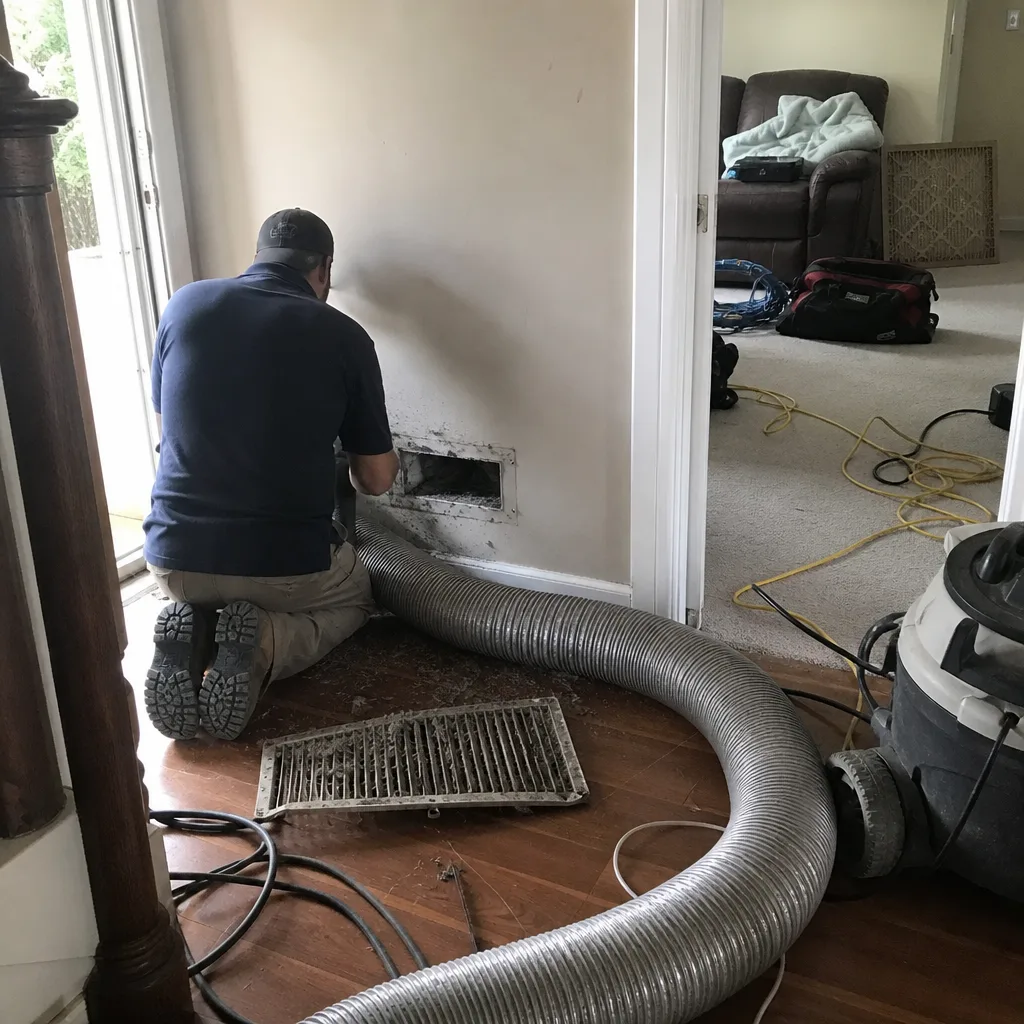
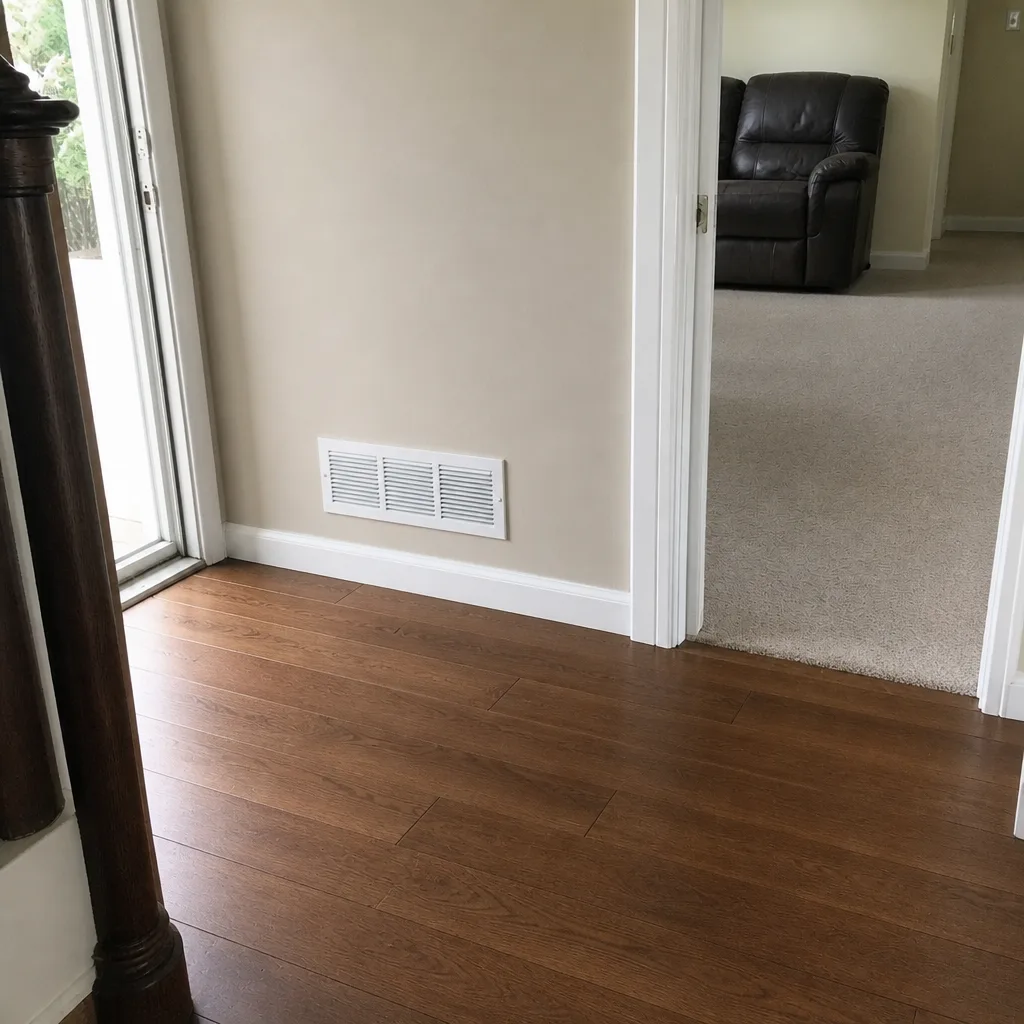
- Before-and-after photos of the ducts, which a professional company supplies as part of the job.
- Filter replacement dates, with the MERV rating used.
- Duct repair and sealing records, including what was sealed and when.
- Annual inspection notes, particularly anything found at the coil or plenum.
We supply before-and-after photos of the homeowner’s own ducts as a standard part of the job, because a service history needs to be the customer’s, not just the company’s. Keep them in one folder, digital or paper, next to the HVAC manual. When you sell, you hand over a file, not a promise.
Common Mistakes to Avoid
- Treating the 3-5 year rule as fixed. It’s a range, not a number. Homes with pets, renovations, or a leaky filter frame need the short end. Homes without those factors can run longer.
- Upgrading filter MERV without checking the blower. A higher-rated filter on a system not designed for the static pressure moves less air and costs you more in equipment wear than it saves in cleaner ducts. Verify capacity first.
- Ignoring filter-frame gaps. A dime-sized gap lets air bypass the media entirely. Foam weatherstrip closes most gaps, and the effect on dust load is significant.
- Cleaning the ducts without sealing the leaks found during cleaning. Cleaning a leaky system just creates a clean network that pulls attic air back in. Duct repair and sealing belong on the same visit as the clean.
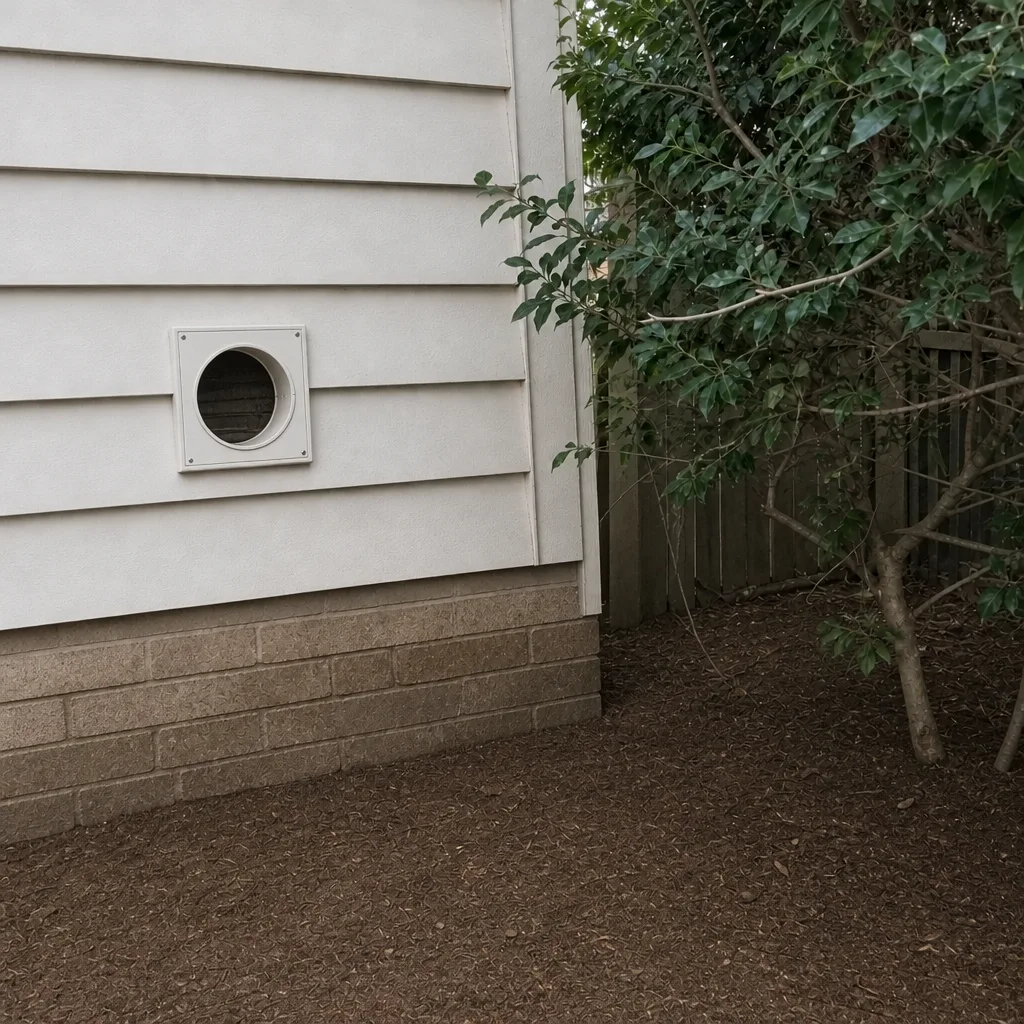
- Skipping the dryer vent because it “isn’t the ducts.” Lint in the dryer vent is a fire risk, not an air-quality one. It deserves the same annual discipline.
- Not keeping records. A clean without a dated invoice and photos is a claim you can’t prove at resale or in a warranty claim.
- Trusting a low-price coupon quote at face value. A number that low often means an in-and-out visit without the equipment to reach the duct surfaces. Ask what machine is used and whether photos are supplied before you book.
See the difference
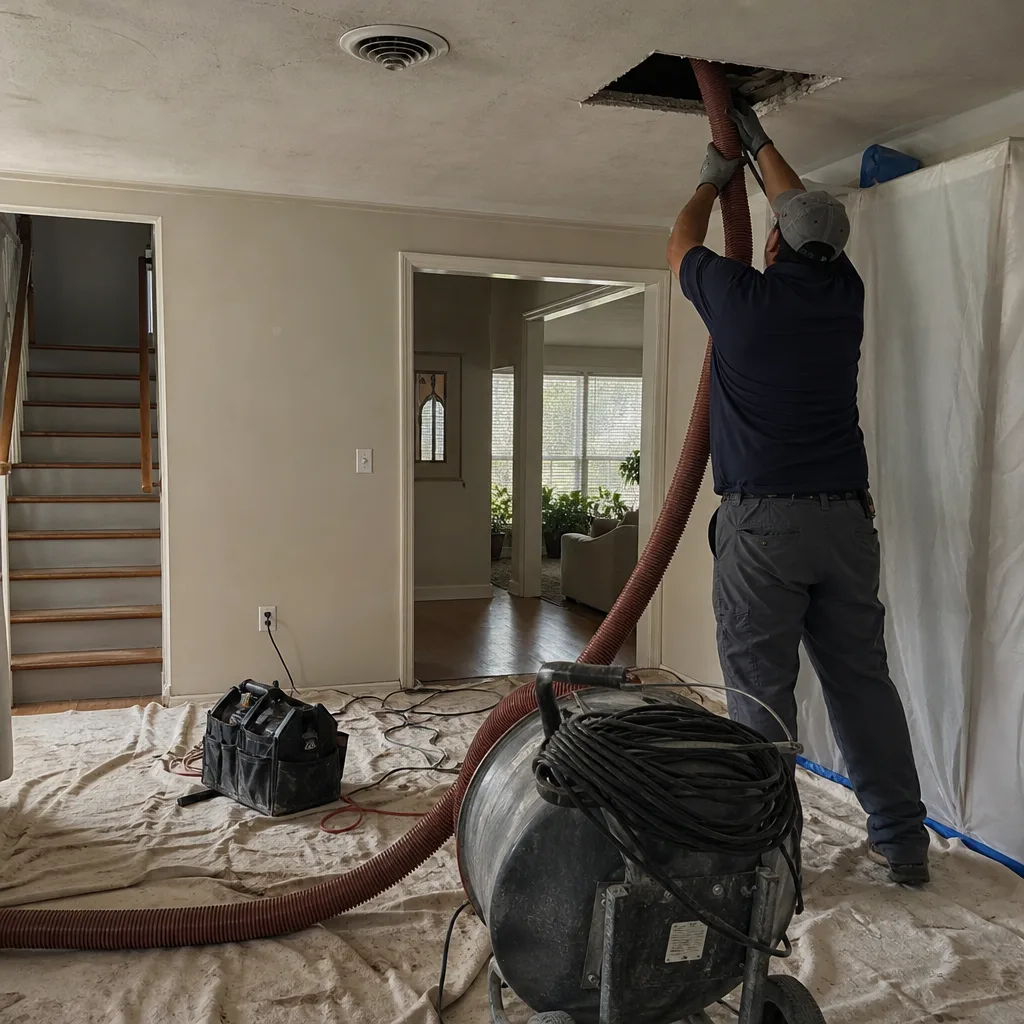 Before
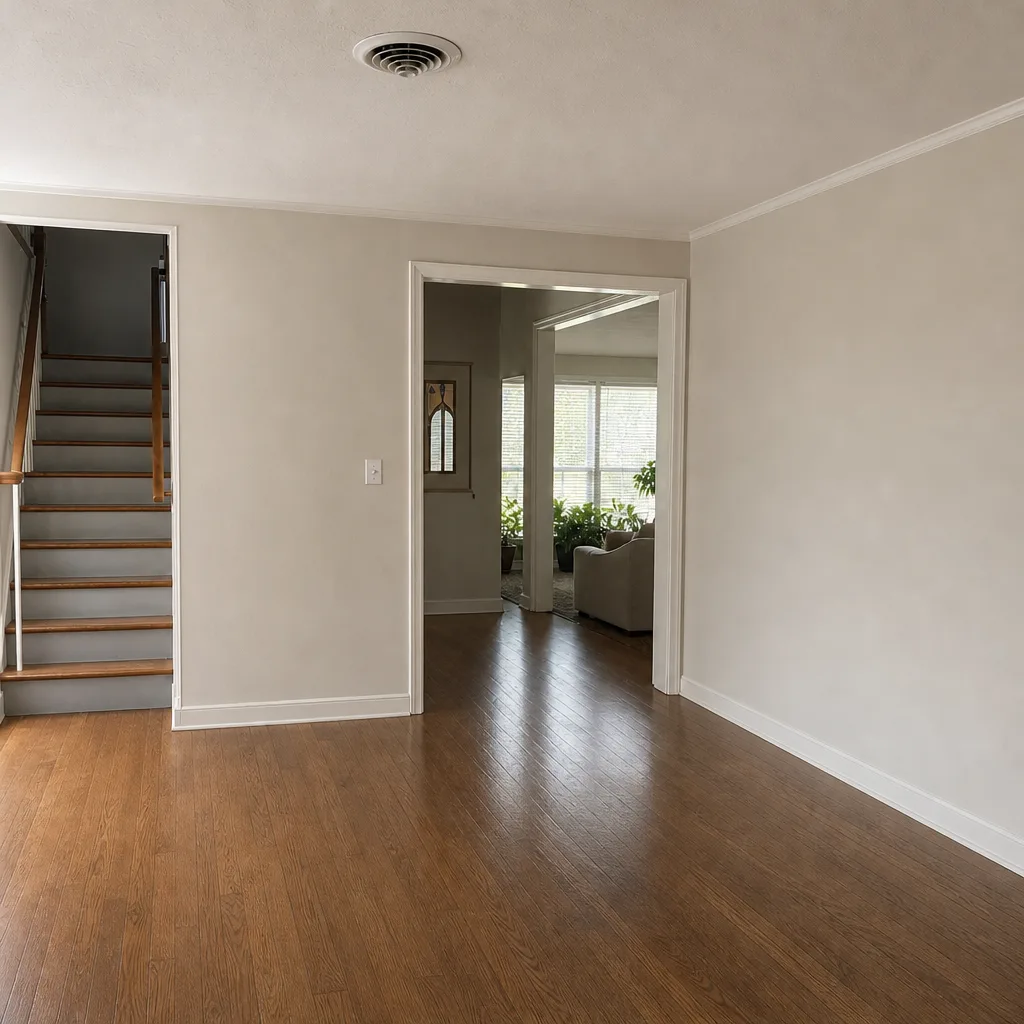 After
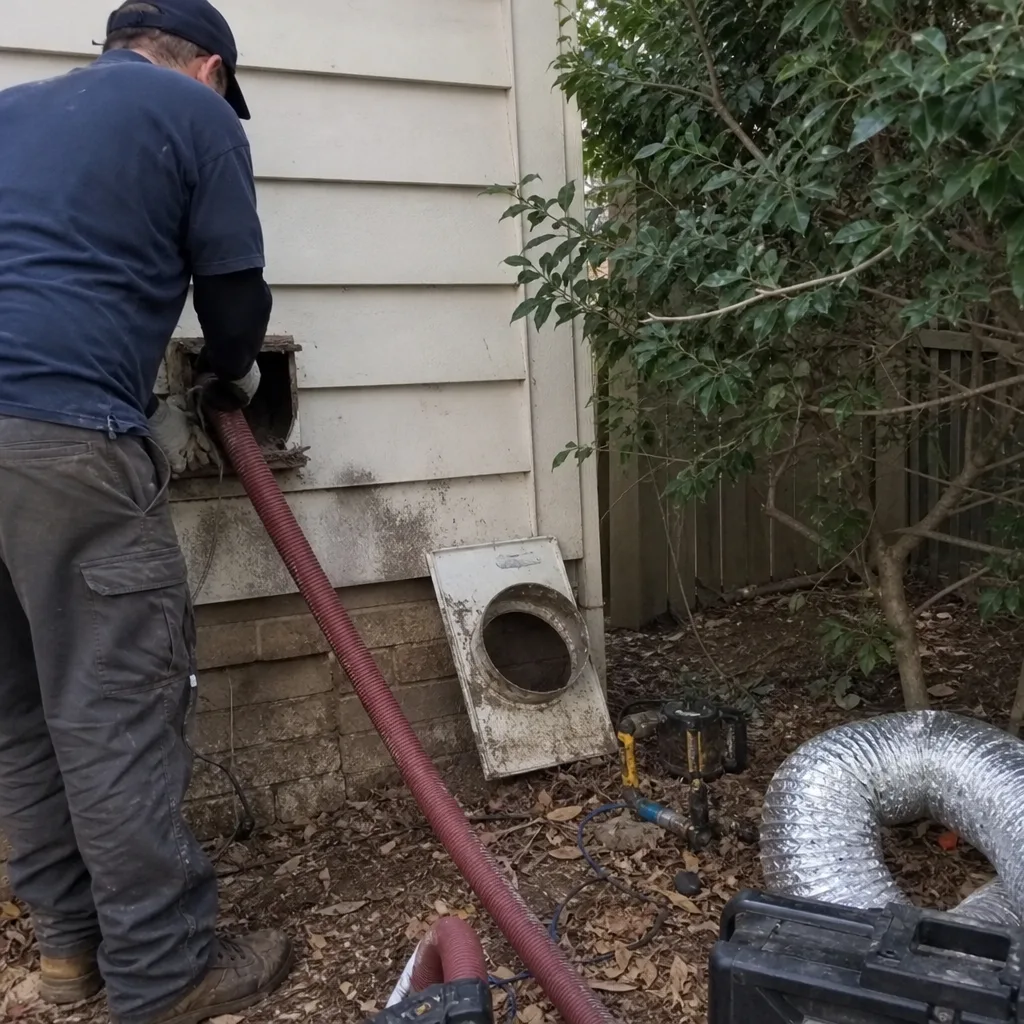 Before
 After
 Before
 After
When to Call a Professional
Some tasks on this schedule are yours. Filters, grille wipes, and recording dates. The moment the work touches the inside of the duct network, the coil compartment, or the blower, it’s a professional job. Call when a grille produces a dust line within a month of a wipe, when you smell mustiness at startup, when a register has weak airflow in an otherwise healthy system, when you’ve had a renovation, pest intrusion, water event, or system replacement, when it’s been three to five years since a documented clean, or when your annual dry-vent interval comes around. A trained technician can also tell you about coil condition and duct integrity in a single visit, which is where the real interval for your home gets set. Air Duct Cleaning North Hills offers free estimates in North Hills. Call (844) 443-4850. We answer 24/7. Fast dispatch from 7am to 7pm, Sunday through Friday.
Frequently Asked Questions
Every 3 to 5 years for most homes, with the 3-year end for homes with pets, recent renovations, or a leaky filter frame. The humidity of the NC Piedmont pushes the interval toward the shorter end for many households. Between full cleans, keep the monthly filter check, quarterly grille and coil checks, and annual duct-integrity check on schedule. Call (844) 443-4850 for an exact quote – estimates are free.
Yes, but only if the system can handle it. A properly seated, well-sealed MERV-13 captures more dust and stretches the duct cleaning interval. A MERV-13 in a leaky frame or on an air handler not rated for the static pressure gives you no benefit and adds blower wear. Verify blower capacity and seal the frame before you upgrade. Call (844) 443-4850 if you want a filter rating checked against your system – estimates are free.
Because they don’t include the equipment or the time to do the job properly. A quote built on a coupon price often covers a quick pass with a vacuum and none of the brush work, sanitizing, or leak inspection that a full mechanical clean requires. Ask what machine is used – professional-grade Rotobrush or Nikro equipment, not a shop vac – and ask whether before-and-after photos of your own ducts are included. If the quote doesn’t come with those answers, the price isn’t comparable. Call (844) 443-4850 for a written, itemized estimate – estimates are free.
Ask for before-and-after photos of your own ducts, not stock images. A professional job supplies them, and a dated invoice with those photos is what you keep as a record. If a company can’t show you your own system before and after, you have no way to verify the work. Call (844) 443-4850 – before-and-after photos of your ducts are part of the job.
Yes. The dryer vent is a separate system and a fire-safety interval. Lint accumulates in the vent regardless of duct condition, and annual cleaning is the standard for most households. Larger families doing heavy laundry loads should have it checked more often. Call (844) 443-4850 to get it on the same schedule as the ducts – estimates are free.
It changes how often the sanitizing step is needed, which is often the difference between a clean system and a system that smells musty in the fall. Our warm, humid summers condense moisture on cool duct surfaces in attics and air handler compartments. Where moisture lingers, biological growth starts on a timeline measured in weeks, not years. Mechanical cleaning plus sanitizing plus duct sealing addresses the condition, not just the debris. Call (844) 443-4850 to talk through your system – estimates are free.
The Bottom Line
The schedule that actually works in North Hills runs on four layers. Monthly: check the filter and the frame for gaps. Quarterly: wipe the grilles, inspect the coil, check return paths and supply flow. Annual: duct-integrity check, blower inspection, dryer vent, and a photo walkthrough. Full mechanical clean: every 3 to 5 years, or sooner if pets, renovations, or a leaky frame load the system. Recalibrate after any trigger event and keep dated records with photos. Cleaning, sanitizing, and sealing on one visit is what keeps the network whole between intervals. That’s the whole plan, and it beats a countdown timer every time.
If your check suggests it’s time, or if you want a trained eye to set your interval in one visit, Air Duct Cleaning North Hills offers free estimates. Call (844) 443-4850. We answer 24/7. Fast dispatch from 7am to 7pm, Sunday through Friday.
Written by the team at Air Duct Cleaning North Hills.