
Last updated November 23, 2026
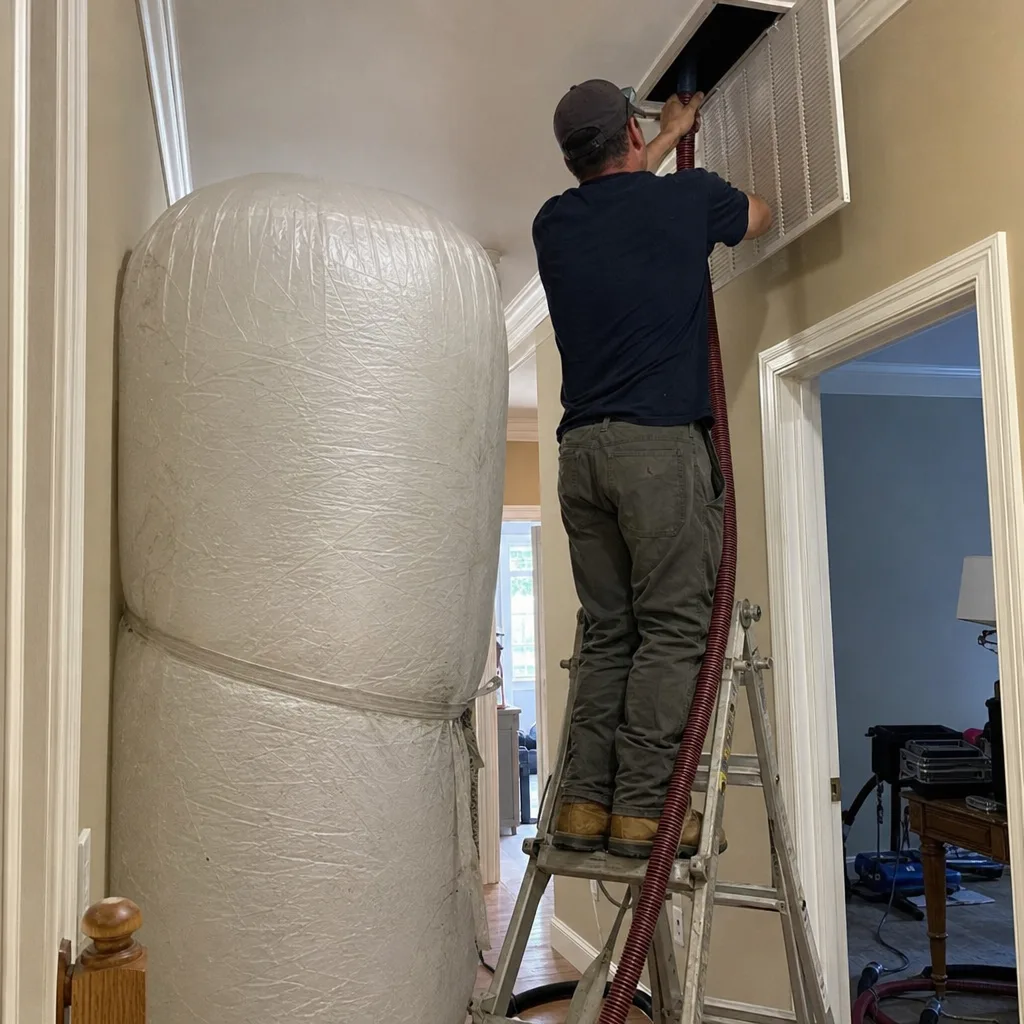
 Whole-home duct cleaning
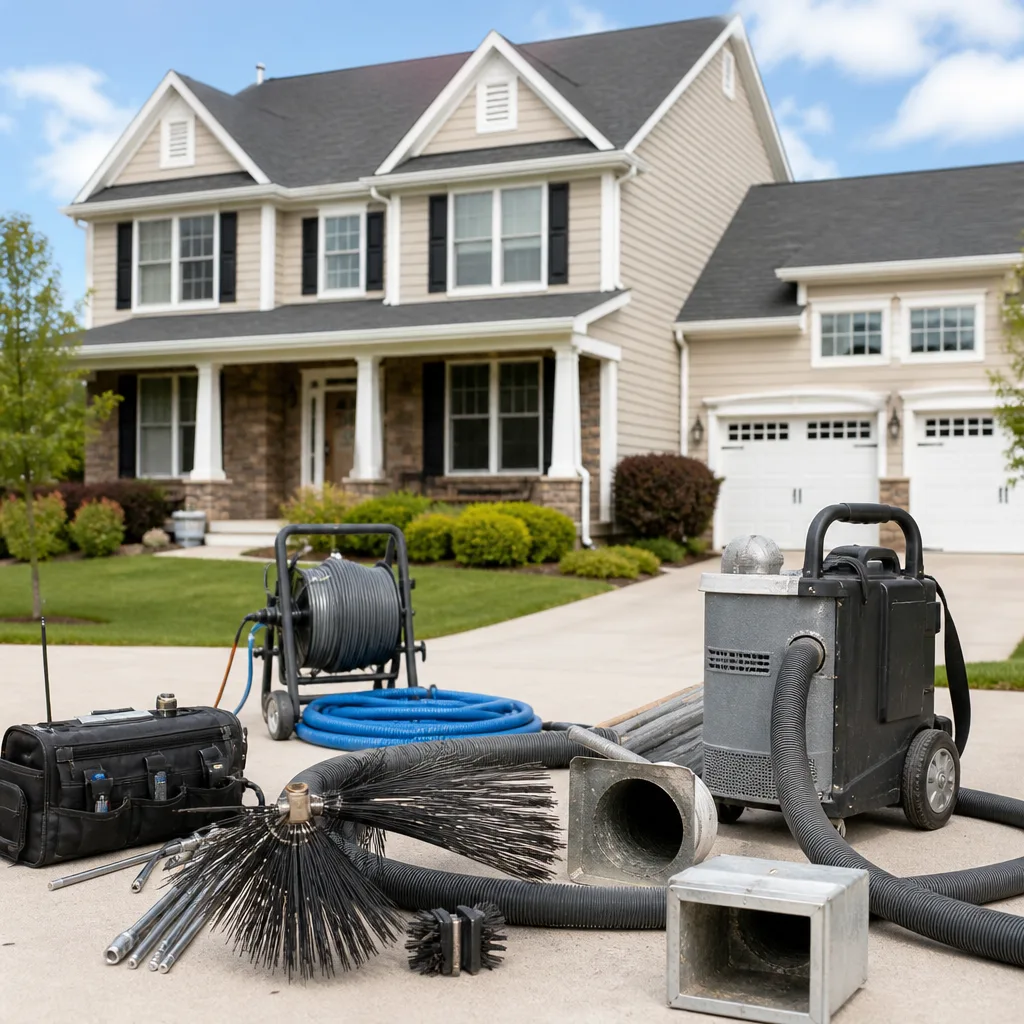
 Dryer vent cleaning
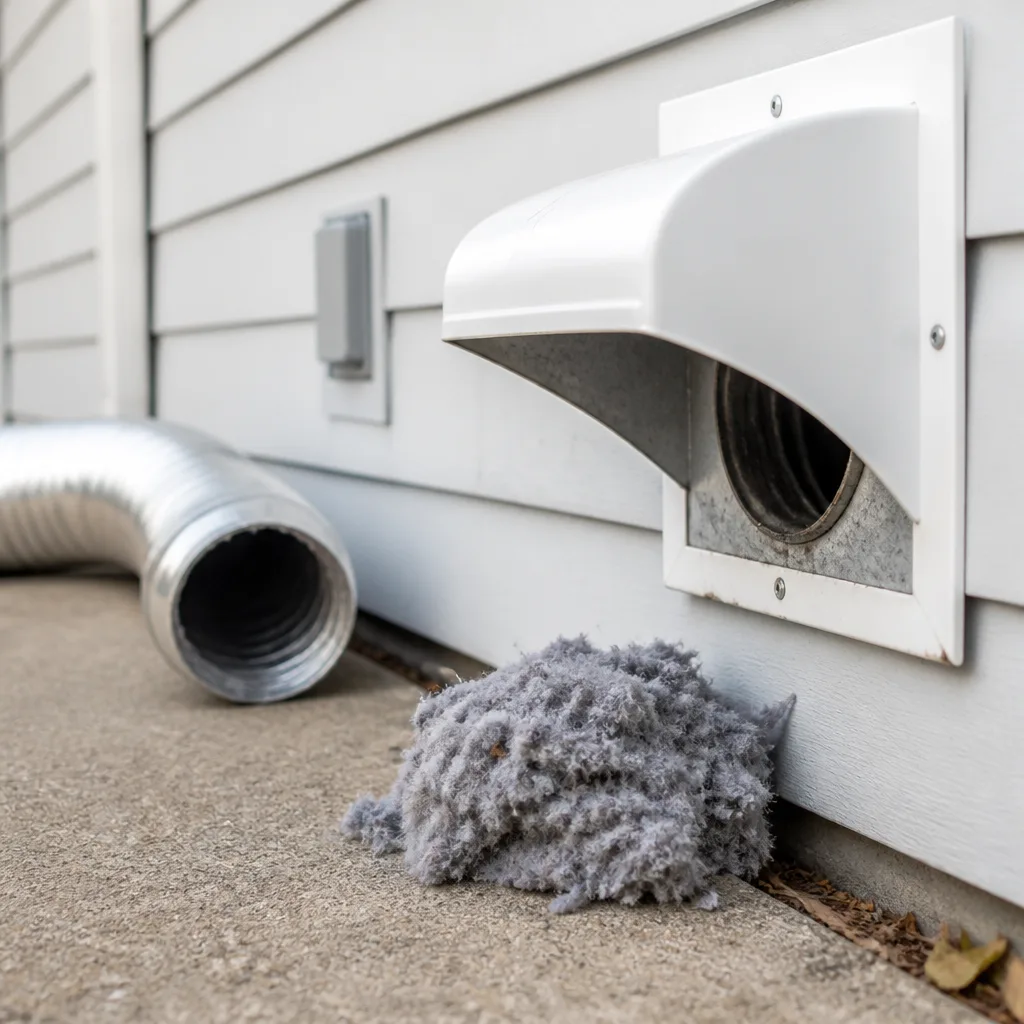
 Camera inspection
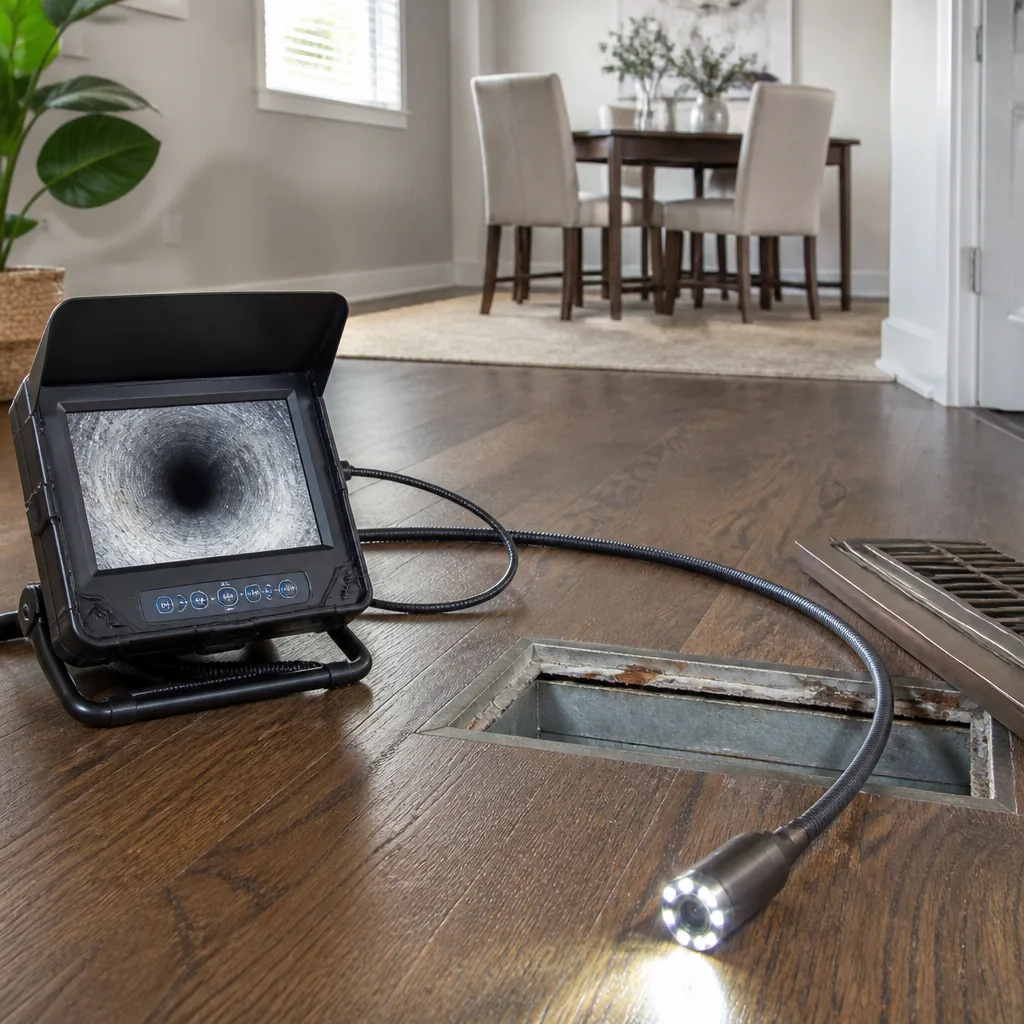
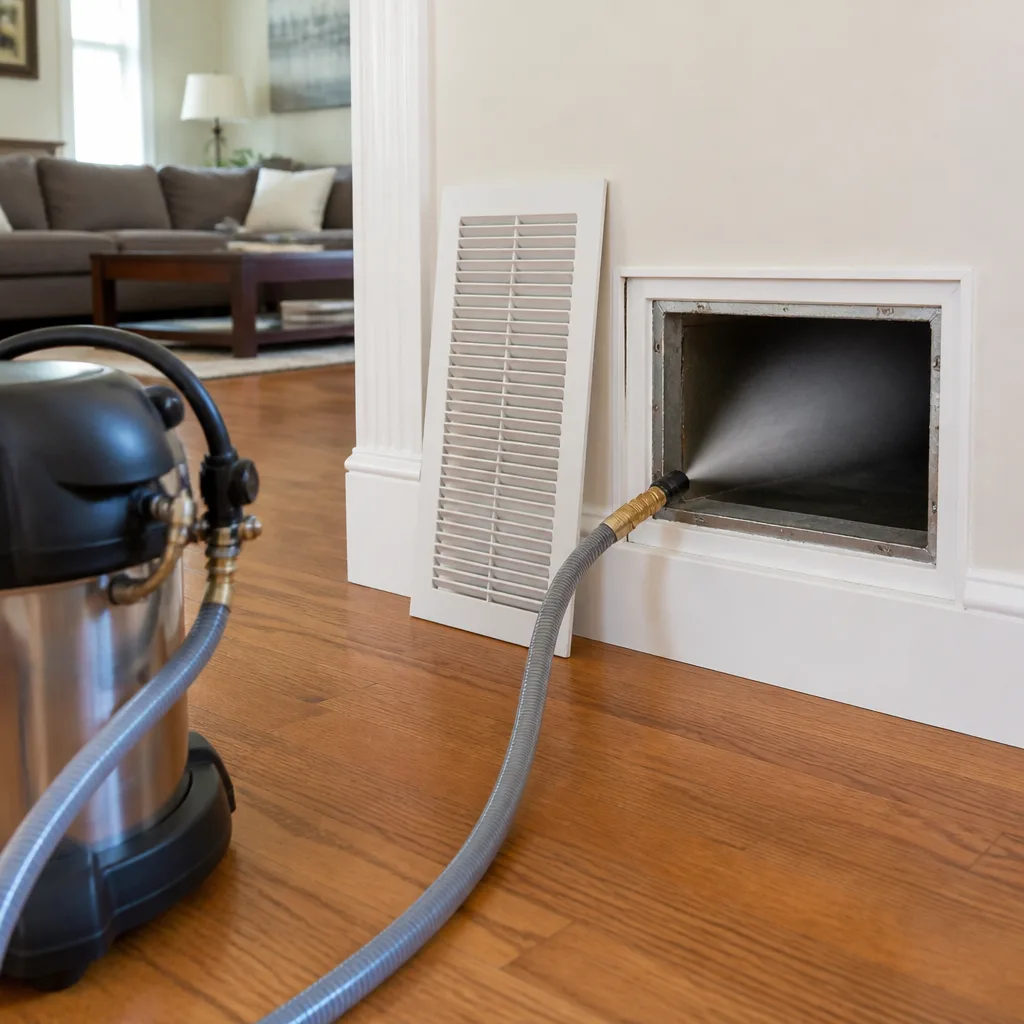 Sanitizing & deodorizing
Whole-system duct and dryer vent check with before-and-after photos - you see exactly what came out of your vents
That "$99 whole-house special" is a bait ad - the real number appears once they are in your hallway, or the "clean" is a shop-vac at the register. We photograph the inside of your ducts before and after instead.
Air Duct Cleaning Troubleshooting in North Hills: Common Problems and How to Fix Them
Two homes on the same street in North Hills can have the exact same complaint – “the back bedroom never gets cold” – and need two entirely different fixes. One has a return grille packed with so much dust it can’t pull air, and swapping the filter takes care of it. The other has a flex duct that collapsed behind a wall cavity, and no amount of cleaning will bring that airflow back. The symptoms look identical at the vent. The causes aren’t. This guide walks through the most common duct problems we diagnose in North Hills, how to tell them apart before you spend money, and which ones cleaning actually solves versus which ones need repair, sealing, or replacement first.
Quick Answer
Most duct problems in North Hills fall into one of four buckets: debris buildup, duct leakage or separation, undersized or poorly routed ductwork, and moisture or biological growth on the coil or drain pan. Cleaning restores airflow only when debris is the actual cause. If the problem is a disconnected duct, a kinked flex run, or a musty coil, cleaning the ducts won’t fix it – the component behind the symptom has to be addressed first. Here’s how to tell the difference.
Styles & brands we work with
- Whole-home duct cleaning
- Dryer vent cleaning
- Camera inspection
- Sanitizing & deodorizing
Table of Contents
- Symptom-to-Cause Matrix: What Your Vents Are Telling You
- How to Check Whether You Actually Have Duct Leakage
- Why Musty Odors Usually Aren’t Coming From Your Ducts
- Debris vs. Separation vs. Undersized Ducts: Which One Do You Have?
- When Repair Comes Before Cleaning
- Duct Repair and Sealing: The Step Most Homeowners Skip
- HVAC Cleaning and Indoor Air Quality Work
- Dryer Vent Troubleshooting: A Separate System, a Separate Risk
Symptom-to-Cause Matrix: What Your Vents Are Telling You
Before you call anyone, sit with the symptom for a minute. Airflow problems announce themselves differently depending on which piece of hardware has failed. In our experience running diagnostics across North Hills homes, the symptom pattern almost always narrows the problem to a short list of candidates.
Here’s how we map the common complaints to the component most often responsible:
- Weak airflow at every vent equally – usually a clogged filter, a dirty blower wheel, or a return air path that’s restricted. Rarely a duct problem at all. Start at the air handler.
- Weak airflow at one or two vents only – typically a damper that’s been closed or partially closed, a collapsed flex duct, or a supply run that’s disconnected at a boot or takeoff.
- Hot rooms in summer, cold rooms in winter – often a balancing issue (dampers out of adjustment), an undersized run serving that room, or duct leakage on the longest run from the air handler.
- Rattling or popping when the system starts – usually sheet metal duct panels flexing under pressure changes, loose duct hangers, or an undersized return causing the blower to work against excessive static pressure.
- Whistling at a grille – a sign of restricted airflow at that register, often a grille that’s too small or a run that’s starved for air.
- Musty or “dirty sock” odor – almost never the ducts. Look at the evaporator coil, the drain pan, or standing water in the plenum.
- Visible dust blowing out of a vent – usually a sign of a duct that has come apart at a joint, or a return pulling air from an unconditioned crawlspace or attic.
If two or three of these symptoms show up together, that’s your clue that the problem is systemic rather than a single failed component. A whole-system air duct cleaning assessment is the right starting point in that case, because the technician can trace the entire airflow path – return, filter, air handler, supply trunk, branch runs, and boots – in one visit.
How to Check Whether You Actually Have Duct Leakage
Homeowners often assume a duct system needs cleaning when it’s actually leaking. The symptoms are nearly identical: weak airflow, uneven temperatures, higher energy bills. But a leaking duct is a repair job, not a cleaning job – and cleaning it first is money spent in the wrong order.
There are two ways to check before you book anything. The first is a tissue test, which any homeowner can run in a few minutes. The second is a static pressure test, which a technician does with a manometer. Both are worth understanding.
The tissue test
- Turn the system on in fan-only mode so air is moving but the compressor isn’t running.
- Hold a single-ply tissue against the face of a supply register. It should pull tight against the grille or flutter briskly.
- Repeat at every supply and return in the home. Note any vent where the tissue barely moves or falls flat.
- At the ones that fail, look carefully around the boot and the visible duct behind the grille for dust streaks, gaps, or a duct that’s pulled away from the boot.
Dust streaks around a joint are the strongest visual clue that a duct is leaking there. Air carrying dust escapes under pressure and leaves a line behind. If you see it at multiple vents, the system is losing conditioned air into a wall cavity or attic – meaning the air handler is running harder to compensate, and your energy bill reflects it.
The static pressure test
A technician uses a manometer to measure pressure at the return plenum and the supply plenum, then compares that to the air handler’s rated external static pressure. A reading well above the manufacturer’s spec points to restricted airflow – undersized ducts, a dirty coil, a clogged filter, or a combination. The test takes minutes and separates “dirty ducts” from “the system can’t breathe because the ductwork is too small,” which are two very different repairs.
We run this test as part of a whole-home assessment in North Hills before recommending any cleaning work. If the static pressure is out of spec, cleaning alone won’t fix the symptom, and we’d rather say so than take the money.
Why Musty Odors Usually Aren’t Coming From Your Ducts
This is the one that surprises most homeowners: a musty smell that seems to come from the vents almost never originates in the ducts themselves. Ducts are thin metal or flex tubing with no organic material for mold to feed on. The smell has to come from somewhere with sustained moisture and a food source.
In our experience, musty odors in North Hills almost always trace to one of these:
- The evaporator coil. The coil sits wet for most of the cooling season. Dust that passes through the filter collects on the coil fins, and that damp dust film is the biological growth that produces the smell.
- The drain pan. Condensate pans that don’t drain fully leave standing water. Algae and sludge form, and the fan pulls that smell into the duct system.
- The return plenum in a humid space. If a return duct runs through a crawlspace or an unconditioned attic and the seam is compromised, it draws humid air into the system and carries the smell with it.
- A wet filter. Filters that get damp from a clogged condensate line or a pan overflow become a growth medium within days.
The fix depends on which of these is the cause. A dirty coil needs coil cleaning, which is part of proper HVAC cleaning, not just duct work. A pan that won’t drain needs the drain line and pan cleared. A compromised return duct needs sealing. If the coil is clean and the pan is dry, then yes, growth inside the ducts themselves is possible – usually in a humid flex duct with a sagging low point. That’s when sanitizing the system makes sense.
This is why our sanitizing step is paired with cleaning and air scrubbers rather than sold on its own. Spraying sanitizer into a duct system that still has a dirty coil is treating the symptom, not the source. We use Abatement Technologies air scrubbers during the work to keep particulate out of the air while the coil is cleaned and the ducts are sanitized – contaminants leave the house rather than resettling.
Debris vs. Separation vs. Undersized Ducts: Which One Do You Have?
This is the distinction that matters most when you’re deciding whether cleaning will help. All three of these conditions produce weak airflow and uneven room temperatures. Only the first is solved by cleaning.
Debris buildup
Dust, pet hair, construction dust, and debris restricted to the duct interior. You’ll often see it at the return grille, and the airflow will be weak but relatively even across the home. This is the one condition where cleaning is the fix. Rotobrush rotary brush systems do this work properly – the brush agitates debris off the duct walls while a Nikro negative-air machine pulls it out. Shop vacuums and “blow-out” methods push debris through the system rather than capturing it, which is what most low-cost duct cleaning services are actually doing.
Duct separation
A duct has come apart at a joint, boot, or takeoff. This is common in homes where flex duct has been run through tight attic spaces and the takeoff connection has pulled free over time. The symptom is usually localized – one room or one side of the house gets weak airflow while the rest is fine. Cleaning this system won’t help because the air is going into the attic, not into the room. The fix is duct repair and resealing, then re-testing airflow, before any cleaning is done.
Undersized ductwork
The ducts were sized too small for the air handler from the start. This is a design issue, not a cleanliness or leak issue. The symptom is high static pressure, noisy airflow, and rooms that never balance no matter how clean the ducts are. Cleaning doesn’t solve it. Repairing a few leaks might improve it slightly. Redesigning the duct system is the only real fix. A static pressure test confirms this quickly, and it’s worth knowing before you spend on cleaning.
One more condition that doesn’t fit neatly into the three buckets: a crushed or kinked flex duct. Flex duct that’s been bent sharply around a framing member restricts airflow like a pinched hose. It’s easy to spot once you’re in the attic or crawlspace and it’s straightforward to correct. But it’s invisible from inside the living space, which is why a visual inspection of the duct routing matters as much as cleaning.
When Repair Comes Before Cleaning
The worst outcome in duct work is cleaning a system that will contaminate again within weeks because it’s drawing dirty air from an unconditioned space or leaking conditioned air into the attic. Cleaning is an investment; repairing the system to hold that cleanliness is what protects it.
We recommend repair first, cleaning second, when the assessment reveals any of the following:
- A disconnected duct or boot. Cleaning it while it’s disconnected means the negative-air machine is pulling attic or crawlspace air through the system instead of your return.
- Visible gaps at the plenum or trunk joints. These need sealing first so the system holds pressure during cleaning and afterward.
- A crushed flex run. Correct the routing, then clean. Otherwise you clean a run that still can’t deliver air.
- A wet or compromised duct section. A duct that has held moisture needs inspection and likely replacement before sanitizing, because the moisture source will just regrow growth.
Each of these repairs can be handled by the same team that does the cleaning. That’s the point of offering duct repair and sealing as an in-house service rather than sending you to a second contractor. When our technician finds a disconnected boot during a North Hills cleaning call, the repair is scheduled and done as part of the same scope of work, so the system gets cleaned, sealed, and re-tested before we leave the job.
If a repair is beyond what you want to invest in, we’d rather tell you that up front than take cleaning money on a system that won’t hold the result.
Duct Repair and Sealing: The Step Most Homeowners Skip
Sealed ducts do more for your energy bill than clean ducts. A system losing 20% of its conditioned air through leaks is running longer, working harder, and still not delivering the airflow to the rooms that need it. Cleaning fixes air quality. Sealing fixes efficiency. Most homeowners need both.
Repair and sealing work on a typical North Hills home covers:
- Resealing plenum, trunk, and branch joints with mastic and foil tape, not duct tape, which fails under heat cycling.
- Reconnecting boots and takeoffs that have pulled free at the register.
- Re-routing crushed or kinked flex runs where possible.
- Adding or adjusting dampers to balance airflow to problem rooms.
- Insulating exposed runs in attics and crawlspaces where heat gain or loss is the real problem.
After sealing, we re-run the static pressure test to confirm the system is now within spec. If it’s still high, the remaining restriction is usually a dirty coil or an undersized run, and we tell you that clearly rather than recommending another round of cleaning.
This is where the equipment names matter. A brush-and-vacuum system with a negative-air machine and a HEPA-filtered air scrubber is what lets us clean a system after sealing without releasing the dust we just loosened into the living space. Rotobrush, Nikro, and Abatement Technologies gear is engineered for this exact work; repurposed shop vacs and leaf blowers aren’t, and the result shows up in whether your home is dusty when we leave.
HVAC Cleaning and Indoor Air Quality Work
Duct work is one piece of the airflow chain. The air handler, blower wheel, evaporator coil, and drain pan are the rest of it. A system with clean ducts and a dirty blower wheel will still deliver dust into the home, and a coil with a biofilm layer will still produce a musty smell at the vents.
Full HVAC cleaning covers the air handler and its components – the blower cage, the coil, the drain pan, and the cabinet interior. The blower wheel is the piece most often skipped in cheaper cleaning jobs because it takes time to access and to clean properly. In our experience, a blower cage packed with dust is a bigger contributor to weak airflow than moderately dusty ducts.
Once the system is clean, the next question is what to do about the air quality long term. This is where filtration upgrades matter. We work with Honeywell and Aprilaire air-quality products because they’re the two brands with the widest range of filter cabinets and media options that fit standard residential systems. A proper media filter cabinet holds a thicker filter that captures finer particles than a 1-inch slot filter, and it protects the coil better over the long run. Guardsman products also come into play on the air-quality side. We recommend filtration upgrades when the assessment shows a filtration gap – usually a return that’s pulling in poorly filtered air from an unconditioned space.
Cleaning, sanitizing, filtration upgrades, and repair all done in one visit by one team – that’s what we mean by full-system indoor-air work. It eliminates the coordination problem of a duct cleaner, an HVAC tech, and an air-quality contractor telling you three different things about the same system.
Dryer Vent Troubleshooting: A Separate System, A Separate Risk
Most homeowners assume the dryer vent is part of the duct system because it’s “a duct in a wall.” It isn’t. It’s a completely separate exhaust path, and it’s a safety system, not just an efficiency one. Lint that accumulates in a dryer vent is a leading cause of residential fires, and it’s the one duct issue where the fix isn’t optional.
The troubleshooting signals are different from HVAC duct problems:
- Clothes taking two cycles to dry – restricted exhaust airflow, usually lint buildup in the vent or a crushed transition duct behind the dryer.
- The dryer feels hot to the touch or the room gets humid – the exhaust isn’t making it outside.
- A burning or hot-lint smell – stop using the dryer and get the vent checked before running another load.
- Lint visible outside the exterior vent hood – the vent cap or flapper isn’t sealing and lint is escaping at the exterior, which often means the run behind it is loaded.
Rigid metal duct is the correct material for a dryer exhaust; the flexible foil and plastic transitions that show up behind many North Hills dryers are a common failure point and worth replacing. Our dryer vent cleaning service addresses the whole run from the dryer connection to the exterior hood and checks the flapper. On the surface, the problem looks like a bad dryer. Below it, it’s usually a vent restriction that a proper cleaning resolves.
Common Mistakes to Avoid
- Booking cleaning before the system has been diagnosed. If the problem is a disconnected duct or an undersized run, cleaning does nothing for the symptom. Ask for a static pressure test or a visual inspection before agreeing to the cleaning work.
- Assuming a musty smell is coming from the ducts. In most North Hills homes, it traces to the evaporator coil, the drain pan, or a humid return. Cleaning ducts and ignoring the coil means the smell comes back within the season.
- Using duct tape on duct joints. Duct tape adhesive fails under the heat cycling of a working HVAC system. Mastic and foil tape hold. This is a maintenance issue that shows up after the first summer.
- Ignoring the blower wheel because the ducts look clean inside. The blower cage is where dust and pet hair collect fastest, and it’s the component most often skipped in a quick cleaning job. Ask specifically whether the blower wheel is included.
- Hiring a cleaner who can’t tell you what equipment they use. If the answer isn’t a specific system like Rotobrush or a negative-air machine, you’re likely getting a blow-out rather than a proper cleaning, and the dust redistributes through the house.
- Skipping the dryer vent because the ducts were just cleaned. The dryer vent is a separate system, and it carries the highest fire risk in the home. It should be inspected on its own interval.
- Cleaning a system with a wet or compromised duct section. Sanitizing a duct that’s still holding moisture just reopens the door to growth. The moisture source has to be fixed first.
See the difference
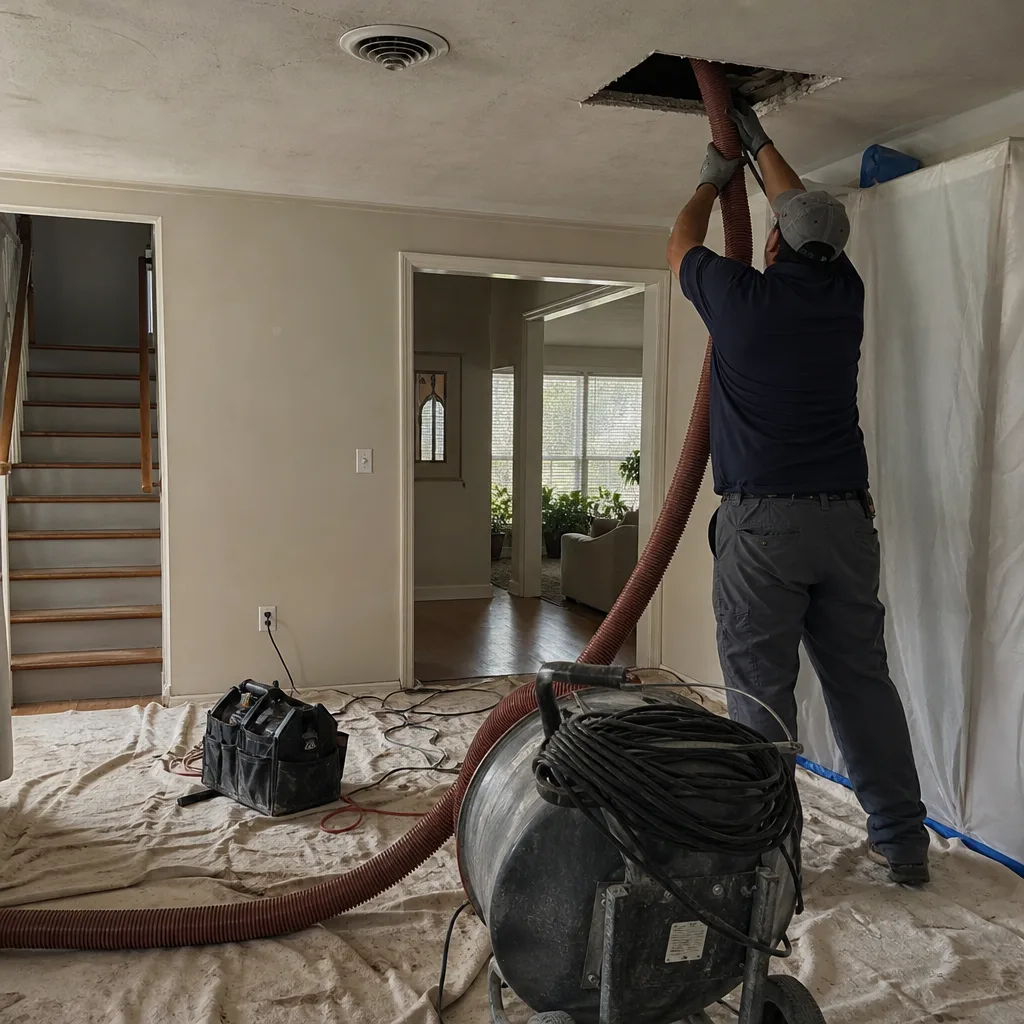 Before
 After
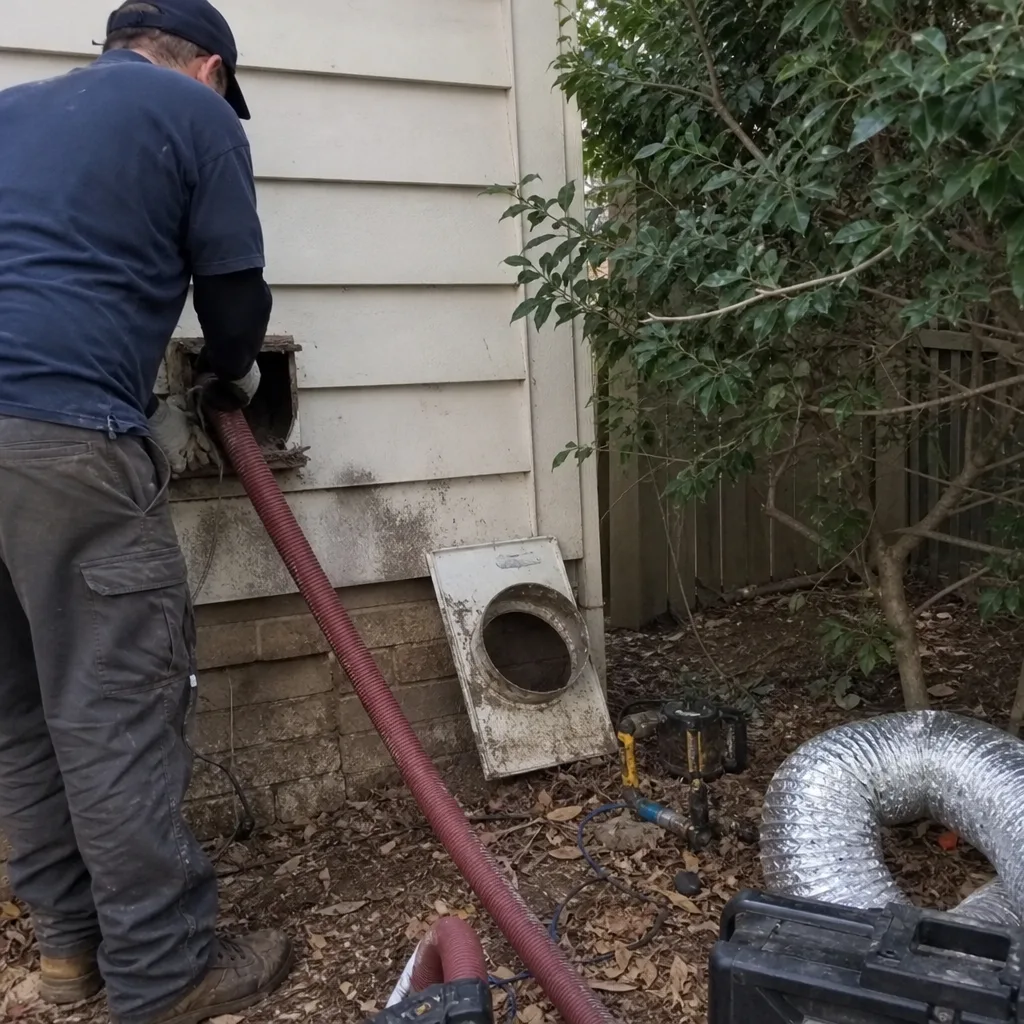 Before
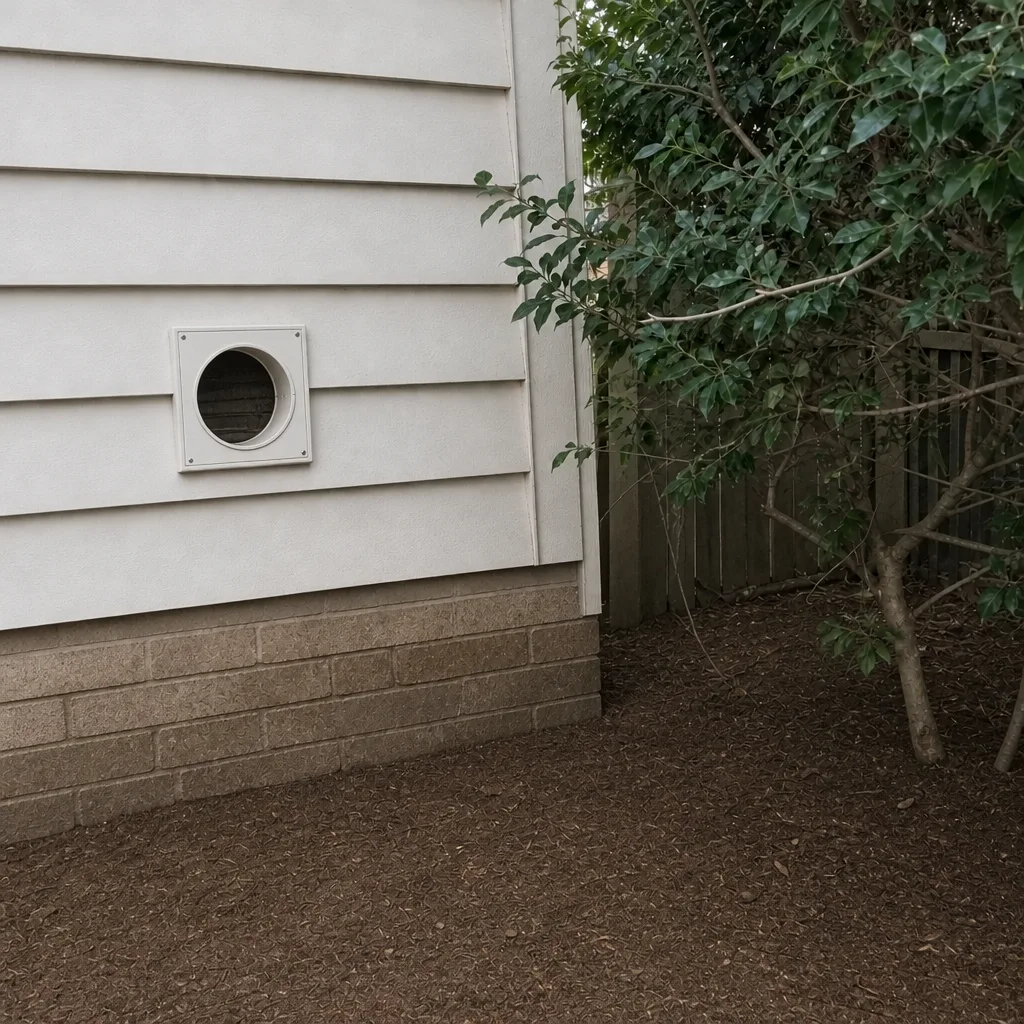 After
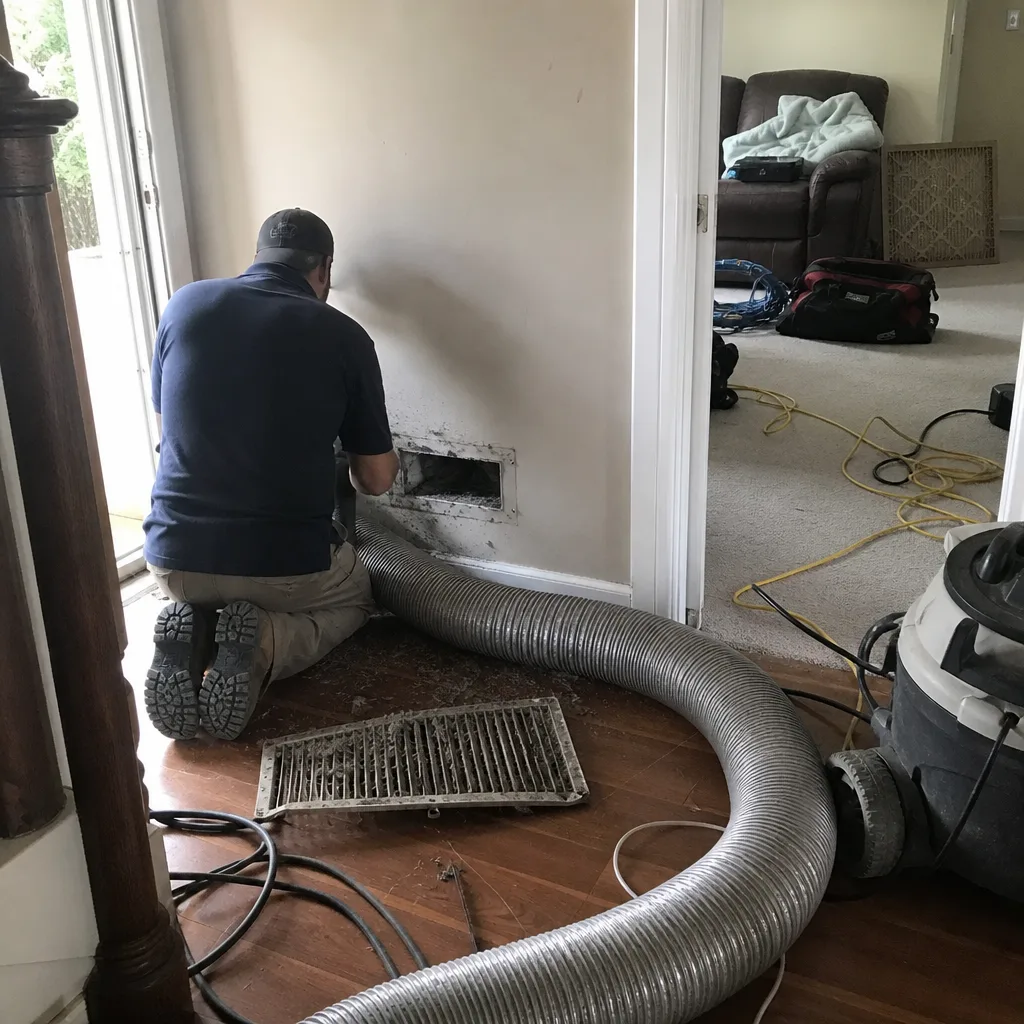 Before
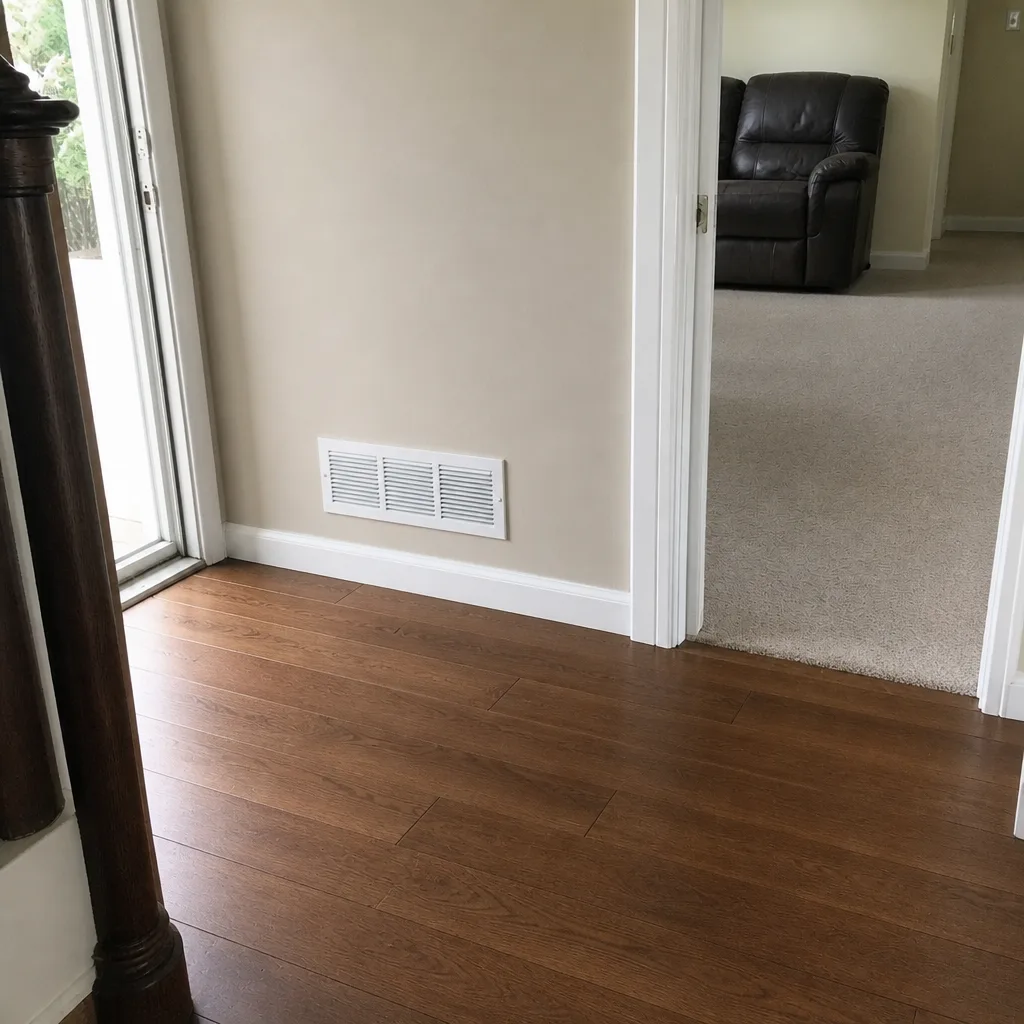 After
When to Call a Professional
Some troubleshooting is DIY territory – a filter swap, a damper adjustment, checking for visible duct separation at the grille. But there are scenarios where DIY stops being useful and starts being dangerous or wasteful. Call a professional when the blower or air handler needs to be opened, when the ducts are visibly separated inside a wall cavity or attic, when you can’t trace the source of an odor, when the static pressure is out of spec and you don’t own the equipment to test it, or when the dryer vent run is long, has multiple elbows, or shows any burning smell. High-static systems and disconnected ducts are not homeowner projects, and getting the diagnosis right first saves you from spending on cleaning that doesn’t fix the problem. Air Duct Cleaning North Hills offers free estimates in North Hills – call (844) 443-4850. We answer 24/7. Fast dispatch from 7am to 7pm, Sunday through Friday, closed Saturday.
Frequently Asked Questions
Look for even debris at the return grille, visible dust streaks around the vents, and airflow that’s weak across the board. If the weakness is localized to one or two rooms, or you see dust streaks at a specific joint, the problem is more likely a duct leak or separation than debris buildup. A static pressure test and a visual inspection of the duct routing inside the attic or crawlspace confirm which it is. Call (844) 443-4850 for a free estimate and we’ll walk the system with you.
The smell is almost certainly coming from the evaporator coil or the drain pan, not the ducts. The coil stays damp during the cooling season and collects dust that supports growth; a drain pan that doesn’t drain fully holds standing water that eventually becomes a sludge. Both are addressed with HPAC coil cleaning and pan service, which we include in HVAC cleaning. Cleaning the ducts alone leaves the source in place.
Cleaning removes debris from inside the duct. Sealing closes the gaps and joint failures where the system is losing conditioned air. Cleaning fixes air quality; sealing fixes efficiency and airflow delivery. In most North Hills homes, the right sequence is diagnose, repair and seal if needed, then clean – because cleaning a system with open leaks means the ducts get contaminated again quickly. Call (844) 443-4850 for a free estimate.
Run the fan in fan-only mode and hold a tissue against each supply register. A tight system pulls the tissue to the grille or makes it flutter briskly. A weak vent barely moves it. At every weak vent, look around the boot and the visible duct behind the grille for dust streaks or a duct that’s pulled away from the boot. Those streaks are the visual signature of a leak. Any vent that fails the test is worth a professional look. Call (844) 443-4850 for a free estimate.
Only if the cause is debris restricting airflow. If the problem is a disconnected run, a crushed flex duct, a closed damper, or ducts that were undersized for the air handler, cleaning alone won’t balance the rooms. The diagnosis has to come first. In our experience, about half of the “hot room” complaints in North Hills turn out to be a balancing or duct design issue rather than a cleanliness one. Call (844) 443-4850 for a free estimate and we’ll test before we recommend.
You can clean the visible duct behind a grille, but you can’t safely clean the full run without proper negative-air equipment. A shop vac pulls dislodged debris into the living space rather than capturing it. Brush-and-vacuum systems like Rotobrush work in tandem with a Nikro negative-air machine to keep the dust contained. For anything beyond the visible duct, call (844) 443-4850 for a free estimate.
Most homes don’t need it on a fixed schedule. Cleaning makes sense when there’s visible debris at the vents, when the home has had major renovation dust, when a pet or occupant has significant allergies, or when a musty smell traces to the system after the coil has been ruled out. Homes with heavy shedding pets, recent remodeling, or a humid crawlspace feeding a return often need it more often than a typical schedule suggests. Call (844) 443-4850 for a free estimate specific to your system.
The Bottom Line
Most duct problems in North Hills are correctly diagnosed by matching the symptom to the component behind it, not by assuming every airflow complaint needs a cleaning. Weak airflow at every vent points to filtration or the blower. Weak airflow at one vent points to a damper, a disconnected duct, or a crushed flex run. A musty smell points to the coil or drain pan. Debris is a real cause, but it’s one of four, and cleaning only solves that one. Get the diagnosis right, then decide whether cleaning, sealing, repair, or a combination is the right scope. Our team handles all five service categories – cleaning, dryer vent, HPAC, air quality, and repair – so the diagnosis and the fix come from the same place. Call (844) 443-4850 for a free estimate. We answer 24/7. Fast dispatch from 7am to 7pm, Sunday through Friday, closed Saturday.
Written by the team at Air Duct Cleaning North Hills.