
Last updated November 23, 2026
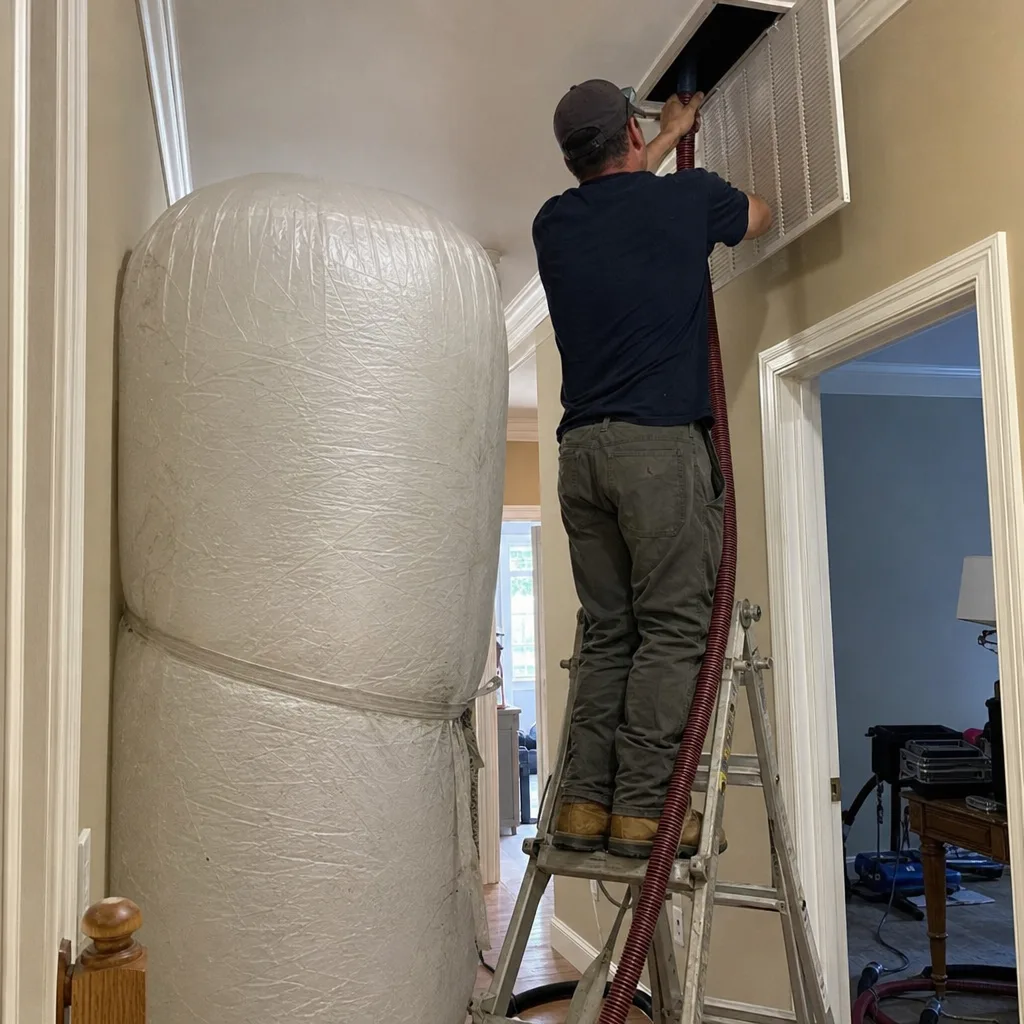
 Whole-home duct cleaning
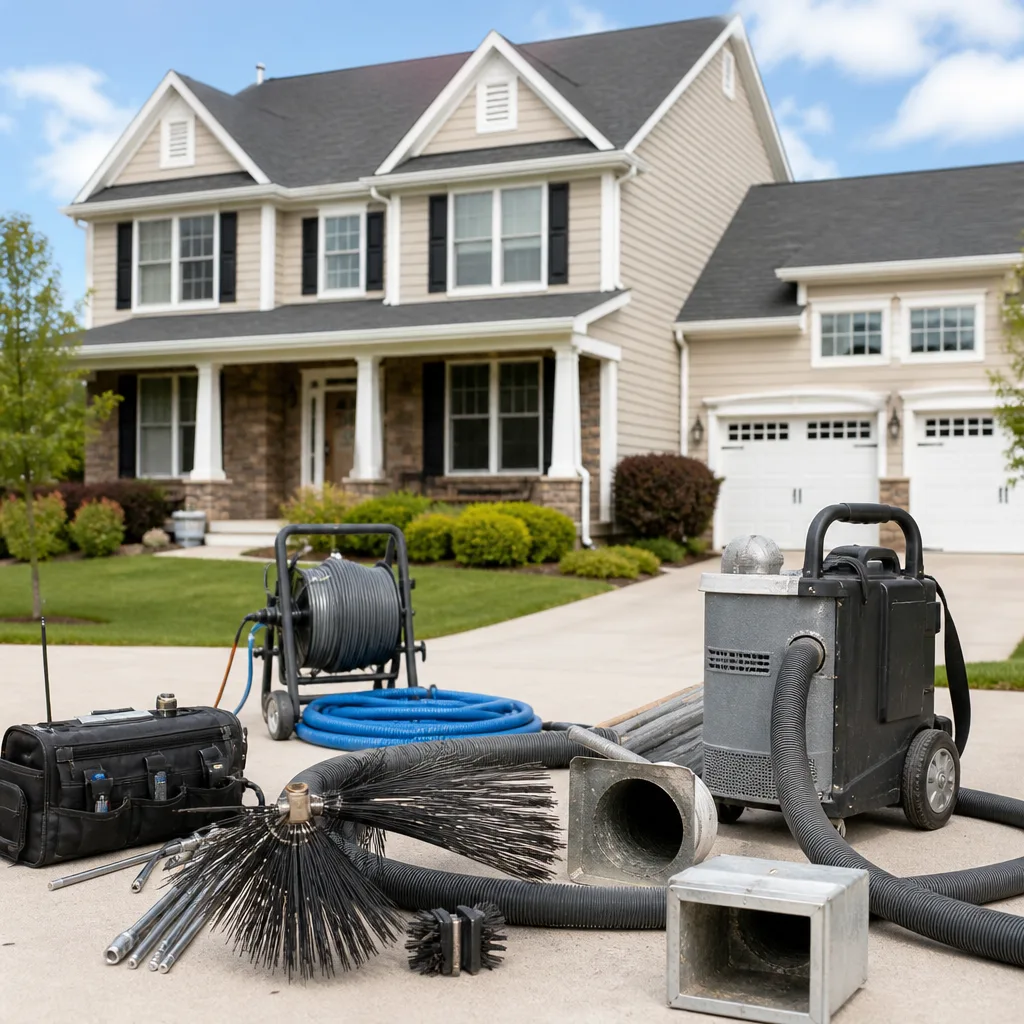
 Dryer vent cleaning
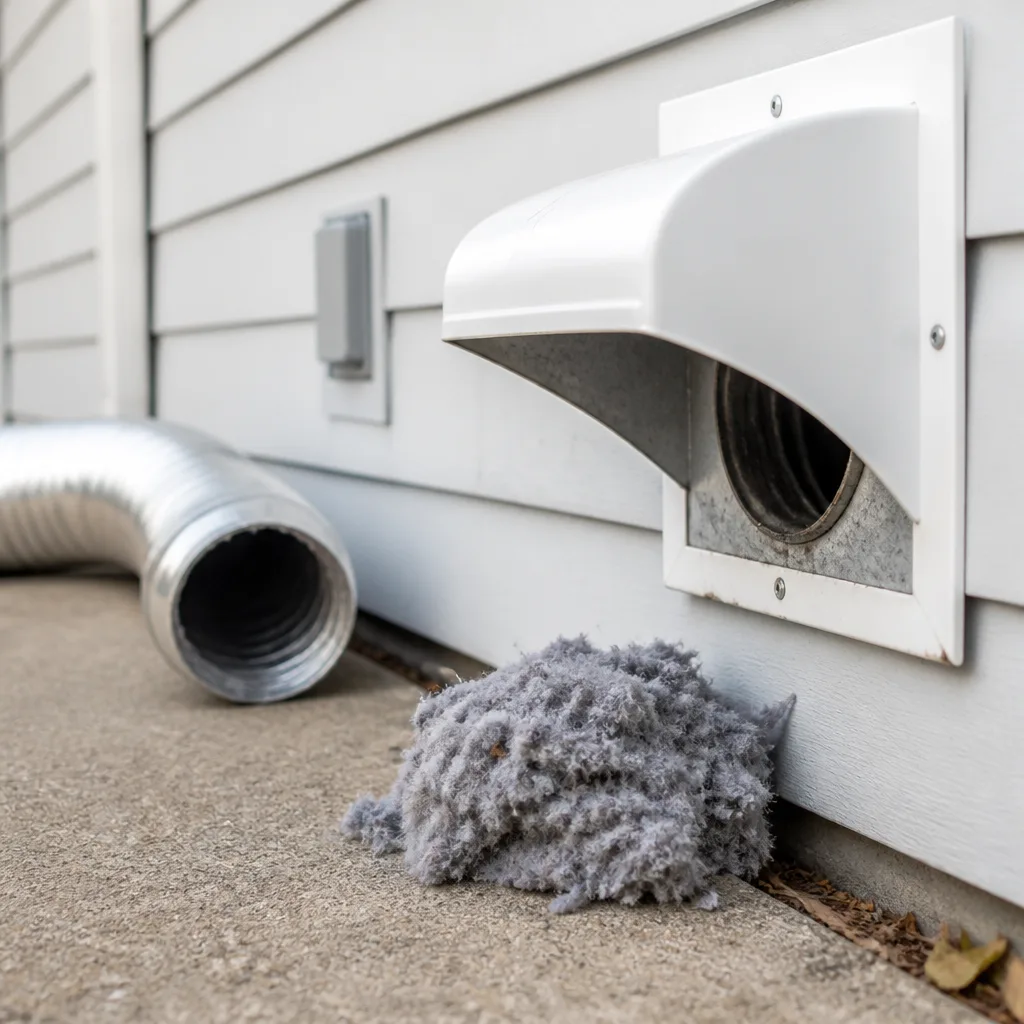
 Camera inspection
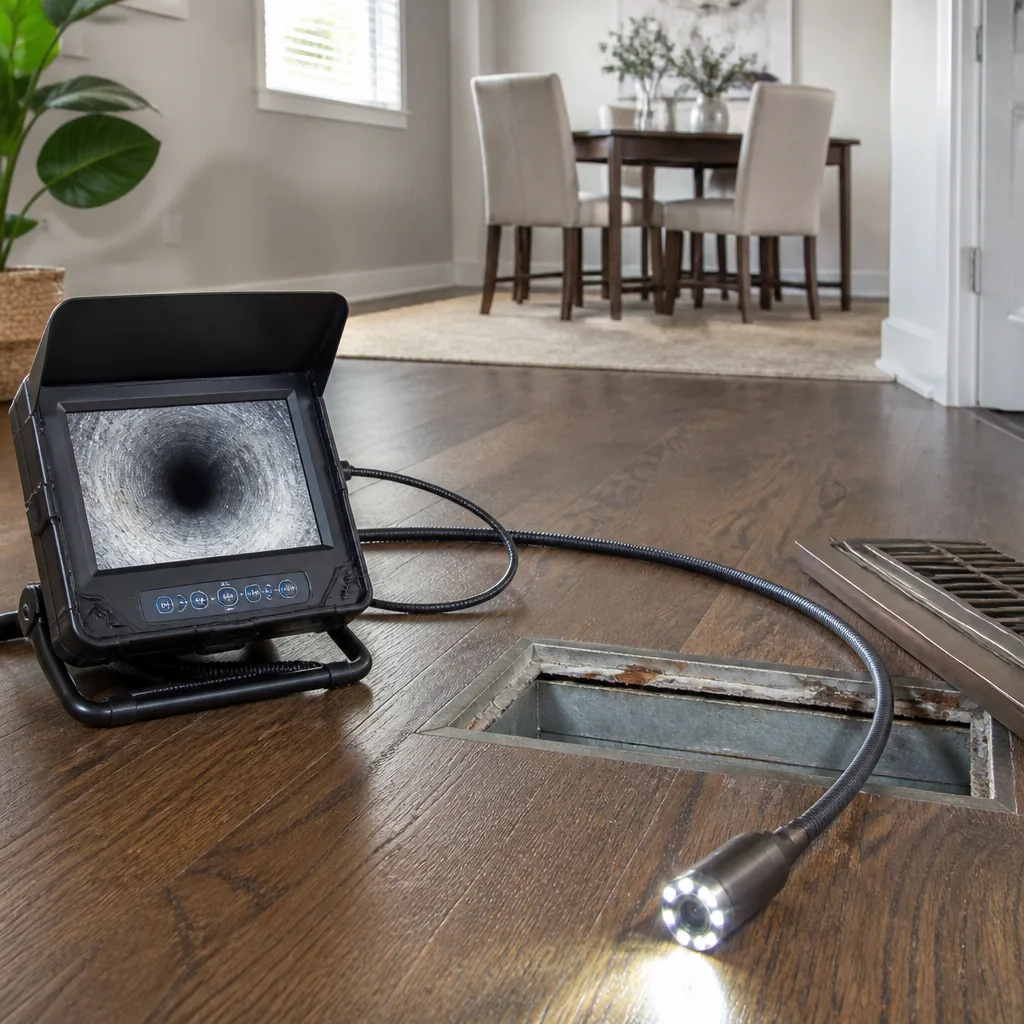
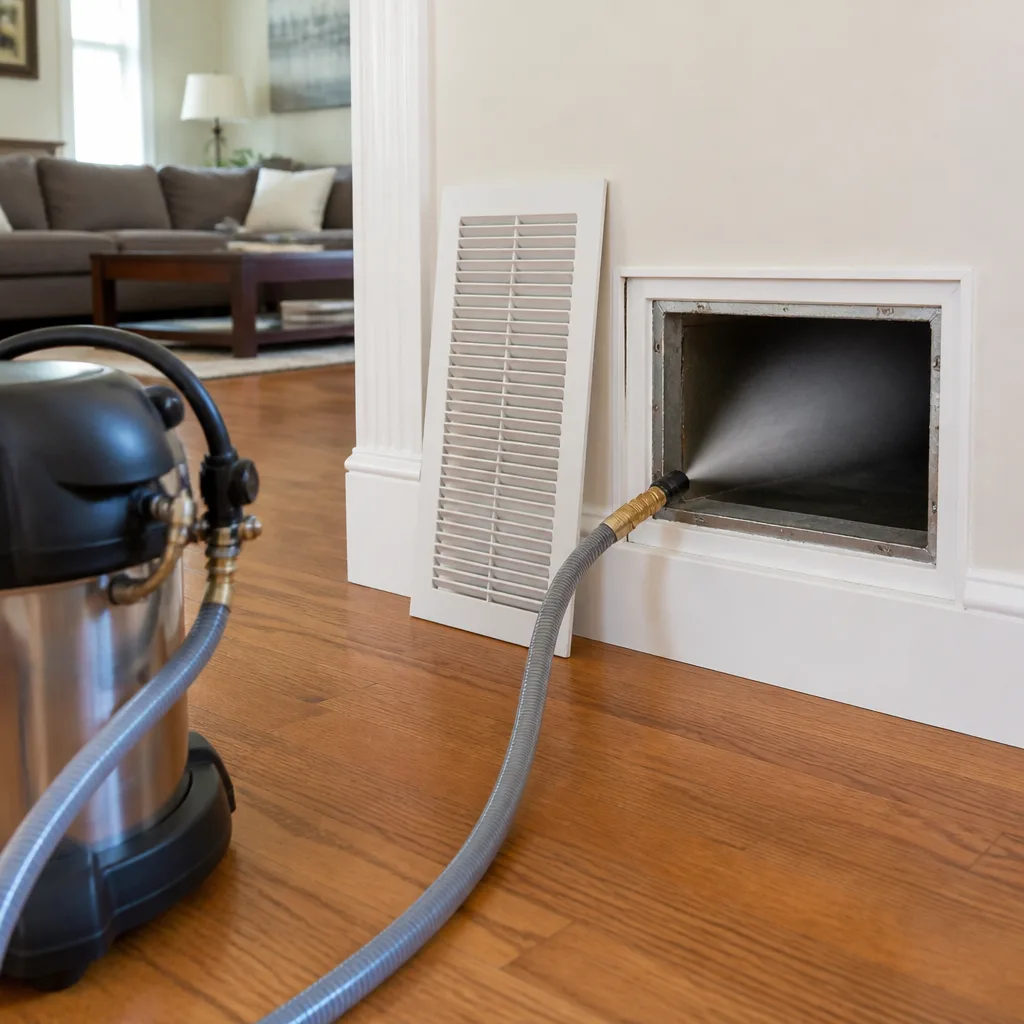 Sanitizing & deodorizing
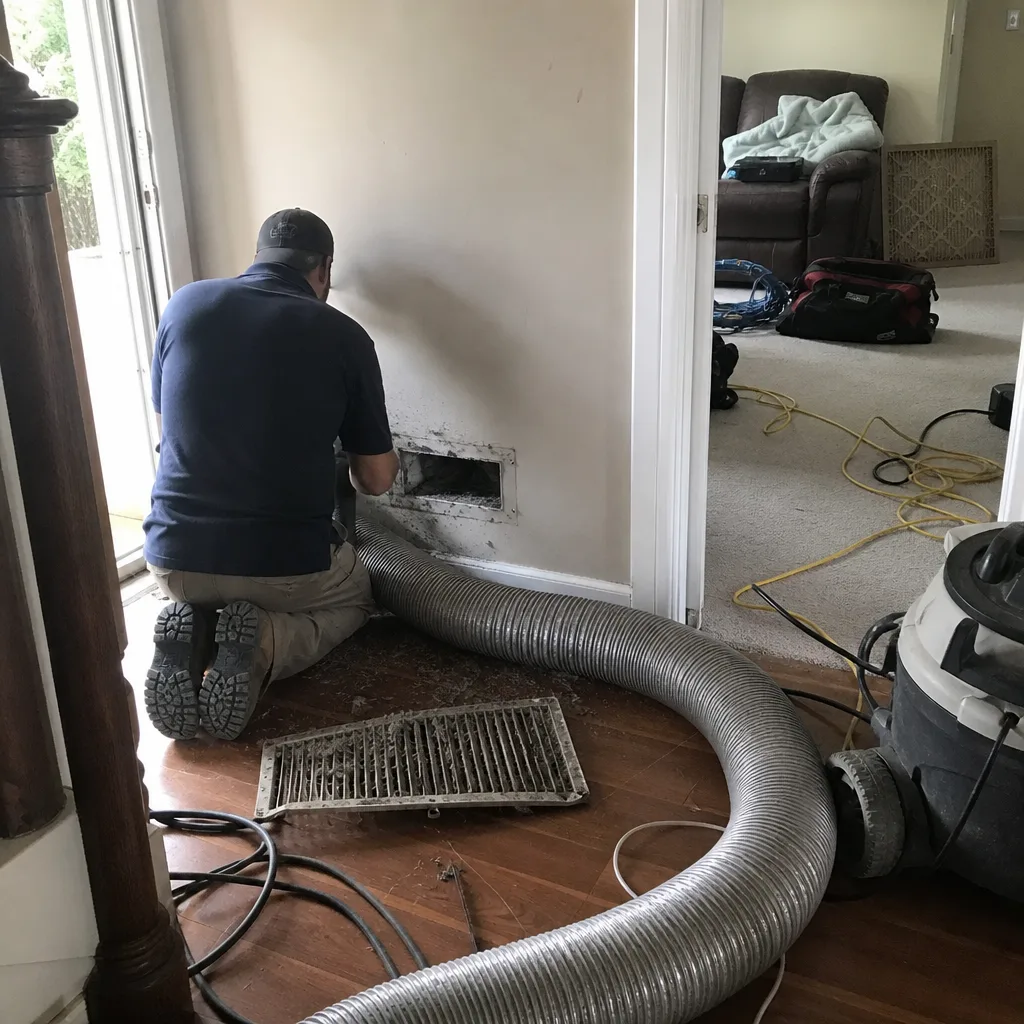
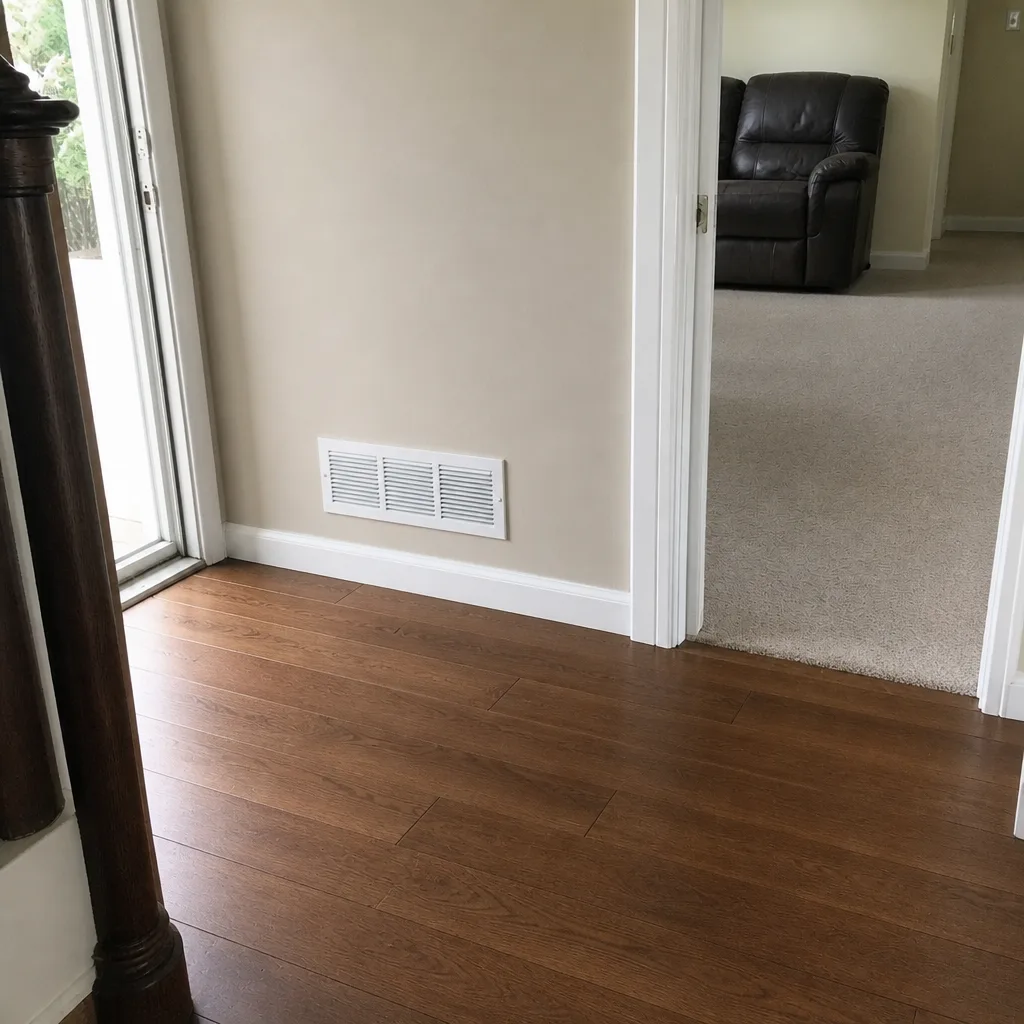
Whole-system duct and dryer vent check with before-and-after photos - you see exactly what came out of your vents
That "$99 whole-house special" is a bait ad - the real number appears once they are in your hallway, or the "clean" is a shop-vac at the register. We photograph the inside of your ducts before and after instead.
Air Duct Cleaning Permits, Codes & Inspections in North Hills, NC: What You Need to Know
Most homeowners in North Hills assume duct work is duct work – that cleaning, sealing, and repair all fall under the same rules. They don’t. Cleaning is maintenance and needs no permit. But the moment a technician cuts duct board, seals a joint with mastic, or reconfigures a plenum, the job becomes mechanical work governed by the North Carolina State Mechanical Code, and in Wake County that can trigger a permit. The problem is that the contractor who finds the damage during a cleaning isn’t always licensed to fix it. This guide explains where that line sits, how to verify a contractor’s credentials, and the questions to ask before any scope expands beyond cleaning. You’ll learn what North Carolina actually requires so you can approve repair work with confidence.
Quick Answer
Standard air duct cleaning in North Hills and across North Carolina does not require a permit. But duct repair, plenum modification, or replacement of duct board and flex runs falls under the North Carolina State Mechanical Code and may require a mechanical permit from Wake County depending on scope. Sanitizing sprays applied during a cleaning are not mold remediation and don’t satisfy remediation standards. Always confirm your contractor holds the right NC mechanical license before approving repair work.
Styles & brands we work with
- Whole-home duct cleaning
- Dryer vent cleaning
- Camera inspection
- Sanitizing & deodorizing
Table of Contents
- What Does the NC State Mechanical Code Say About Duct Work?
- When Does Duct Work Need a Permit in Wake County?
- Cleaning vs. Repair: Where the Line Actually Sits
- Mold Treatment vs. Mold Remediation: What NC Requires
- How to Verify Your Contractor’s NC License Class
- Questions to Ask Before Scope Expands
- What a Duct Inspection Actually Involves
- Why North Hills Homes See These Issues
What Does the NC State Mechanical Code Say About Duct Work?
The North Carolina State Mechanical Code governs the installation, alteration, repair, and replacement of mechanical systems, and that includes ductwork. Chapter 6 of the code covers duct systems: materials, sizing, sealing, clearances, and support. When a contractor changes the physical duct system – adding a run, replacing a section of duct board, sealing joints with mastic, or altering a plenum – the work has to meet the code’s requirements for materials and sealing.
Here’s what that means in plain terms. A duct cleaning that removes debris from inside an existing, unmodified system is maintenance. No code section applies to the act of cleaning itself. But once a technician cuts into a duct, adds a fitting, replaces a length of flex duct, or reseals a plenum with mastic, the work is now an alteration or repair under the mechanical code. That work must be done to code, by someone authorized to do it, and in many Wake County jurisdictions it requires a permit before the work starts.
The code sections that matter most for homeowners:
- Chapter 6 (Duct Systems) – covers duct construction, installation, insulation, and sealing requirements. Applies whenever duct material is cut, joined, or replaced.
- Section 601 (General) – requires duct systems to be installed in accordance with the code’s provisions and to be sealed to prevent air leakage.
- Section 603 (Duct Construction) – sets requirements for duct materials, including duct board and flexible duct, and how they must be supported and connected.
- Penalties and enforcement – work performed without a required permit can be subject to inspection failure, required removal, and in some cases fines.
If your ductwork was installed before the current code cycle, don’t assume that older work automatically fails. Existing installations are generally grandfathered. But new repair work performed today has to meet today’s code. That’s the distinction that catches homeowners off guard: the ducts themselves may be fine as-is, but the repair you’re approving right now must meet current requirements. If a contractor tells you the code “doesn’t apply” because your system is old, that’s a red flag worth questioning.
When Does Duct Work Need a Permit in Wake County?
Wake County and its municipalities, including Raleigh, issue mechanical permits for work that alters or replaces mechanical systems. Duct cleaning alone needs no permit. Duct repair, replacement, or modification may. The deciding factor is scope, and the rules can vary by jurisdiction, so the safest move is to ask the local inspections office directly before approving anything beyond cleaning.
Here’s how we think about the line. If the work is strictly removing debris from unmodified ducts – no cutting, no new material, no resealing – it’s cleaning, and no permit applies. If the work involves any of the following, it’s mechanical work and likely needs a permit:
- Cutting into the duct system. Opening a duct to access a damaged section, install a new fitting, or add a branch run.
- Replacing duct board or flex duct. Removing and installing new duct material counts as alteration or replacement.
- Modifying a plenum. The supply or return plenum is part of the mechanical system; changes to it are mechanical work.
- Sealing with mastic or mechanical fasteners. Mastic sealing of significant portions of the duct system may be considered repair work depending on scope.
- Reconnecting or relocating a duct run. Moving a supply register or rerouting a run affects the system’s design and operation.
There’s also the question of who can pull the permit. In North Carolina, mechanical permits are generally pulled by the licensed contractor performing the work. If the person cleaning your ducts doesn’t hold the right license, they can’t legally pull the permit for repair work. That’s the gap we see most often in North Hills: a homeowner discovers a leaking duct or a crushed flex run during a cleaning, and the cleaning contractor either can’t do the repair legally or offers to do it without a permit. Either outcome puts the homeowner at risk.
We handle duct repair and sealing as an in-house service, which means the work found during a cleaning can be scheduled into the same visit rather than handed off. But we still advise every homeowner to confirm the permit picture with Wake County before approving repair. A phone call to the inspections office takes a few minutes and removes the guesswork.
Cleaning vs. Repair: Where the Line Actually Sits
The distinction between cleaning and repair is the single most important thing to understand in this guide. Cleaning removes what’s inside the ducts. Repair changes the ducts themselves. One is maintenance, the other is mechanical work, and the regulatory treatment differs accordingly.
Here’s a side-by-side breakdown of common tasks and how they generally classify:
- Source removal of dust and debris from duct interiors – cleaning. No permit.
- Rotary brush agitation with negative air capture – cleaning. No permit.
- Application of a sanitizing product to duct surfaces – treatment, not remediation. No mechanical permit, but see the mold section below.
- Replacing a crushed flex duct run – mechanical repair. Permit likely.
- Cutting out and replacing duct board – mechanical repair. Permit likely.
- Mastic sealing of joints and seams across the system – mechanical repair depending on scope. Permit may apply.
- Adding a new supply or return run – system alteration. Permit required.
- Replacing the return air plenum – mechanical work. Permit required.
In our experience, a large share of North Hills homes have at least one duct issue that surfaces during cleaning: a disconnected flex run in an attic, a crushed section behind a knee wall, or a plenum joint that’s been pulling in attic air. When we find one, we document it with photos and explain what the repair involves before any scope changes. That’s a basic standard of care, and any contractor who won’t show you the problem and explain the code implications is one to walk away from.
The takeaway: cleaning and repair are two different jobs, often performed by two different credentials, and the homeowner is the one who has to make sure the second job is done properly. Ask about the permit before the work starts, not after.
Mold Treatment vs. Mold Remediation: What NC Requires
Here’s a distinction that trips up a lot of homeowners. A sanitizing spray applied during a duct cleaning is treatment. It is not remediation. North Carolina treats mold remediation as a separate category of work with its own rules, and a spray-and-go product applied mid-cleaning does not meet the standard for remediation.
Mold remediation in North Carolina is generally governed by rules that require containment, removal of contaminated materials, and verification – work that goes well beyond fogging a duct system with a sanitizing product. The North Carolina State Board of Examiners for Licensing Contractors recognizes a separate classification for mold remediation work. In practice, this means a cleaning company can treat light surface growth on duct interiors with an EPA-registered sanitizing product, but if there’s substantial mold growth inside the HVAC system, that job may require a licensed remediation contractor.
What a sanitizing application during cleaning actually does:
- Reduces surface microbial load on duct interiors after debris is removed.
- Helps address musty odors that trace back to damp dust and organic buildup.
- Does not remove contaminated porous materials (duct board with active growth, for example).
- Does not provide the containment, removal, and verification that remediation requires.
We’re careful about language here. We use Abatement Technologies air scrubbers during sanitizing work to keep air quality controlled throughout the job, and we deploy EPA-registered sanitizing products on duct surfaces after mechanical cleaning. But if we find substantial growth during a cleaning in North Hills, we tell the homeowner plainly that treatment isn’t remediation, and that a licensed remediation contractor may be needed. Overstating what a spray can do is one of the most common credibility problems in this trade, and it’s worth asking any contractor to explain the difference before you hire them.
One practical note: visible mold growth on accessible duct surfaces is worth documenting. Take photos, note the location, and keep the record. If remediation turns out to be necessary, that documentation helps the remediation contractor scope the job correctly.
How to Verify Your Contractor’s NC License Class
North Carolina licenses contractors through the State Board of Examiners for Licensing Contractors, and mechanical work falls under specific license classifications. Before you approve any duct repair, sealing, or modification, you need to know whether the person doing the work holds the right license for it. This is the check most homeowners skip, and it’s the one that matters most.
Here’s how to verify, step by step:
- Ask for the license number in writing. Any legitimate contractor can provide it without hesitation.
- Look it up on the state board’s license lookup. The North Carolina State Board of Examiners for Licensing Contractors maintains a public search tool. Enter the number and confirm the classification covers the work you’re approving.
- Confirm the license class covers mechanical work. North Carolina uses classification letters to distinguish the scope of work a contractor can legally perform. Ask specifically whether the license covers duct repair and mechanical alterations, not just cleaning.
- Ask who will pull the permit. If the work needs a permit, the licensed contractor generally pulls it. If your contractor says “no permit needed” for work that clearly alters the duct system, get a second opinion.
- Confirm insurance. Ask for a certificate of insurance showing general liability coverage. This protects you if something goes wrong during the work.
There’s also the question of the cleaning itself. North Carolina doesn’t require a contractor license to perform duct cleaning alone, which means the barrier to entry for cleaning services is low. That’s exactly why the cleaning step and the repair step require separate scrutiny. The person who can clean your ducts may not be the person who can legally repair them. Air Duct Cleaning North Hills handles the full workflow – cleaning, sanitizing, and repair – but we still advise every homeowner to verify credentials independently, because the license lookup is free and takes a couple of minutes.
One note on what to expect: contractors who do this work every day are comfortable with these questions. If someone gets defensive when you ask about license class or permit responsibility, that reaction tells you something.
Questions to Ask Before Scope Expands
The moment a cleaning contractor tells you “we found a problem,” your job changes from hiring a cleaning to evaluating a repair. That shift deserves its own set of questions, and asking them before any scope changes protects you from the two most common failure modes: unlicensed repair work and surprise costs.
Ask these questions in this order:
- “Is this cleaning or repair?” Get a clear answer on whether the work being proposed is maintenance or mechanical work. The distinction is the starting point for everything else.
- “Does this work require a permit in Wake County?” If the answer is “no permit needed” for work that cuts or replaces duct material, ask them to explain why. Get it in writing.
- “What NC license classification do you hold?” And ask for the number so you can verify it yourself.
- “Who pulls the permit if one is required?” The licensed contractor should be the one pulling it.
- “Show me the problem on camera.” A credible contractor captures photos or video of the duct interior before proposing repair. Rotobrush and Nikro systems include camera access for exactly this reason.
- “Is this a mold issue or a debris issue?” If there’s microbial growth, ask whether the work proposed qualifies as remediation or treatment. If they say treatment, ask what happens next if remediation is needed.
- “What’s the flat price for the whole job, and what does it cover?” A written estimate before work starts, with the repair priced separately from the cleaning.
In our experience, the scope-expansion moment is where trust is earned or lost. A contractor who welcomes these questions and answers them clearly is one you can work with. A contractor who waves them off, promises the permit “isn’t a big deal,” or offers to do unlicensed repair “as a favor” is telling you something important about how they operate. In North Hills, where homes range from older ranch-style properties to newer builds near the Midtown district, the repair issues vary, but the questions don’t.
What a Duct Inspection Actually Involves
If you’re buying a home in North Hills, or if you’ve inherited a duct system you don’t have records for, an inspection gives you a factual baseline before you commit to repair work. A proper duct inspection isn’t a visual glance from a register – it’s a camera-based look at the interior of the system, including the parts you can’t see from the living room.
A thorough inspection typically includes:
- Interior camera inspection of supply and return runs, including attic and crawlspace sections where accessible.
- Access panel review – how many access points exist, whether they’re properly sealed, and whether they’re positioned to reach problem areas.
- Joint and connection check – looking for disconnected runs, crushed flex duct, and loose connections at boots and plenums.
- Plenum and air handler inspection – the point where the duct system meets the HVAC equipment, which is where many leaks start.
- Moisture assessment – checking for damp spots, condensation issues, or evidence of active moisture that might need remediation rather than cleaning.
- Documentation – photos and a written summary you can keep, share with your insurance company, or hand to a licensed repair contractor.
What an inspection is not: it isn’t an energy audit, and it isn’t a guarantee that a permit won’t be required for downstream repair. But an inspection gives you the facts you need to ask the right questions. If the inspector finds a disconnected duct in an attic in North Hills, you’ll know to ask about permit requirements before approving the reconnect, rather than after.
One practical detail: inspections are best done before cleaning, not after. The camera shows the system in its current condition, which is what you want a record of. Cleaning afterward removes the debris and leaves you with a documented history of what the system looked like when you started.
Why North Hills Homes See These Issues
North Hills is a mix of older residential neighborhoods and newer construction, and that mix shapes what duct issues show up here. Homes with older duct systems often have original flex duct or duct board that’s been in place through decades of summer heat and winter cold. Flex duct cracked at the joints over time, and duct board gets crushed or water-damaged, especially in attic runs. Newer homes aren’t immune either: tight construction and sealed envelopes mean the duct system gets worked hard, and poor initial installation creates problems that only surface when someone gets a camera inside.
North Carolina’s climate adds its own pressure. Long, humid summers mean the air conditioning system runs hard, and condensation inside the air handler and duct system is common in poorly insulated attic runs. That moisture is what feeds microbial growth and what makes musty odors a frequent complaint here. Winter heating cycles, meanwhile, dry the air out and make any duct leakage more expensive, because heated air escapes into the attic instead of reaching the living space. In both seasons, the same underlying point applies: the HVAC system works harder when ducts are clogged or leaking, and the consequences don’t stay inside the duct system.
What that means for permits and code in North Hills specifically is that duct problems here often land in the repair category rather than the cleaning category. A cleaning that finds a disconnected flex run in an attic is a cleaning plus a repair, and the repair may need a permit. We’ve found that homeowners here benefit from asking about the permit picture up front rather than discovering it mid-job. The same advice applies whether you’re in a home near the North Hills shopping district or in one of the surrounding residential blocks.
The practical takeaway: expect a cleaning in North Hills to be a scope-defining moment. Have your questions ready before the camera goes in.
Common Mistakes to Avoid
- Assuming cleaning covers repair. Cleaning removes debris; it doesn’t fix crushed flex duct or disconnected runs. If a contractor’s quote includes “repairs” without a license number and a permit discussion, ask questions before you approve it.
- Accepting unlicensed repair work. A cleaning contractor who offers to “reseal that for you” without the right NC license is putting you at risk. Unpermitted, unlicensed work can fail inspection later and complicate a home sale in North Hills.
- Confusing sanitizing with mold remediation. A sanitizing spray during cleaning is treatment, not remediation. If there’s substantial growth in the ducts, the job may require a licensed remediation contractor, and no spray changes that.
- Skipping the license lookup. The NC State Board of Examiners for Licensing Contractors lookup is free and quick. Asking for the number is the easy part; actually checking it is the step that matters.
- Not asking who pulls the permit. If repair work needs a permit in Wake County, the licensed contractor should be pulling it. If nobody’s pulling it, the work may be unpermitted, and that becomes your problem.
- Approving scope changes without photos. A credible contractor documents duct problems with camera images before proposing repair. If you’re being asked to approve repair work without seeing the problem, ask to see it.
- Treating a cheap cleaning quote as the whole story. The contractor who finds a repair problem mid-clean and can’t legally fix it is going to hand you off to a second contractor or suggest doing it unlicensed. Ask how the company handles repair discoveries before you book.
See the difference
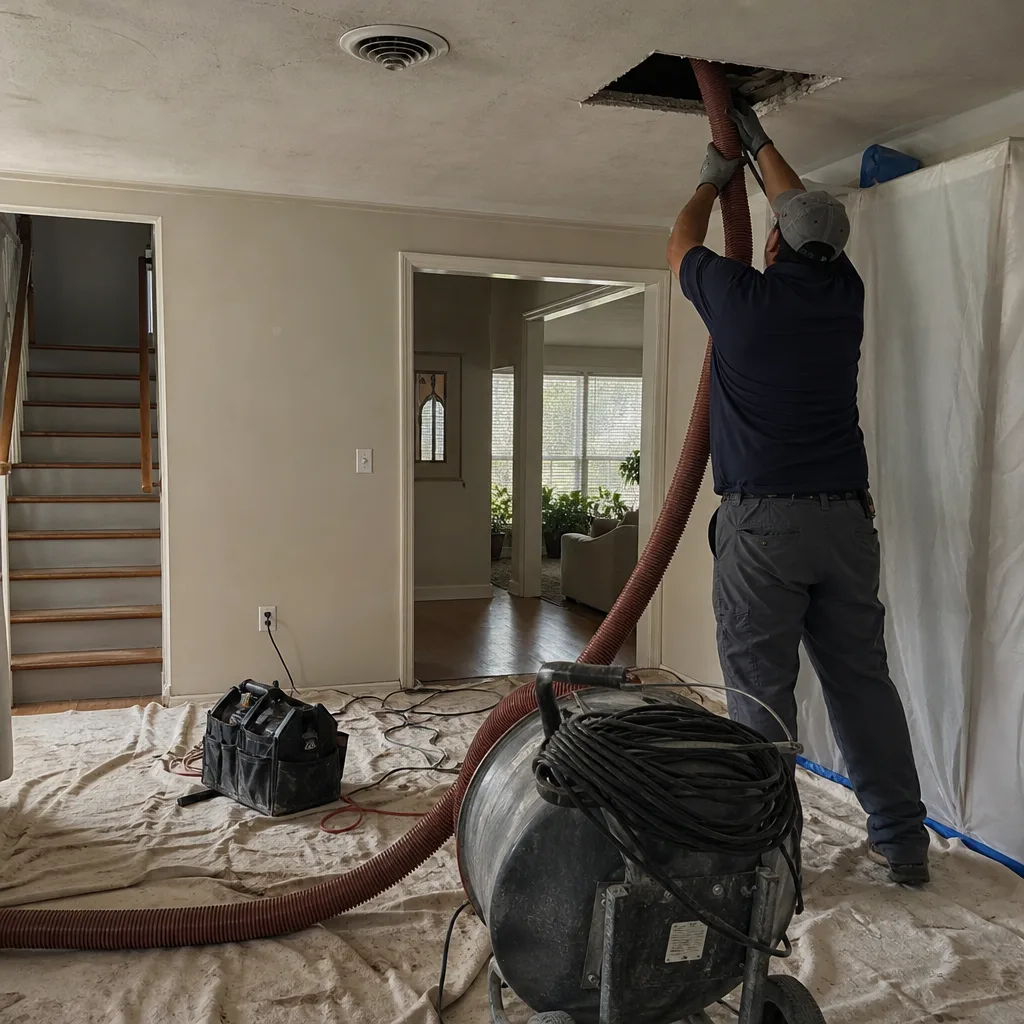 Before
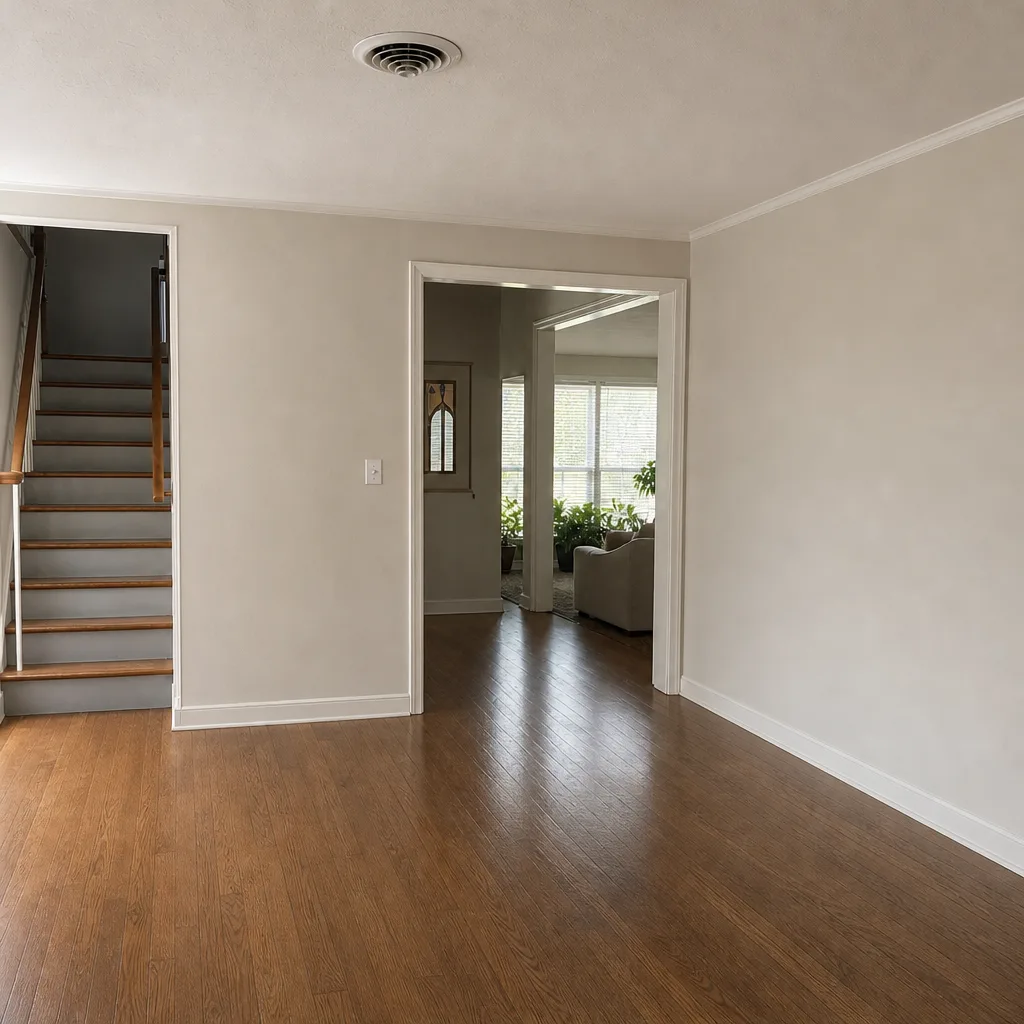 After
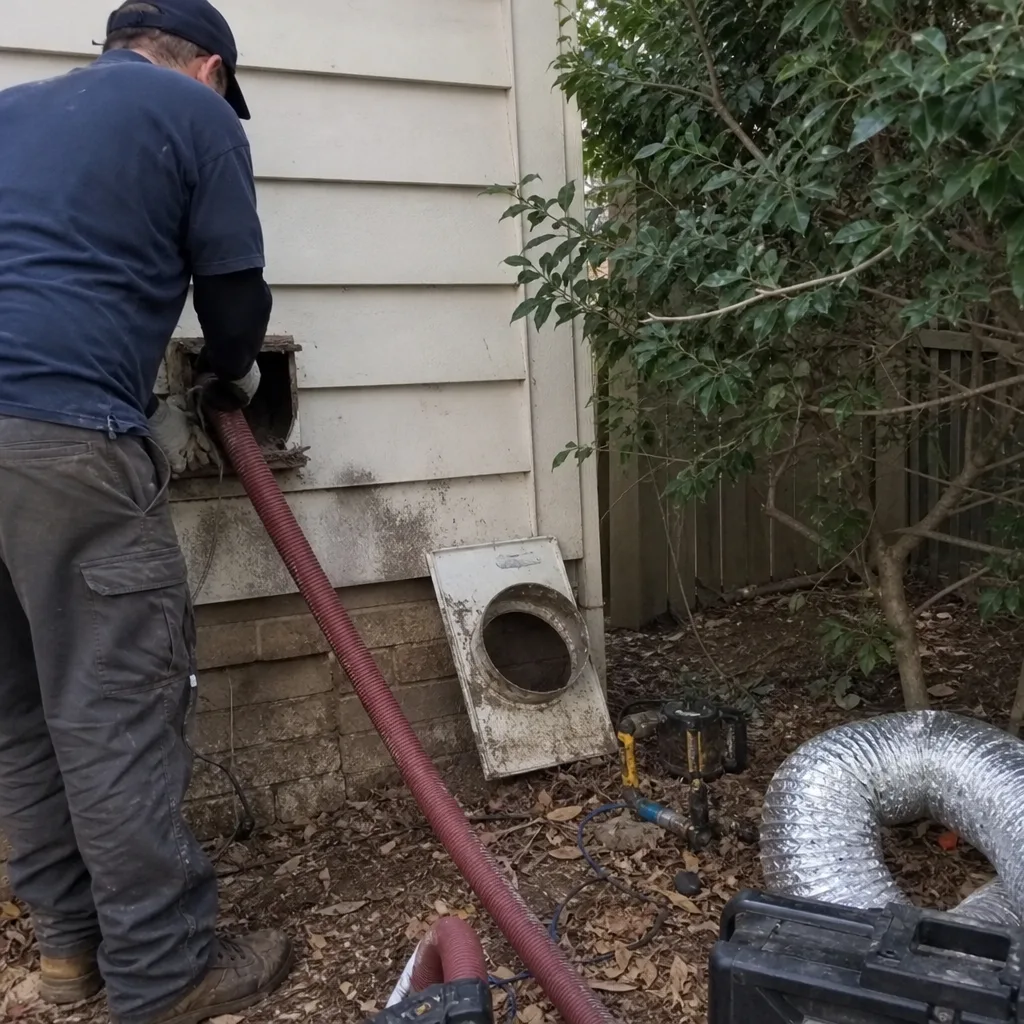 Before
 After
 Before
 After
When to Call a Professional
There are specific scenarios where the code and permit questions become urgent rather than academic. If you’re buying a home in North Hills and the inspection report flags duct issues, get a professional assessment before closing so you know whether the work is cleaning or repair, and whether a permit applies. If you’ve discovered mold growth inside the duct system, call a professional before any spray treatment is applied, because the remediation decision needs to come first. If you’ve had duct repair done in the past and you don’t have permit records, a licensed professional can help you sort out what was done and whether it needs to be re-inspected. And if a cleaning contractor has proposed repair work without explaining the license and permit picture, get a second opinion. Air Duct Cleaning North Hills offers free estimates in North Hills – call (844) 443-4850. We use Rotobrush and Nikro equipment for the cleaning, and we handle duct repair and sealing as an in-house service so the problems we find can be scheduled into the same visit rather than handed to a separate contractor.
Frequently Asked Questions
No. Air duct cleaning itself is maintenance and does not require a permit in North Hills or anywhere in North Carolina. A permit may be required if the work includes duct repair, replacement, or modification, which falls under the NC State Mechanical Code and may require a mechanical permit from Wake County. Call (844) 443-4850 for an exact quote – estimates are free.
Cleaning removes debris from inside existing, unmodified ducts. Repair changes the duct system itself – cutting into ducts, replacing duct board or flex runs, modifying a plenum, or sealing with mastic. Cleaning is maintenance with no permit requirement; repair is mechanical work governed by the NC State Mechanical Code and may require a permit. If you’re unsure which category your situation falls into, call (844) 443-4850 and we’ll help you sort it out.
No. A sanitizing spray applied during a duct cleaning is treatment, not remediation. North Carolina mold remediation has its own requirements, including containment and removal of contaminated materials, that a mid-cleaning spray does not meet. If substantial mold growth is present, a licensed remediation contractor may be required. Call (844) 443-4850 to discuss what your inspection found.
Low quotes often reflect a surface-level service rather than a full-system cleaning with proper equipment and documentation. Some low quotes also leave repair work – and the license and permit questions that come with it – for a separate conversation, or skip it entirely. A credible quote should explain the process, the equipment (Rotobrush and Nikro systems, for example), and how repairs are handled. Call (844) 443-4850 for a written estimate that covers the whole job.
Ask for the license number in writing and verify it on the NC State Board of Examiners for Licensing Contractors public lookup. Confirm the classification covers mechanical work, ask who will pull the permit if one is required, and request a certificate of insurance. Do this before approving any repair work, not after. Call (844) 443-4850 if you’d like help understanding what to ask.
Most homes benefit from cleaning every few years, though the right interval depends on the home, the duct system, and conditions like pets, recent renovations, or visible dust. North Carolina’s humid summers make moisture-related issues more likely in poorly insulated attic runs, which is one reason an inspection is worth pairing with cleaning. Call (844) 443-4850 for a free estimate and a straight answer about your system.
The Bottom Line
Air duct cleaning in North Hills needs no permit, but duct repair, sealing, and plenum modification fall under the NC State Mechanical Code and may require a mechanical permit from Wake County. That’s the line worth remembering. Sanitizing sprays are treatment, not remediation, and a contractor who blurs that distinction is one to question. Verify license class through the state board before approving repair work, ask who pulls the permit, and insist on camera documentation before scope changes. Our technicians have up to 12 years of experience with the equipment and the code picture, and we handle cleaning, sanitizing, and repair under one roof so you’re not coordinating separate contractors. Call (844) 443-4850. We answer 24/7. Fast dispatch from 7am to 7pm, Sunday through Friday.
Written by the team at Air Duct Cleaning North Hills.